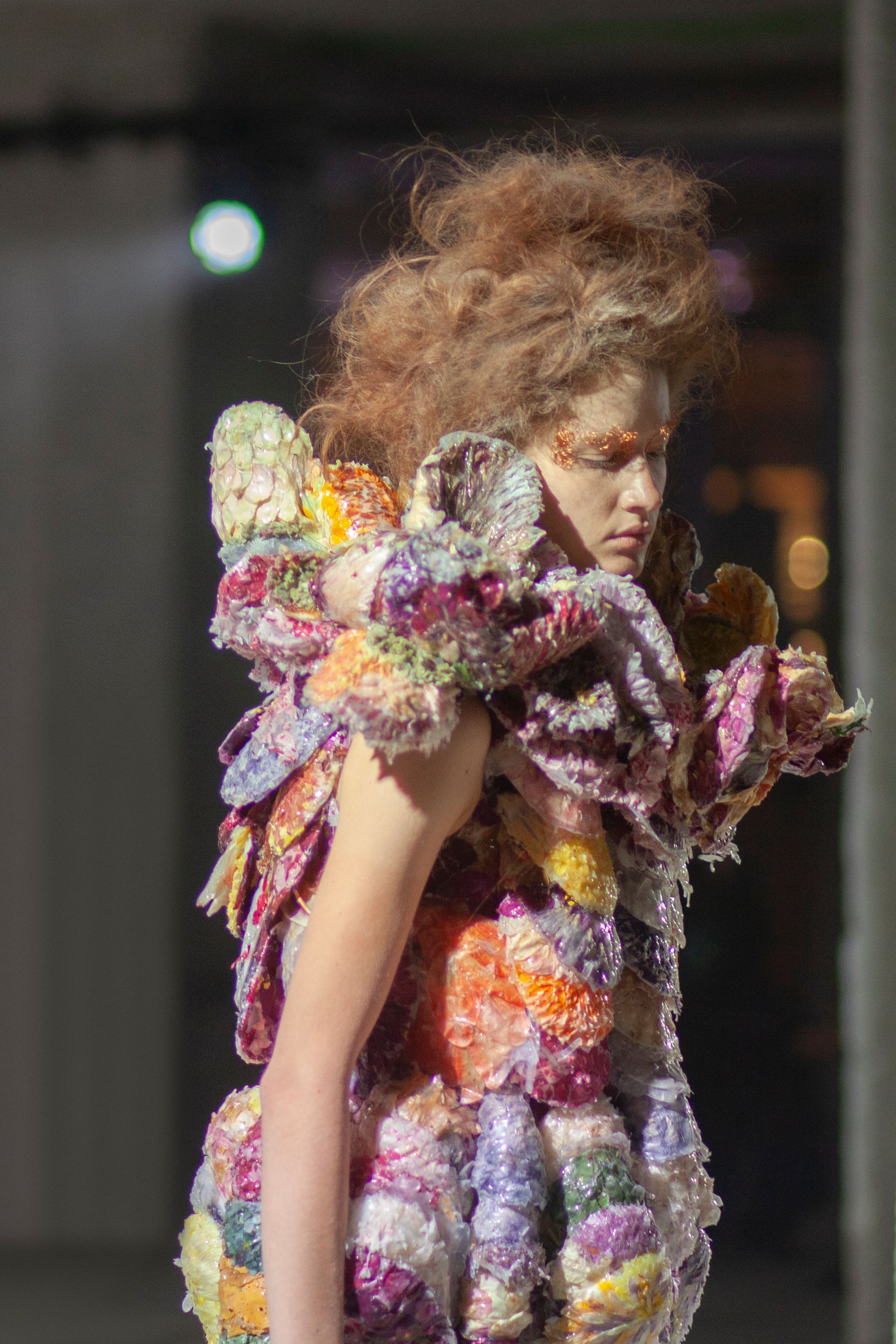
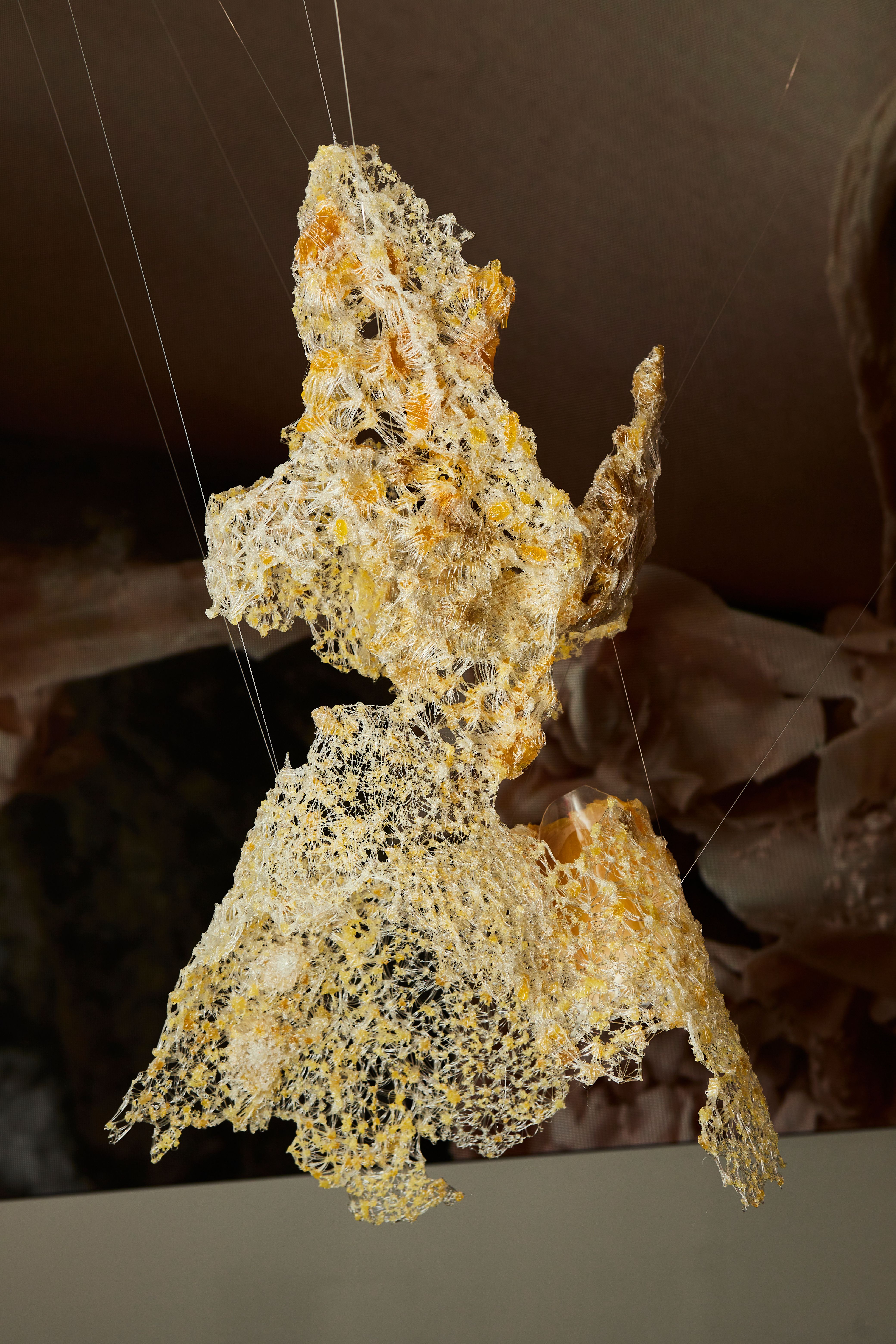
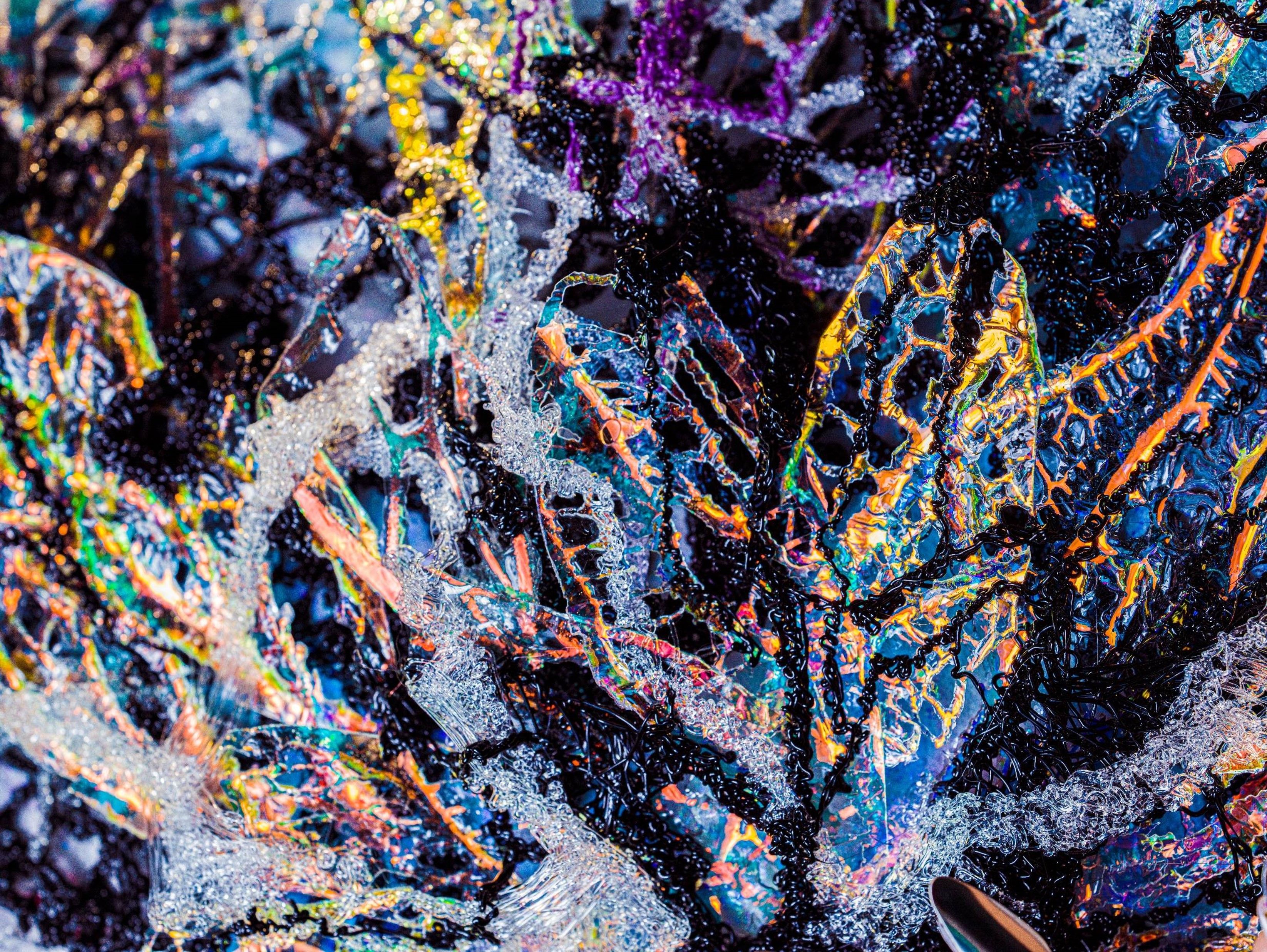
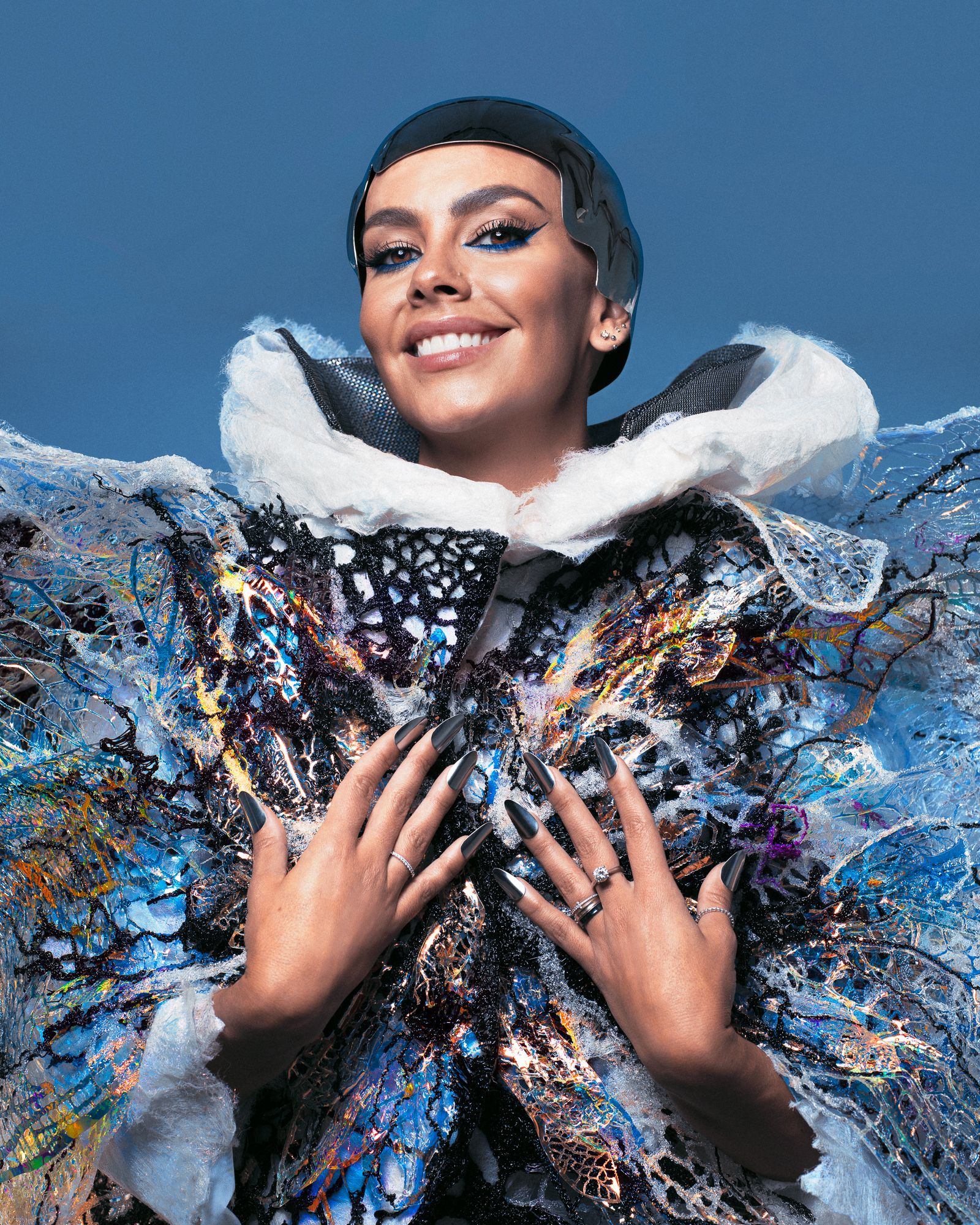
Raquel Buj is an architect and fashion designer whose work unfolds at the crossroads of body, material, and technology. Through her studio, Buj Studio, she creates experimental garments, wearable sculptures, and installations that explore the possibilities of biomaterials, digital fabrication, and traditional craft techniques. Her practice moves fluidly between disciplines—fashion, architecture, performance, and visual art—yet always remains grounded in a deep sensitivity to material processes and the ways in which we inhabit and relate to our surroundings.
In this interview, she shares the ideas behind her approach, current projects, and the role of collaboration in her practice.
How did the idea for Buj Studio come about? What was your transition like from architecture to the world of experimental fashion and textiles?
My initial background is in architecture, although I later completed a master’s degree in architecture and fashion. That step came from a desire to bring architecture closer to the body, to create an intermediate space between architecture, fashion, art, and material research. It might seem like a broad mix, but it makes sense if we don’t limit ourselves with rigid labels.
I was always very interested in material exploration. However, in professional practice, when designing buildings, I felt that part of that connection with the material was lost. You draw, create plans, but in the end, it's built by others. I needed to recover that more direct, physical relationship. I wanted to work from a hands-on, intuitive approach, making decisions through the body itself. I’ve never seen this transition as a break between disciplines, but as a natural evolution. My approach to fashion grew from the idea of the second skin, not as a response to trends, but as a way to reflect on how we inhabit our bodies and connect with the world around us.
Material research is a fundamental pillar in your work. How do you select and develop the materials you work with?
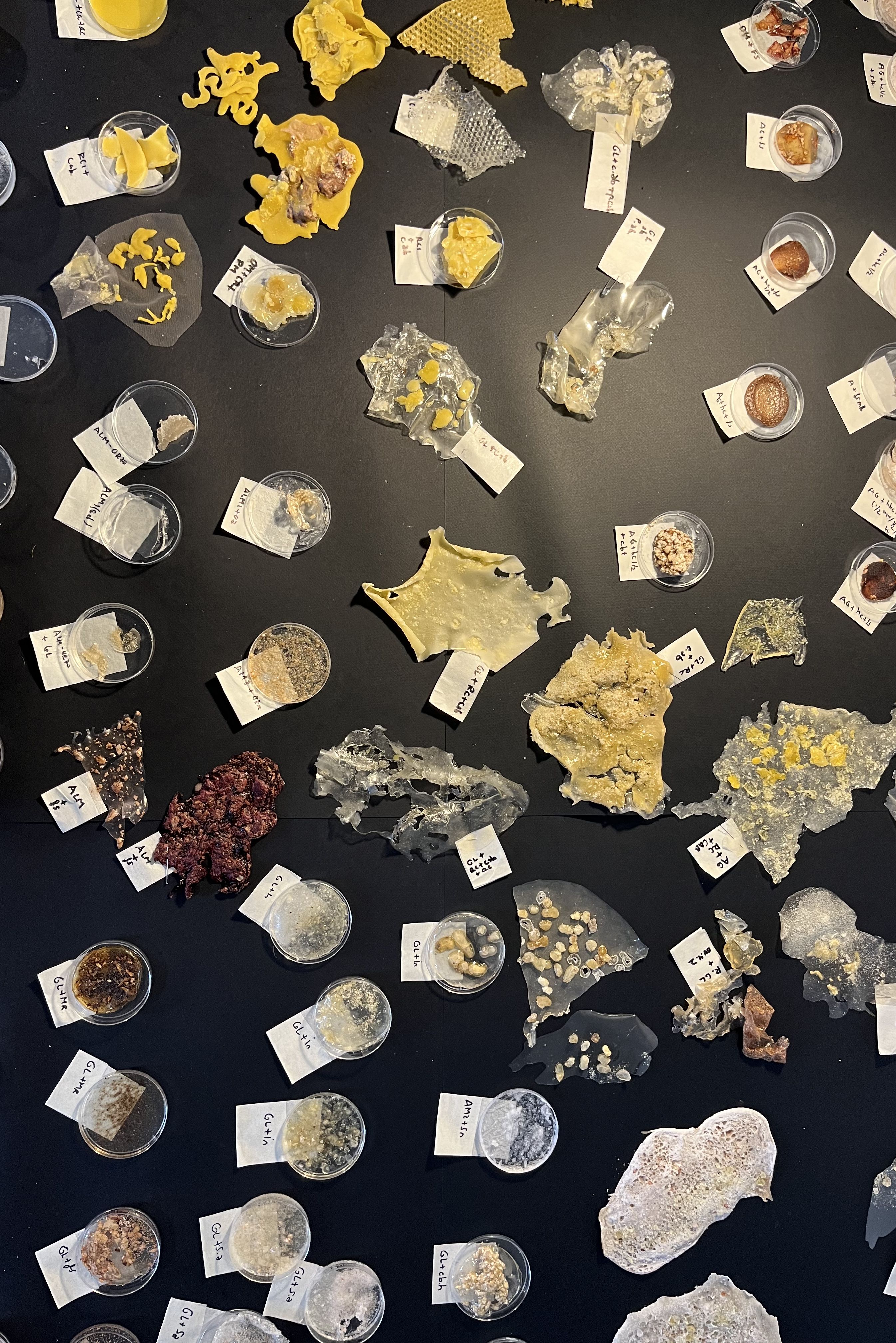
In our studio, when we work on a fashion collection or a project, the process doesn’t begin only with a concept or sketches followed by the search for materials, as often happens. In our case, we start working with materiality almost from the beginning. There is an initial concept, yes, but the material tests themselves guide us, not only in terms of form, but also conceptually.
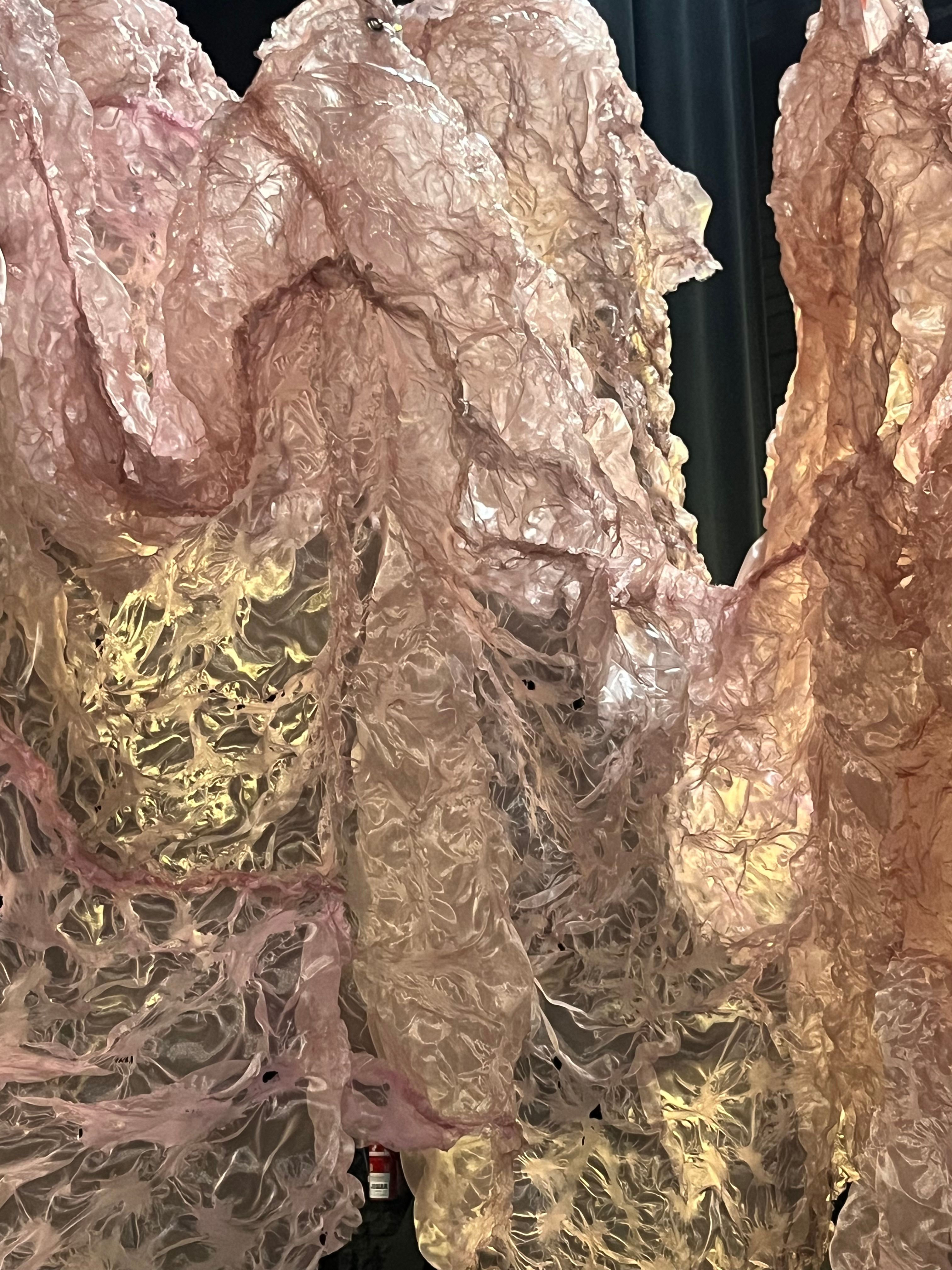
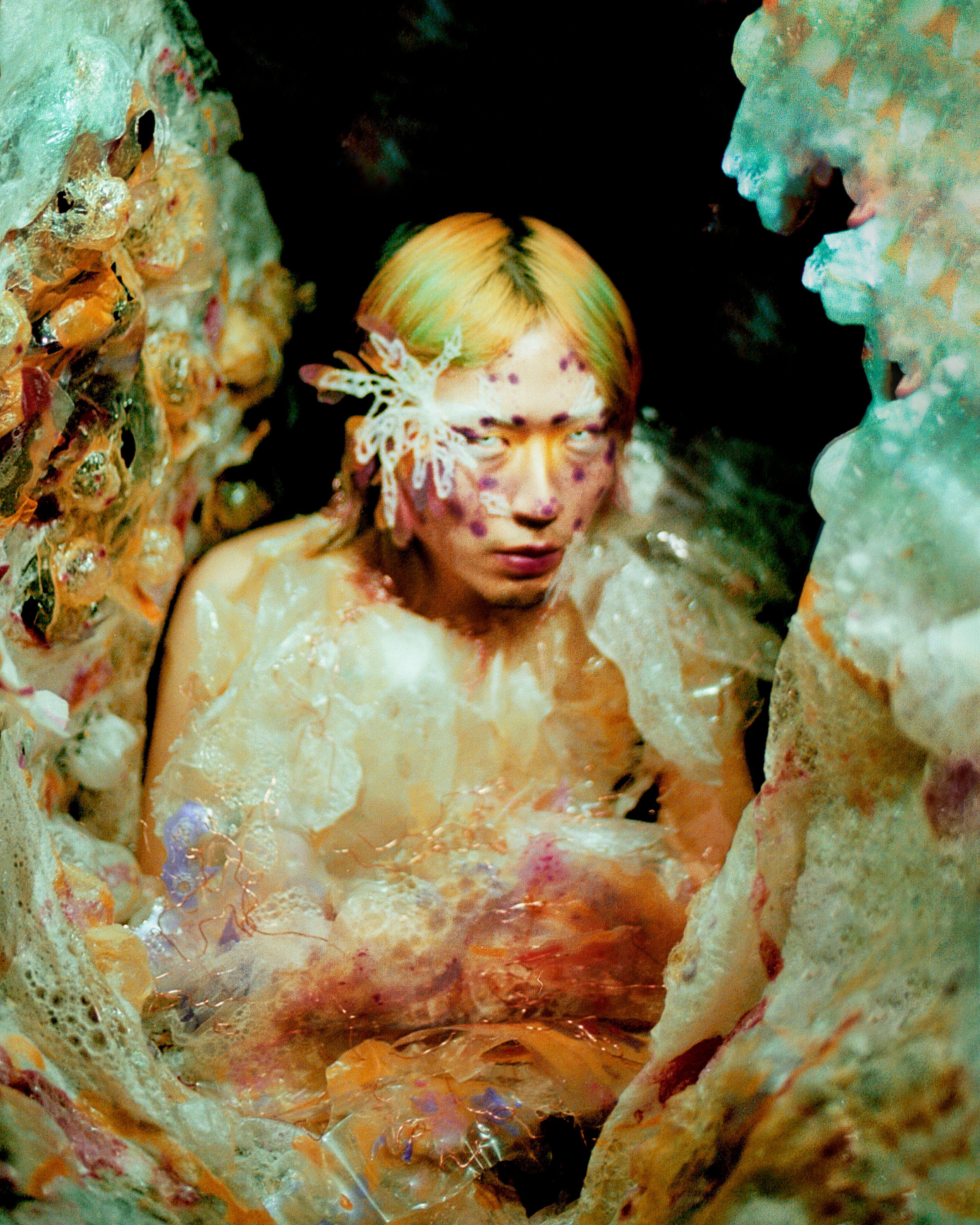
I feel we live in a contemporary world that has very little connection with materiality. Industrial development, focused on productivity and rapid commercialisation, has pushed aside the more sensitive dimension of materials. Our way of working allows us to rethink our relationship with materials and build from a more conscious, attentive place. I don't like using the word “sustainability” because it feels overused, but I would say we try to work in a more sensitive way: we use recycled materials and develop our own biomaterials. In essence, we design from the origin in order to rethink a material relationship that has been deeply affected by fast fashion and the logic of rapid consumption.
Sustainability, or sensitivity, is an increasingly important concern in both fashion and architecture. How do you integrate sustainable practices beyond just the choice of materials in your work?
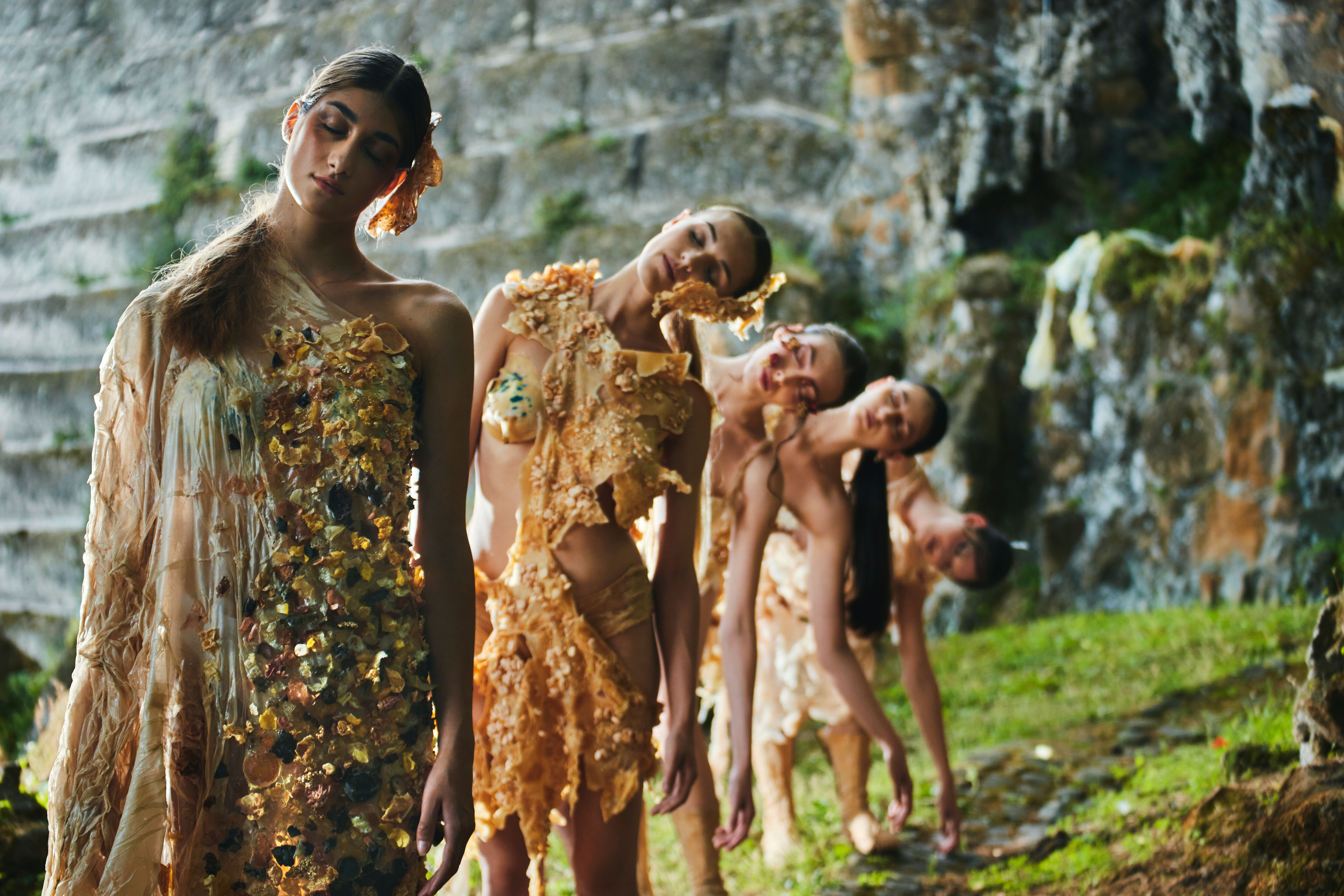
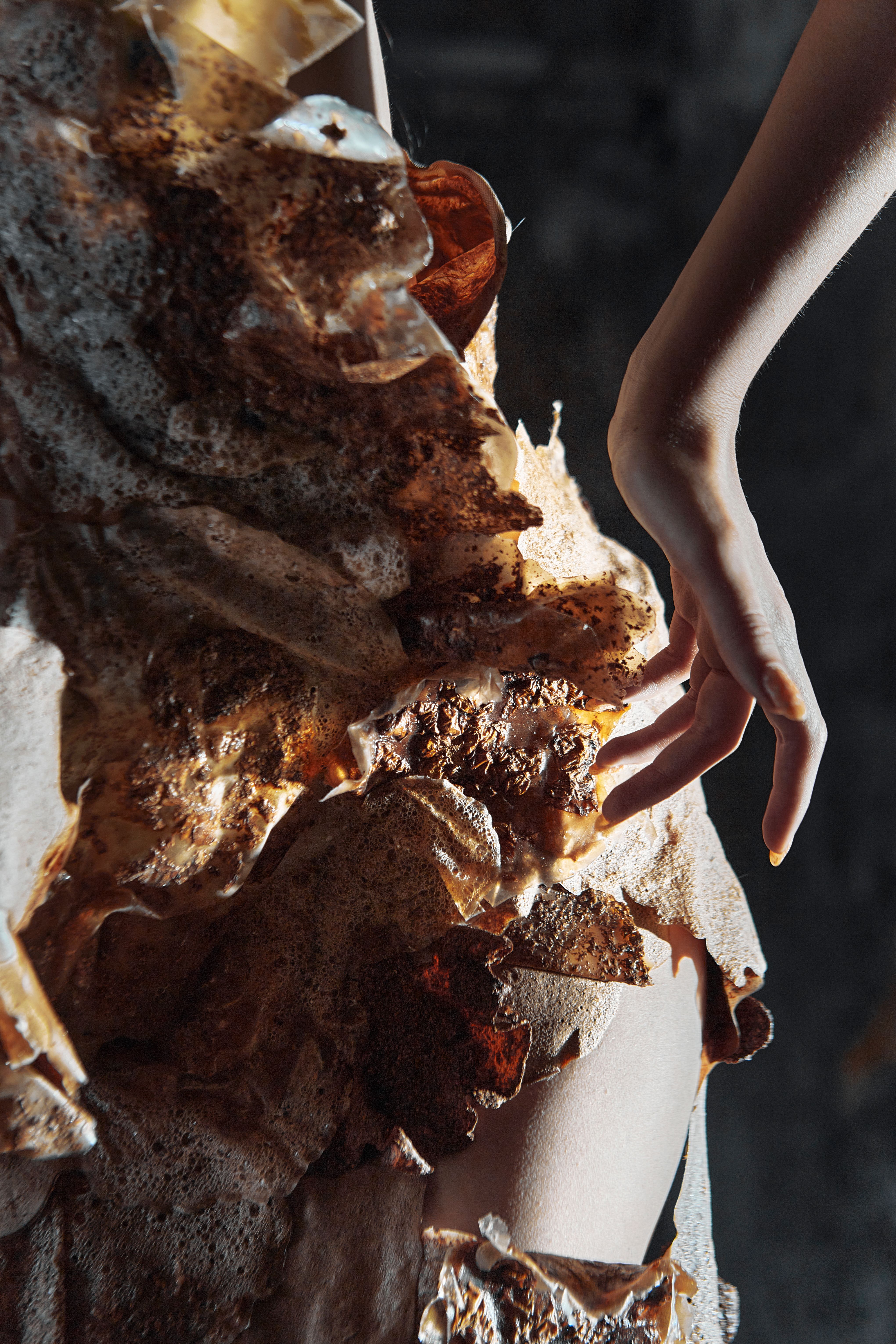
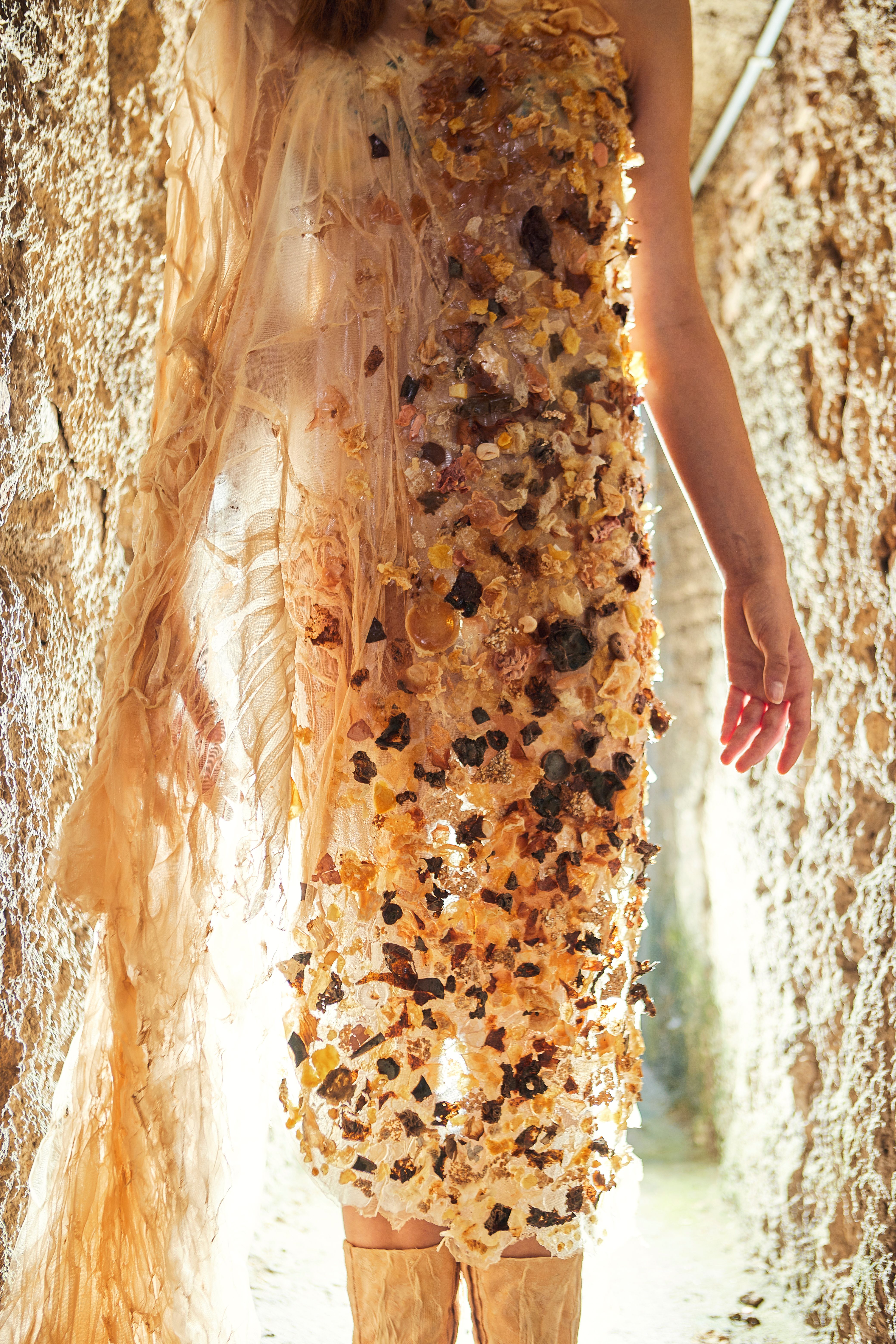
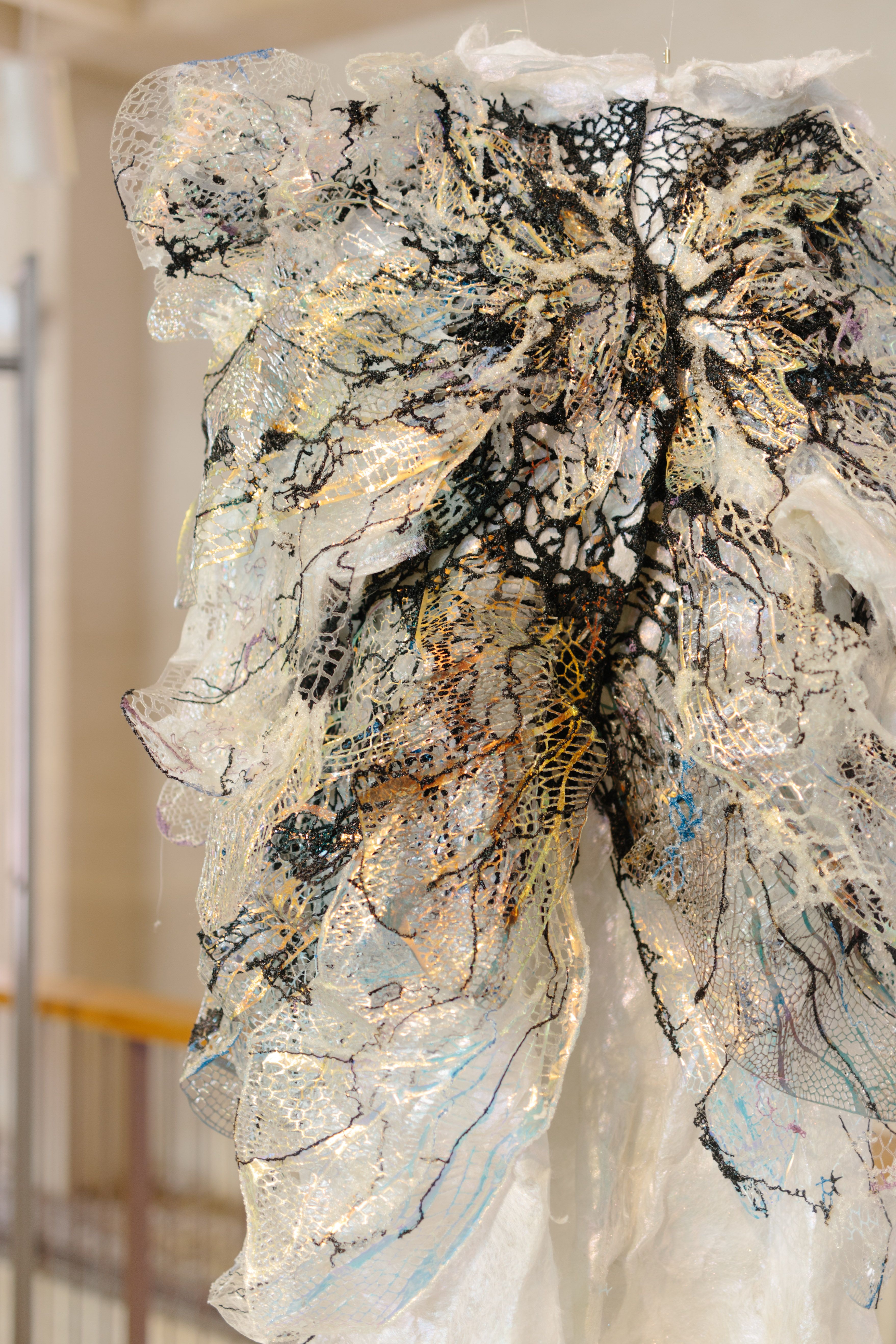
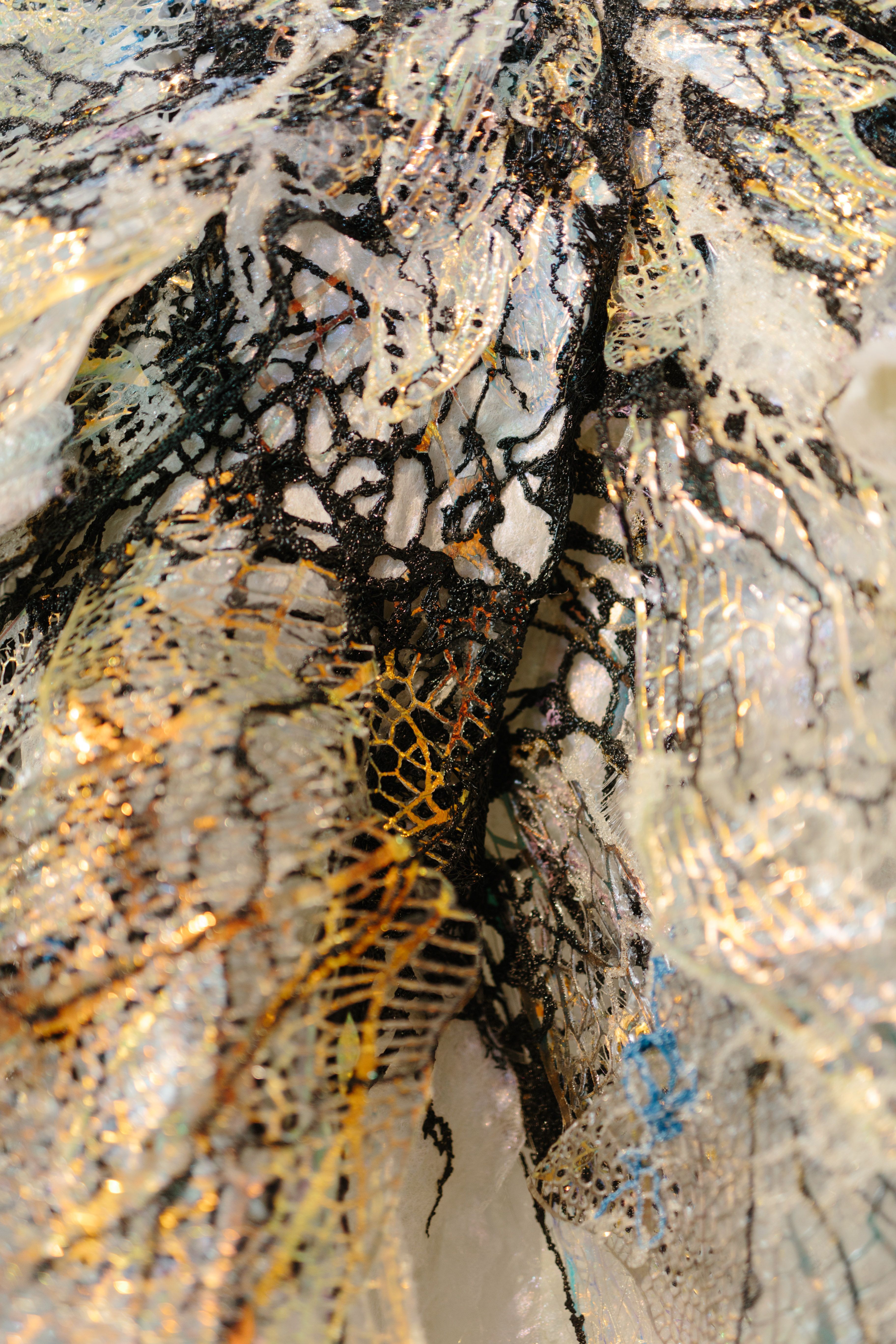
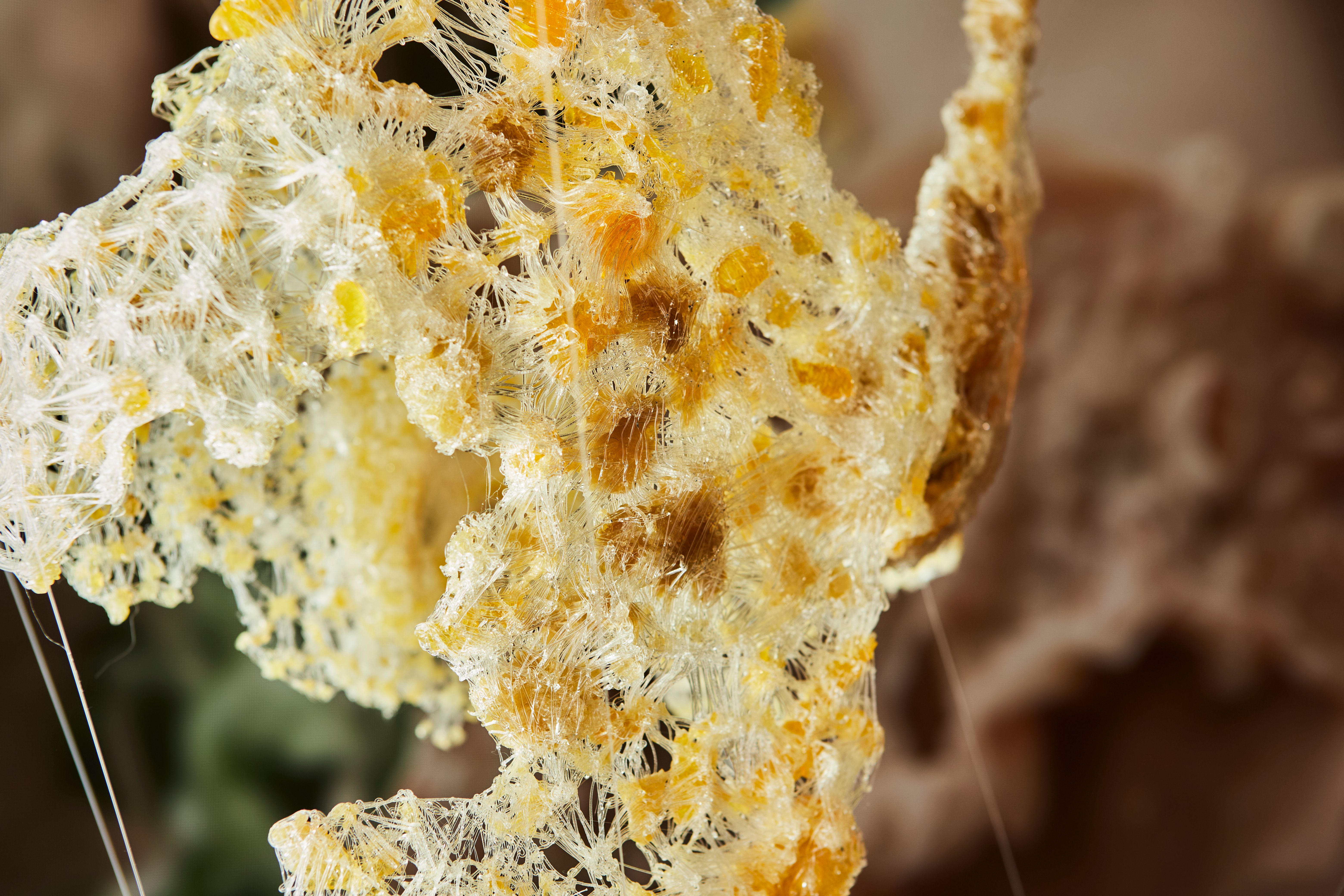
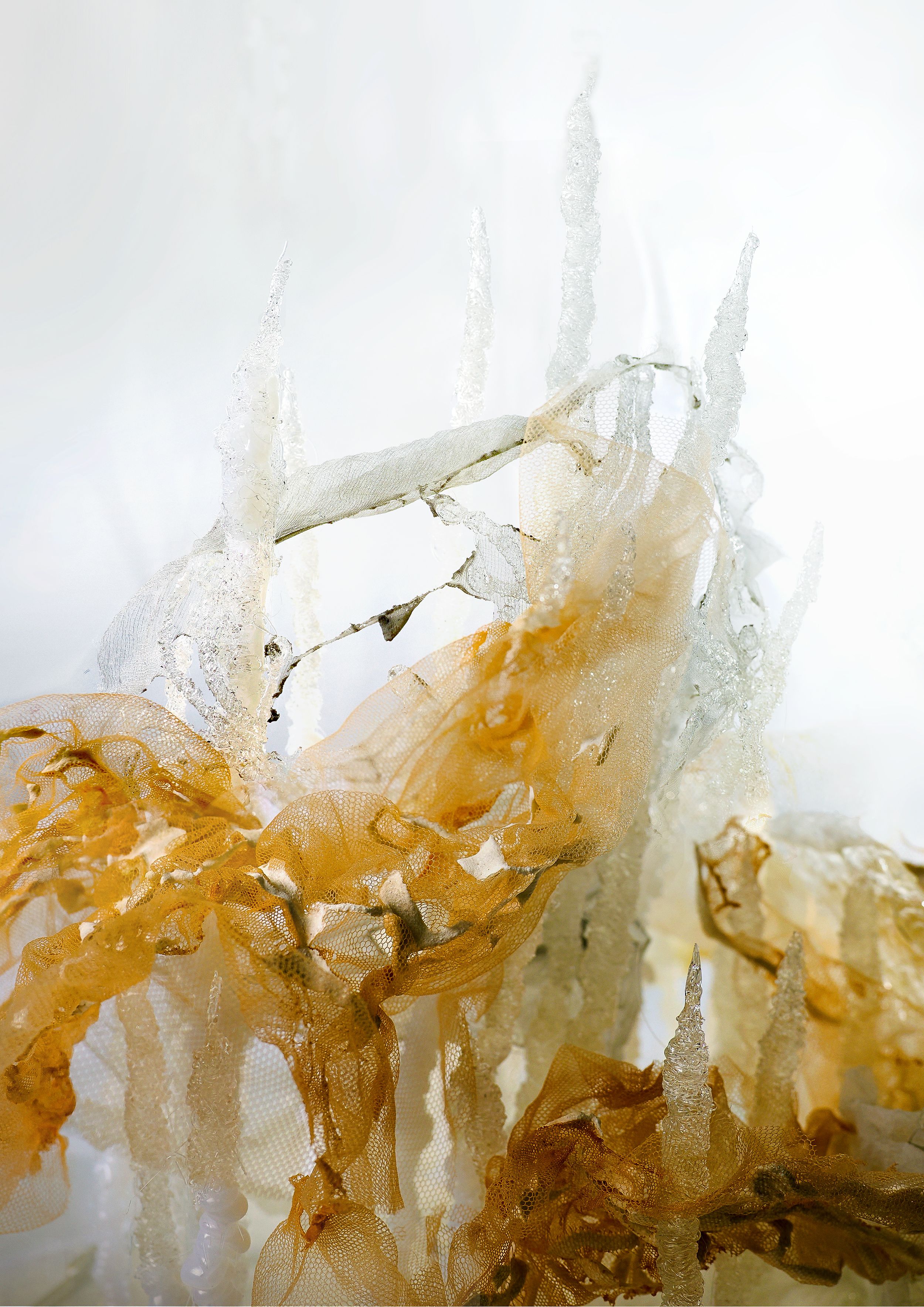
In the studio, we work on different types of projects: some are commissions, others are exhibition-based, and we also develop small collections of our own. Depending on the nature of the project, we integrate sustainability in different ways. Many of our pieces are one-of-a-kind, which already limits the logic of mass production. Additionally, in our material research process, we often reuse previous tests, recycle, and combine previously explored elements. It’s a way of not discarding what’s already been done and of incorporating the past into the new. We also work, whenever possible, with biomaterials, natural-origin materials, many of which are created in our own studio using bioplastics or even mycelium, which we recently used in an installation. We also use recycled fabrics and other materials we've developed ourselves. All of this depends on the time available for research in each project.
Some of your pieces incorporate biodegradable materials, waste-based textiles, or experimental composites. What challenges have you faced in working with these materials?
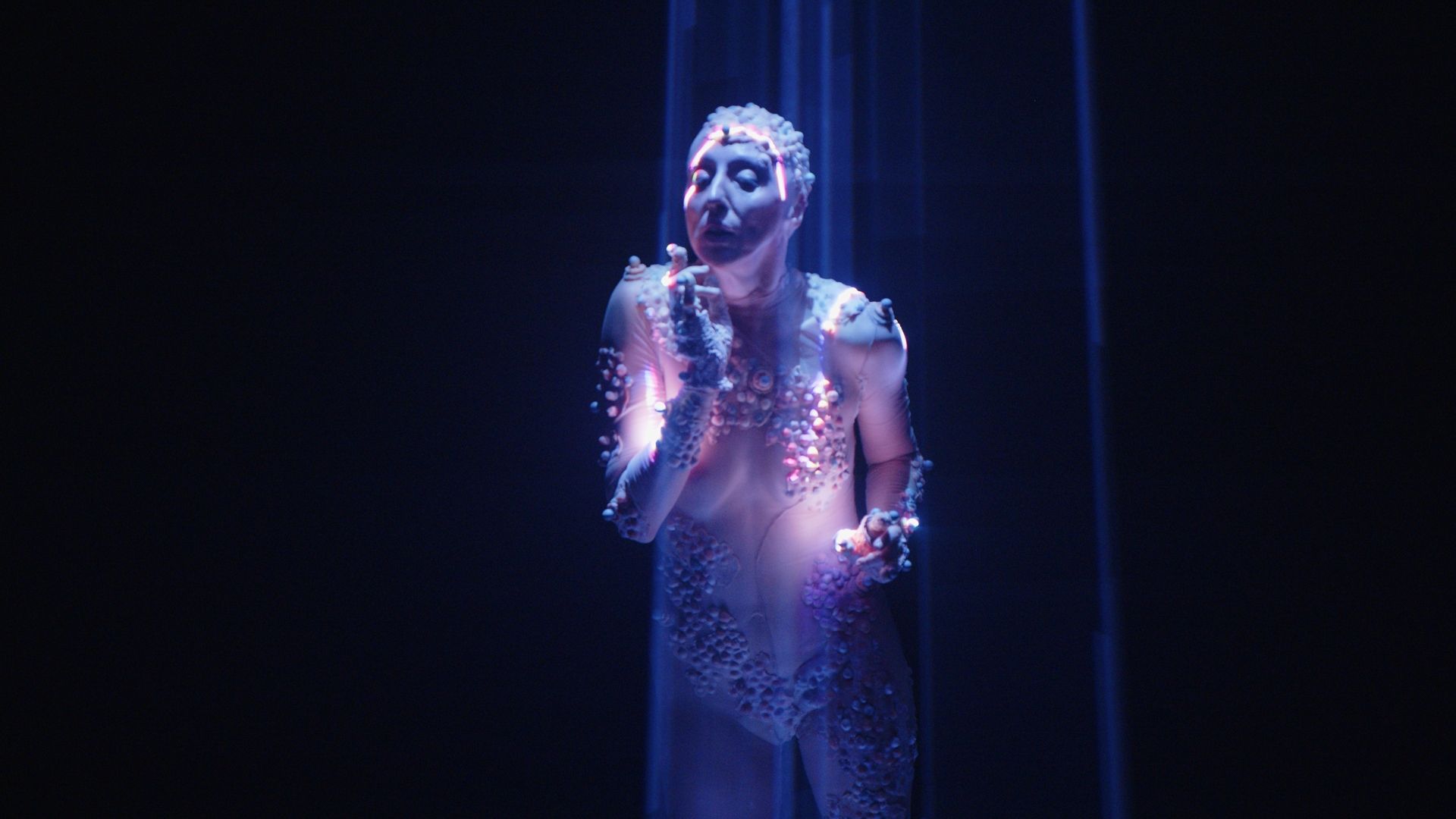
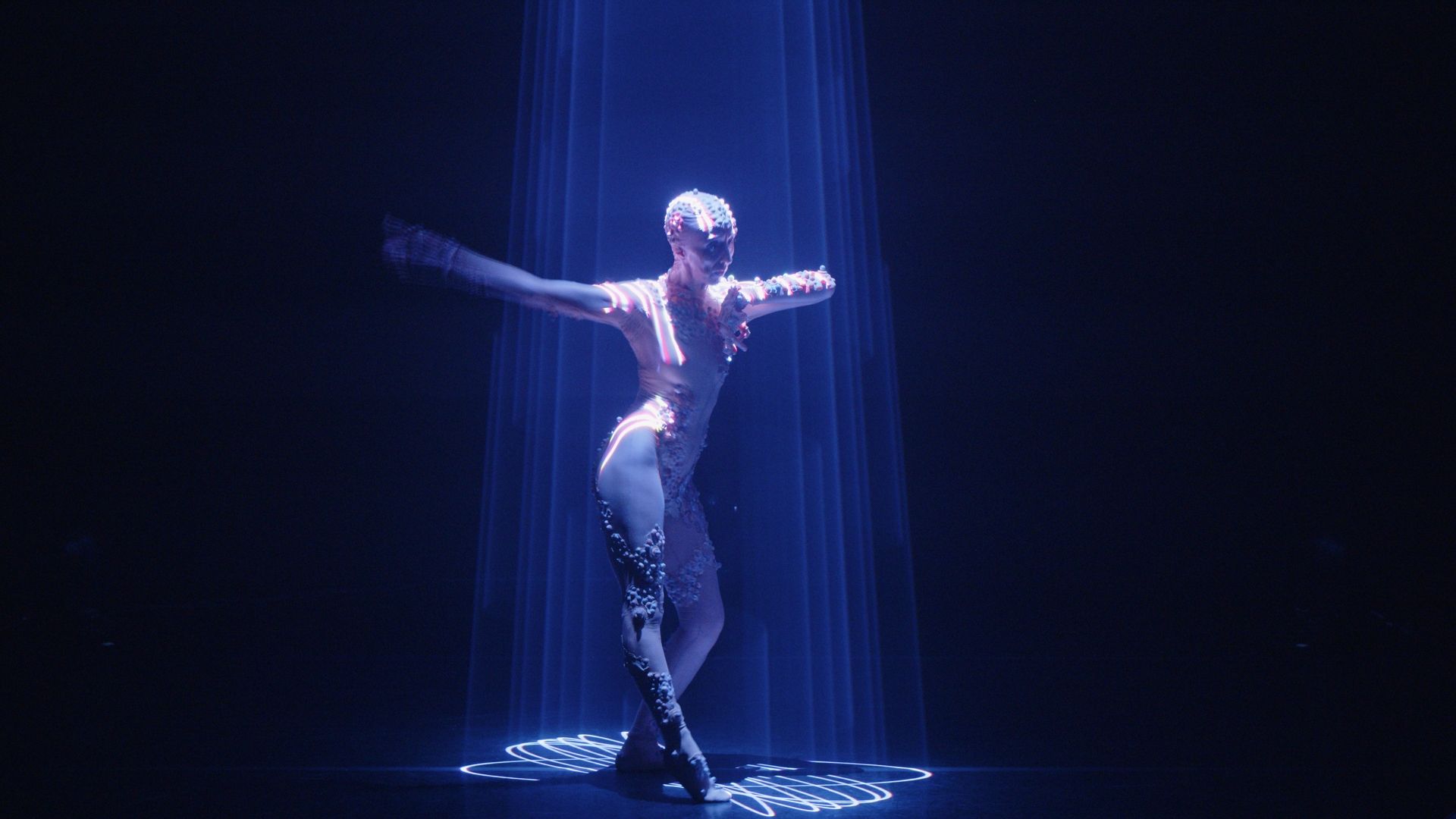
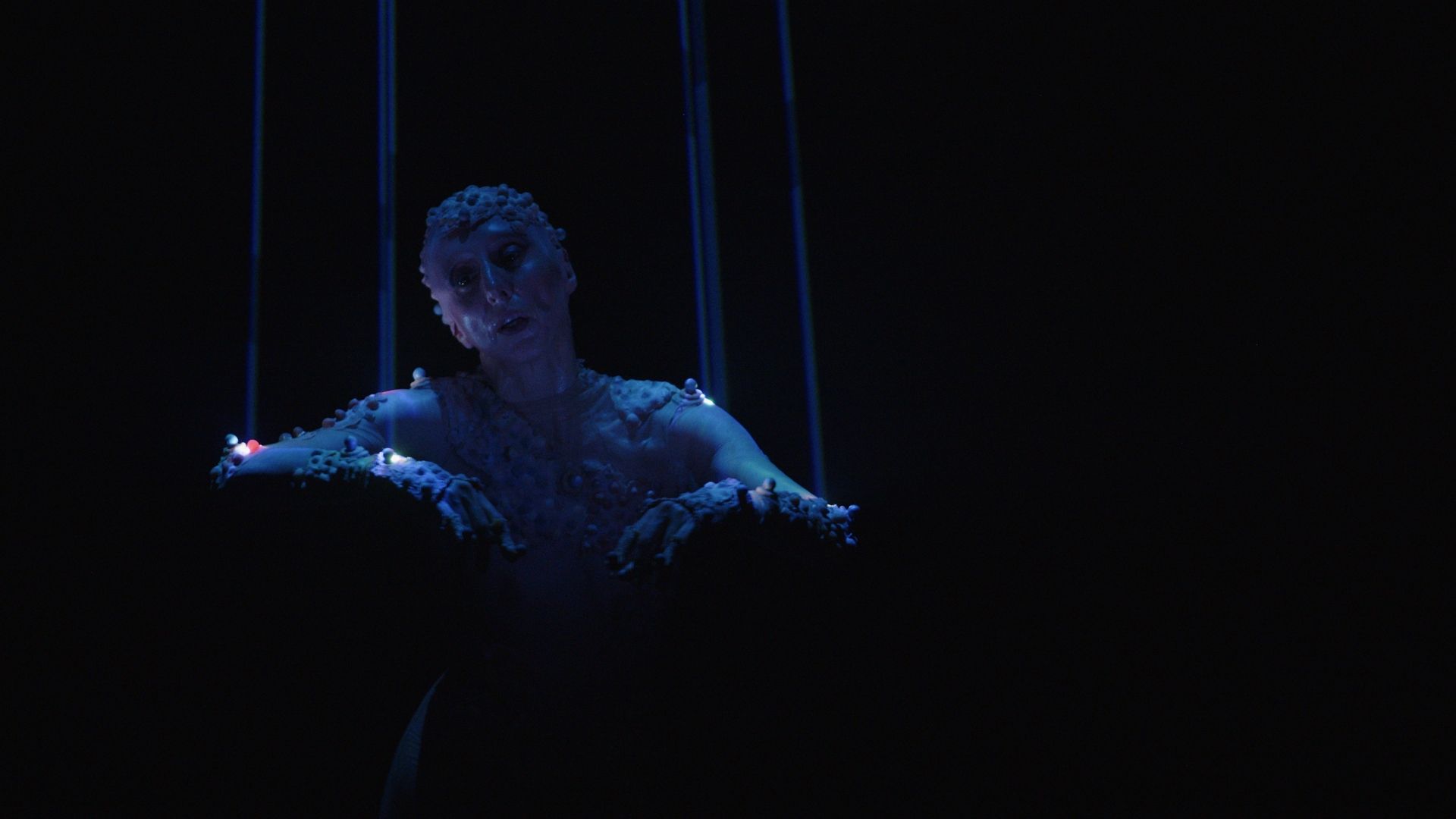
In a project we carried out for an institute of dance and technology, working with biomaterials led us to ask questions like: how do you wash these garments? How do they behave with sweat? How do they adapt to the body and movement? From how the material breathes to its durability in a stage environment, everything becomes part of the experimental process.
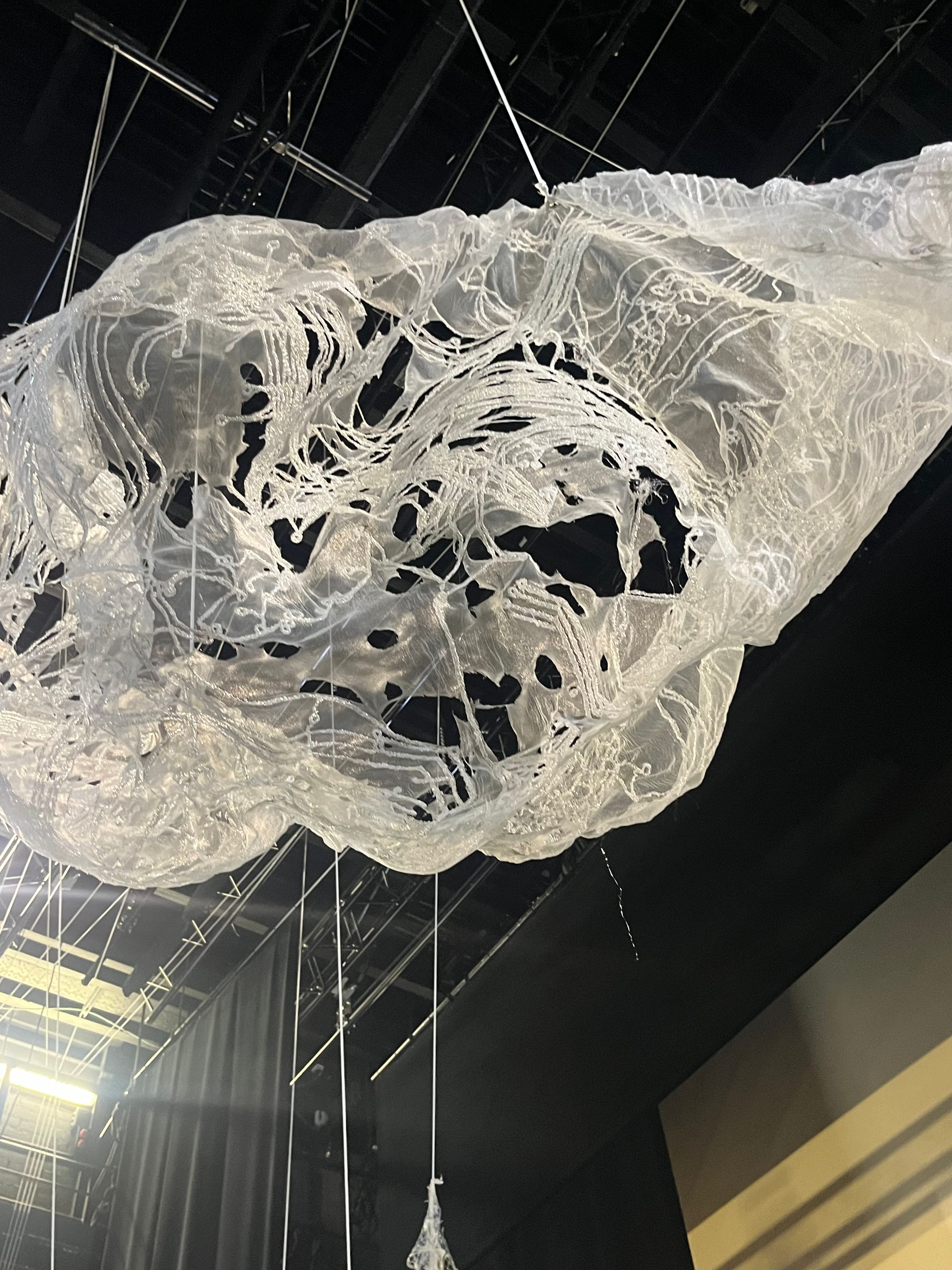
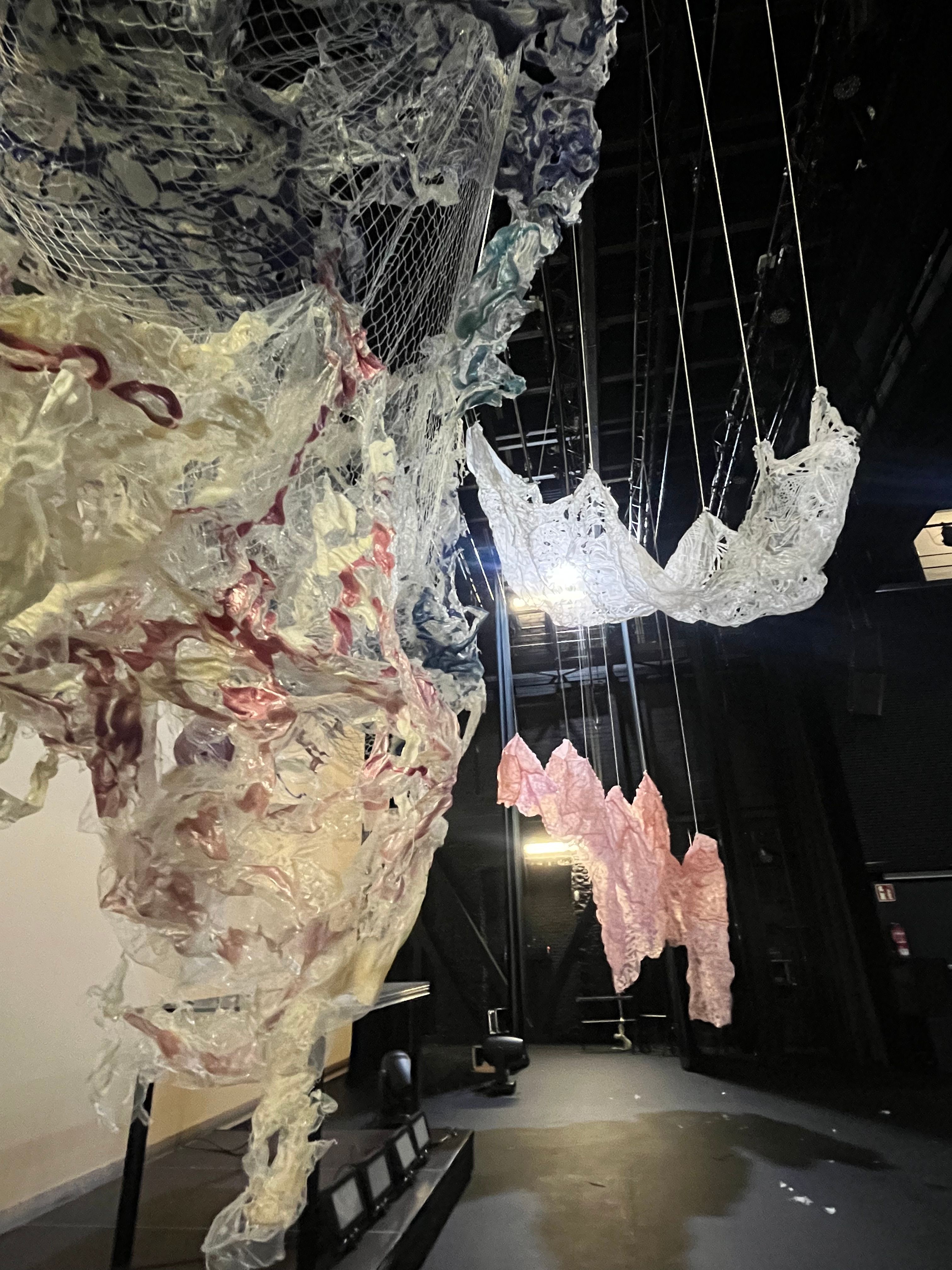
We also just created a stage design, and in that case, the challenge was the scale. In the studio, we work in a very handcrafted way, we do everything ourselves, so dealing with larger formats involves a completely different kind of logistics. There are many variables to consider, and often we’re not fully aware of the complexity until we’re deep into the process.
Your work combines handcraft techniques with digital fabrication. How do you balance the traditional and the technological in your creative process?
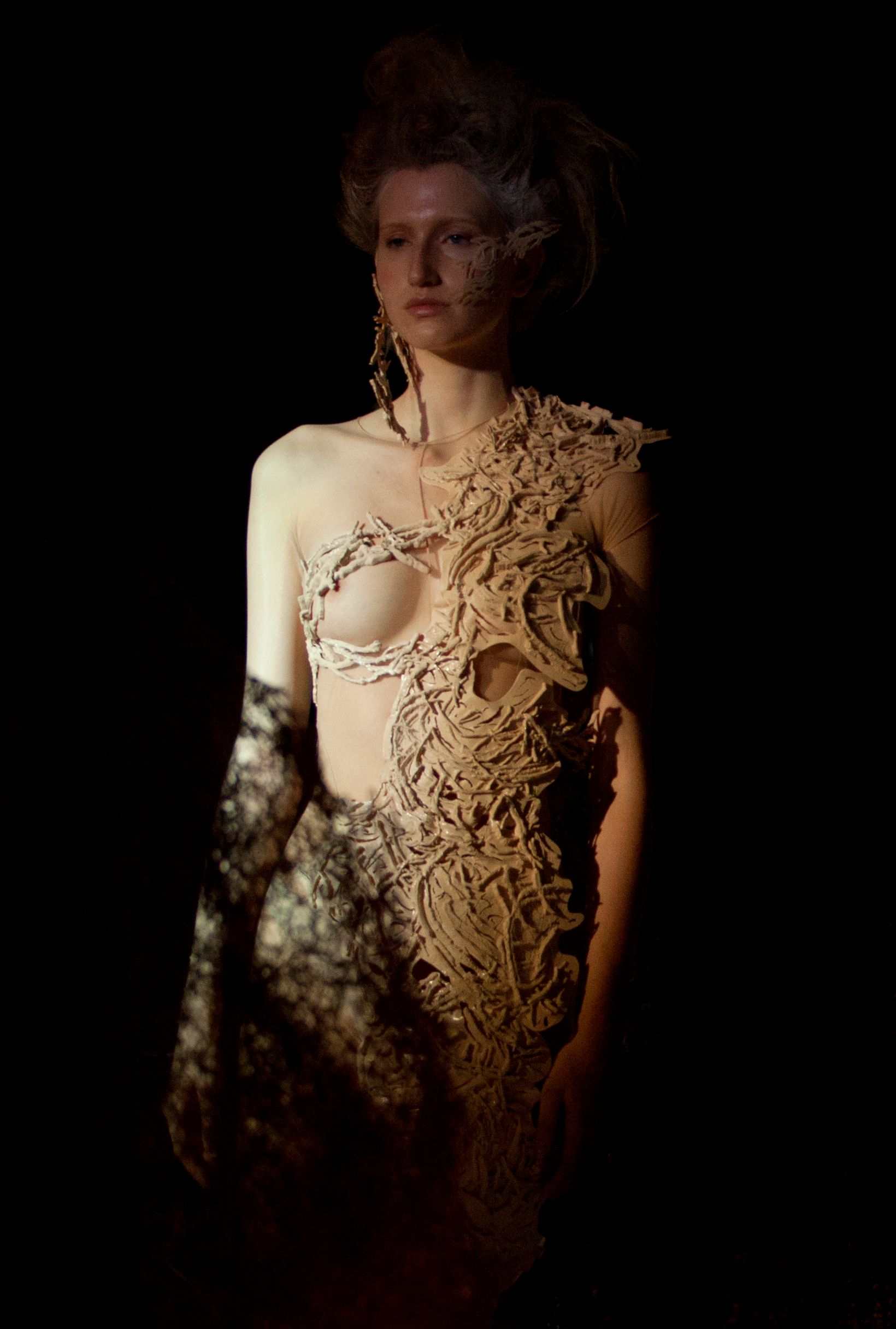
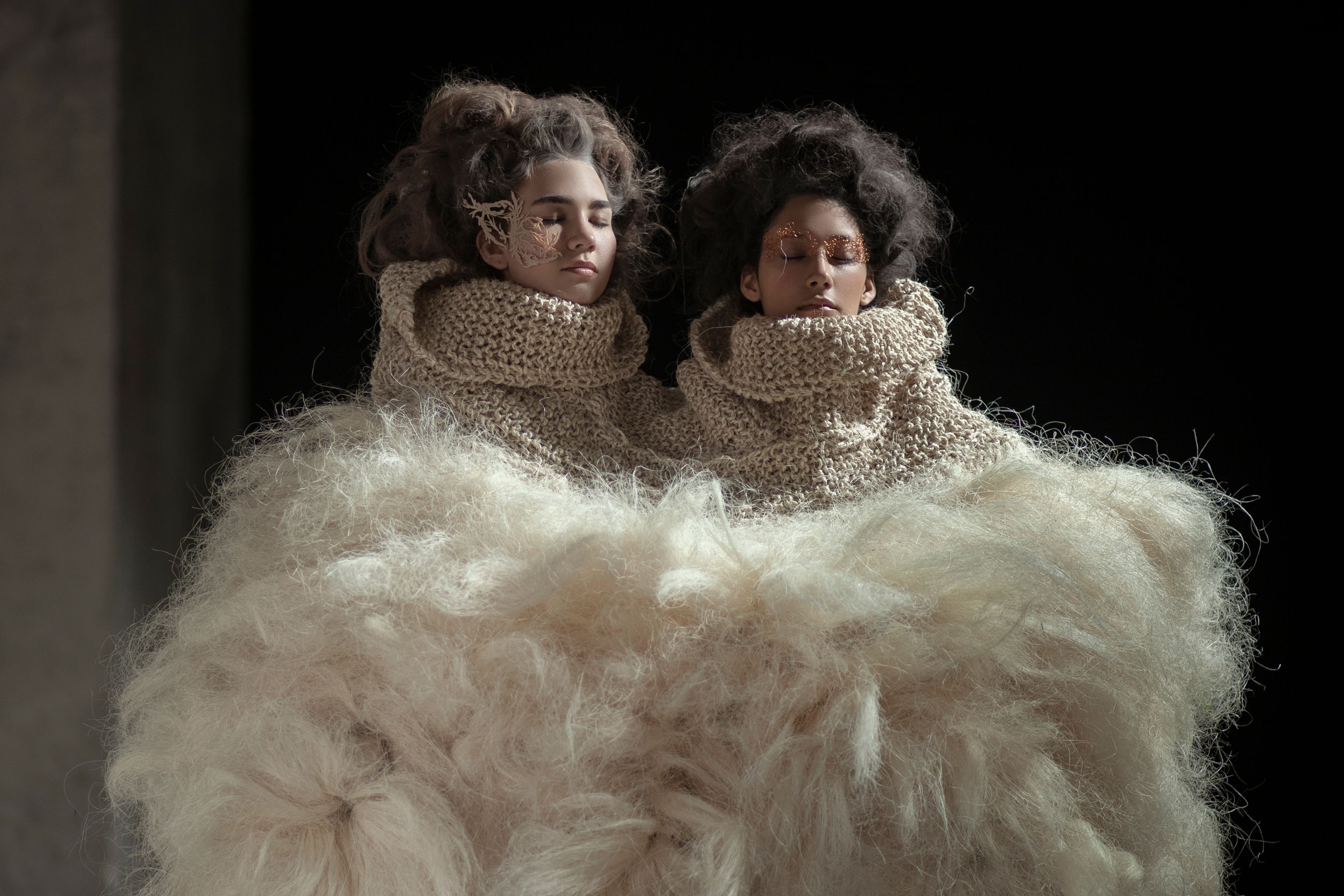
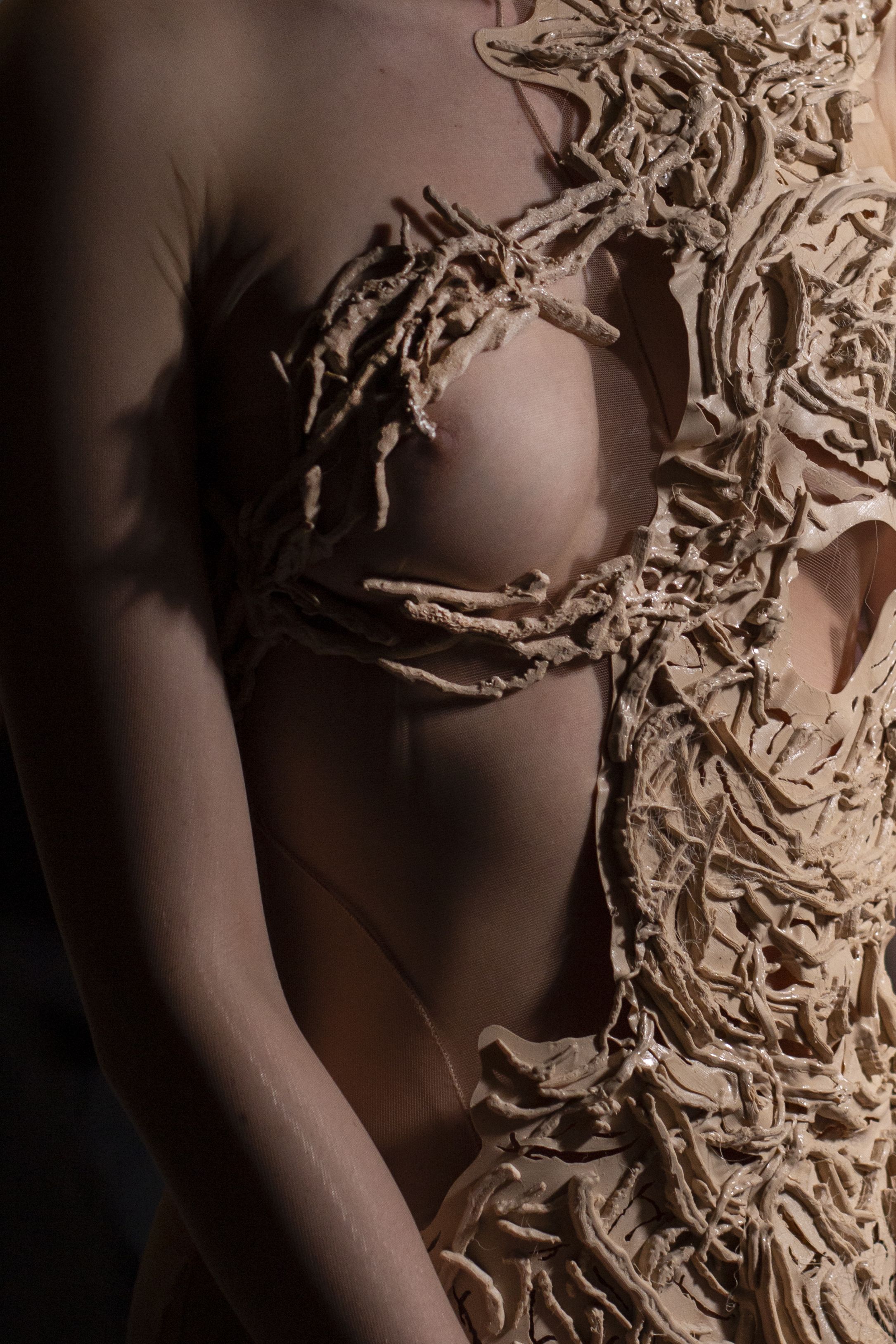
I'm particularly interested in the mix between handcraft techniques and digital fabrication. For example, in a collection I presented at Mercedes-Benz Fashion Week titled Nidos, we used 3D printing with PA, a material with a more refined component, combined with recycled wood. But the goal wasn’t to let the 3D printing produce a polished final result. On the contrary, we wanted to intervene with handcrafted techniques so that a constant fusion would always be present.
We're currently exploring 3D printing with biomaterials, starting from handmade materials and integrating them into digital processes. For me, craft and technology are complementary tools that, when combined, give rise to new and unique materialities.
Many of your projects involve collaborations with engineers, scientists, or technologists. How do these interdisciplinary dialogues shape your work?
There’s a very hands-on side to the studio, developing materials and crafting unique pieces, but collaboration is just as essential. We created a garment for a dance and technology institute that integrated motion capture sensors. Working with technical specialists was incredibly enriching. It taught me how clothing can go beyond function to become an interactive, evolving stage: responding with light, sound, and even AI.
What interests me is how something technical, like a sensor, can become a handcrafted second skin through design. Collaborations—like the recent set we created for artist Chenta Tsai Tseng (Puto Chino Maricón)—are essential to my practice. They open up new perspectives and push the work beyond its limits.
Can you tell us more about your latest project? What ideas or themes are you currently exploring?
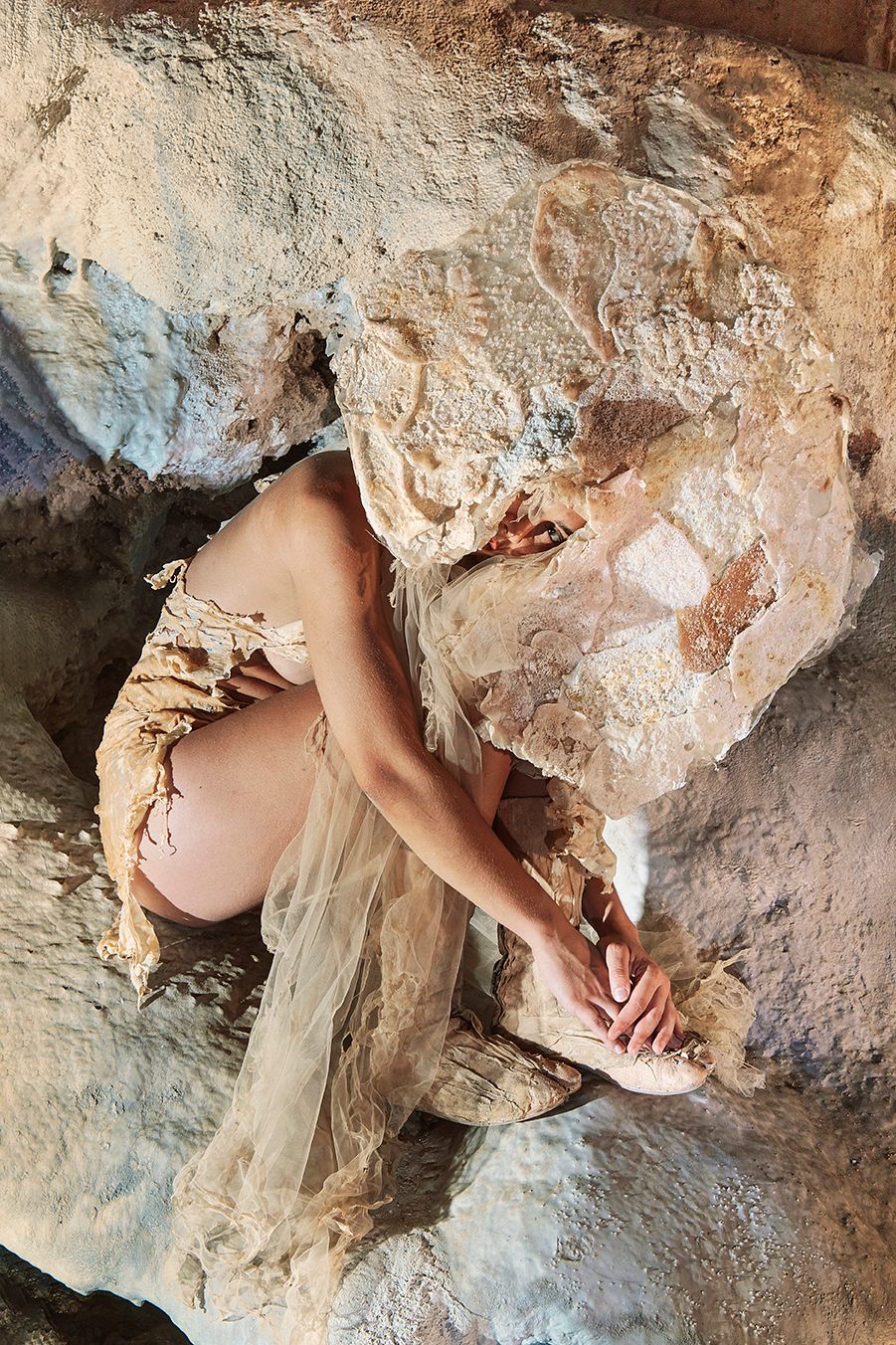
Right now, we’re working on a project called Karst, which will be presented at the Círculo de Bellas Artes in Madrid this May, and later in Santiago and Rome. It’s a collaboration with the RESIS Festival, and with the contemporary music orchestra led by composer Hugo Gómez-Chao. The project also involves Luz Arcas, National Dance Award recipient and director of La Phármaco. Together, we’re developing a fascinating piece that blends sculpture, scenography, costume design, contemporary music, and the body.
You recently collaborated with Elena Rocabert on the exhibition Un agujero en mi jardín, part of the Madrid Design Festival 2025. Can you tell us more about the exhibition and what this collaboration meant to you?
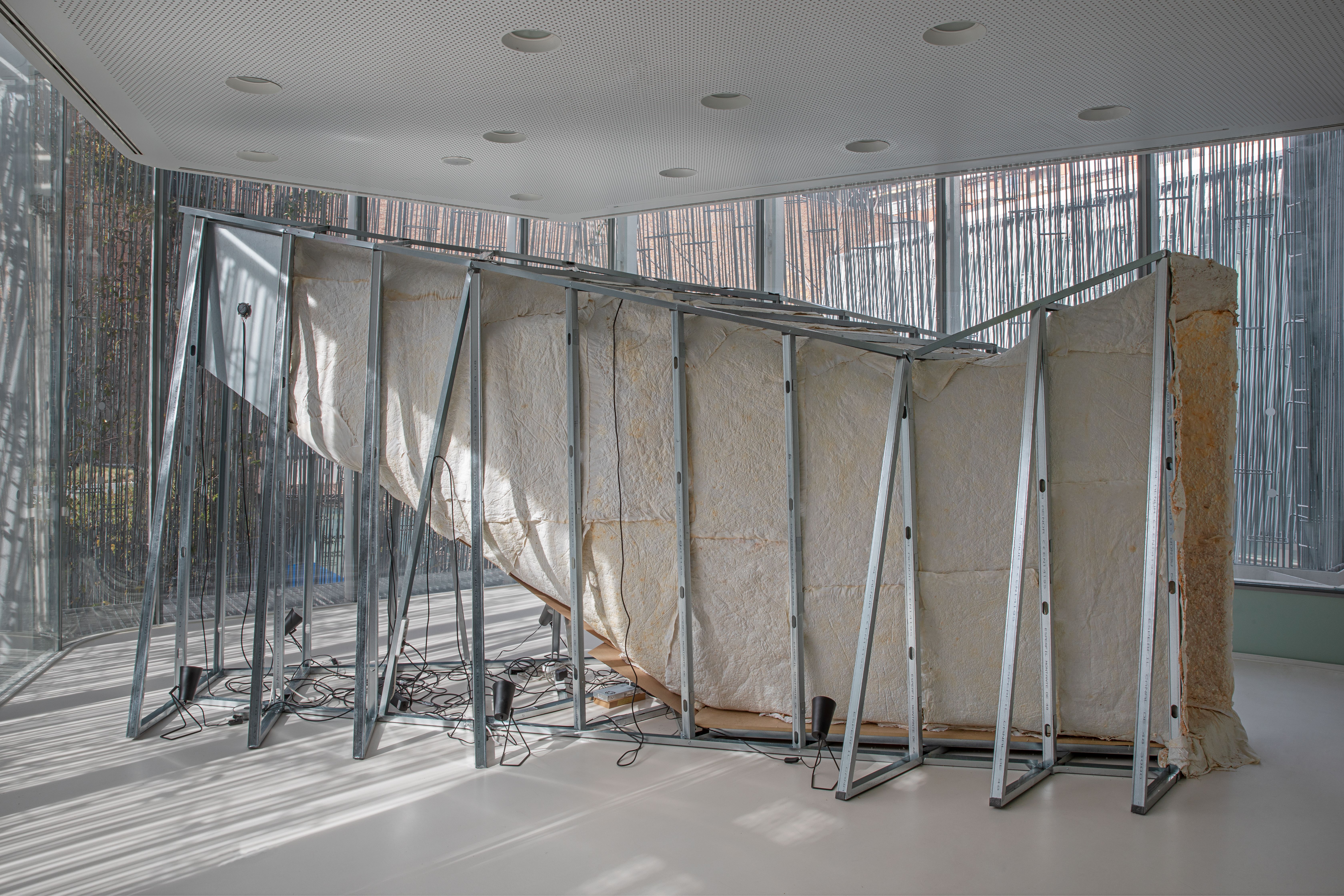
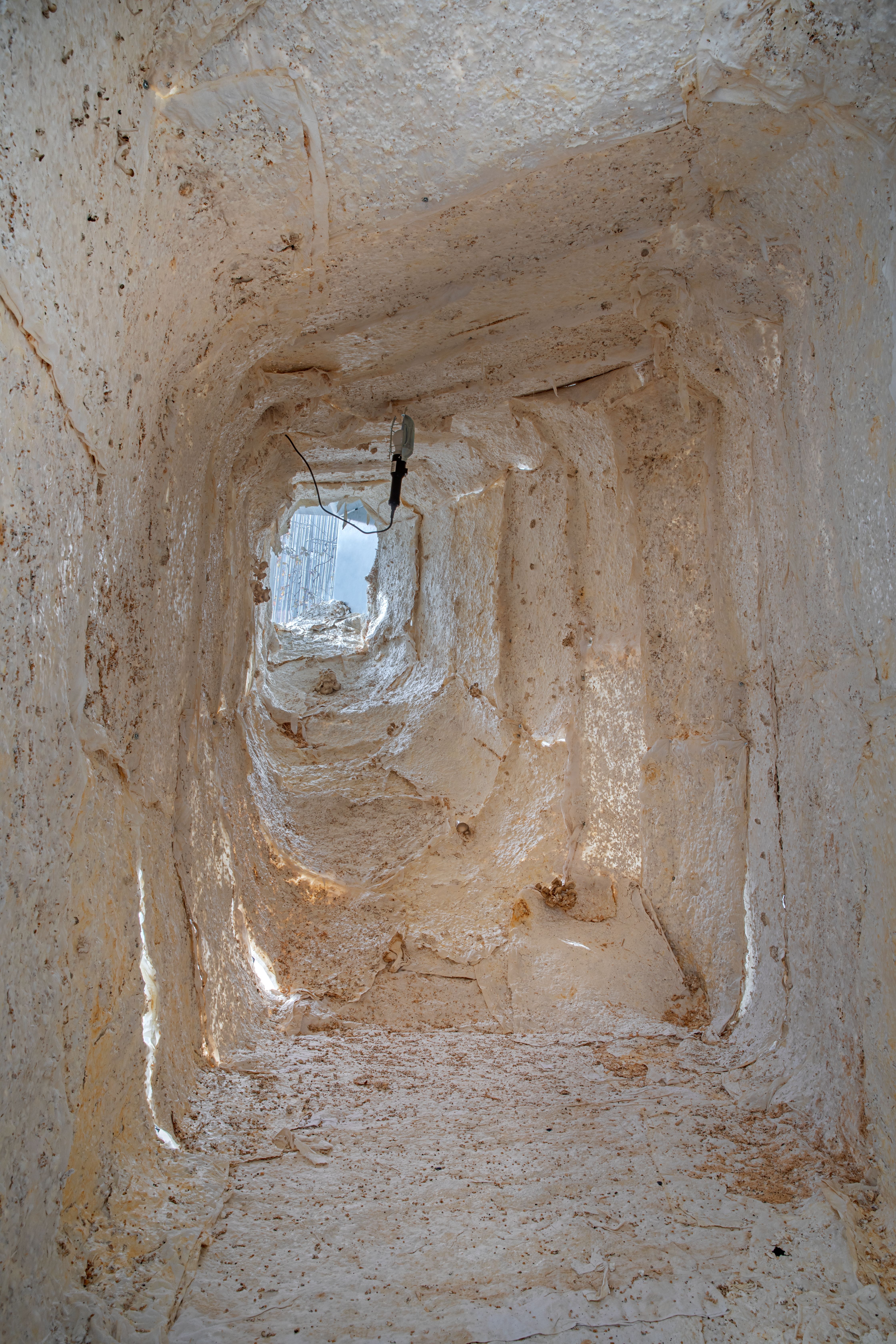
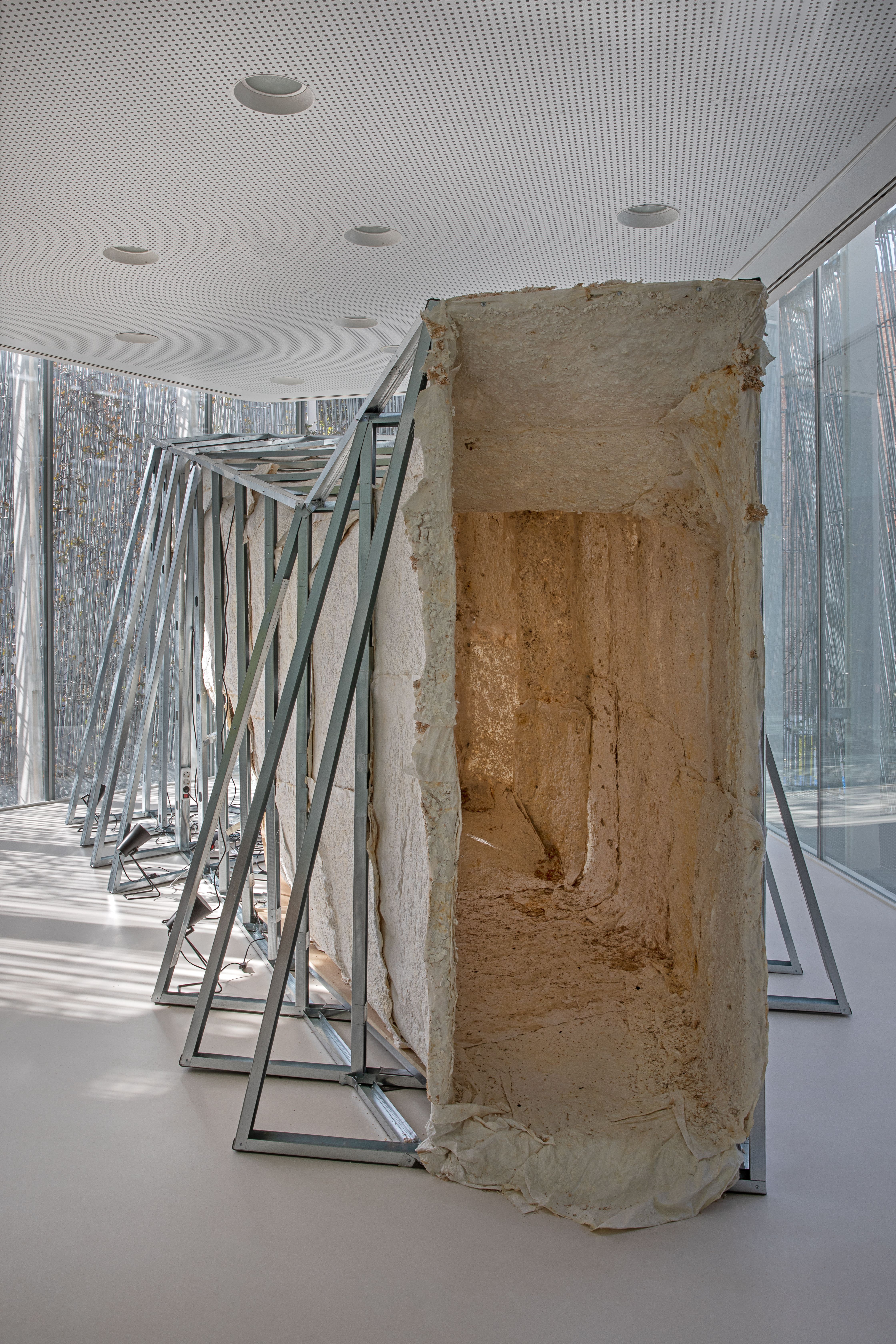
This collaboration was very special because we worked with a material both Elena and I are passionate about: mycelium—a living biomaterial that grows its own structures and forms part of the underground network connecting ecosystems. We were drawn to it both for its symbolic meaning and creative potential. As part of the Madrid Design Festival and in collaboration with the IED, we created an immersive installation titled Un agujero en mi jardín. The goal was to explore biomaterials through a sensory experience: symbolically digging into the earth, smelling the mycelium, watching it grow, and reconnecting with nature in a different way.
While the material itself isn’t expensive, the process was intense: weeks of hands-on work with students from the master’s program, cultivating mycelium panels. It was a collective, experimental project full of uncertainty, since biology doesn’t always follow exhibition timelines, but that unpredictability made it all the more rewarding.
You mention Neri Oxman as one of your main influences. What aspects of her practice do you find most inspiring, and in what ways do you see parallels with your own work?
Neri Oxman is a key reference in my work. I’m inspired by how she merges science, nature, design, and technology through a multiscale, transdisciplinary approach. Her way of treating materials as living systems that grow and interact resonates deeply with my practice.
In my work, biomaterials and digital fabrication are central. I often start with natural substances and integrate them into processes like 3D printing. For me, handcraft and technology are complementary tools for experimentation.
Though my approach is more artisanal and intuitive, I also move across disciplines, collaborating with artists, dancers, and scientists. Coming from architecture, I think in terms of relationships: between materials, the body, and the environment. Like Oxman, I hope to expand these connections through deeper collaborations with science.
What other influences have shaped your artistic practice?
I have many influences. One of the most important is Iris van Herpen, whose work I find incredibly powerful. Like Neri Oxman, I admire her ability to connect fashion with other disciplines and think across multiple scales. Her mix of traditional craftsmanship with unconventional materials, often drawing on haute couture but reimagined through a futuristic lens, is truly fascinating.
Her aesthetic world, full of marine, mythological, and organic references, has also deeply inspired me. Other key influences include Bart Hess and Lucy McRae, who work from the body and blur the lines between art, design, and science.
Designers like Hussein Chalayan and Issey Miyake have shaped my conceptual and performative approach. And beyond fashion, I’m constantly inspired by biology, nature, and architecture; fields that inform and enrich my practice in unexpected ways.
What’s next for Buj Studio?
I’m currently focused on a long-term project that combines art, science, and material research—less about urgency, more about process. We’re also searching for a new studio to support a more flexible practice across different contexts. Coming up, I’ll be part of a group show at MAXXI in Rome, presenting my project on ointments: a significant milestone in my work.