Interview with Raphaël Barontini
A Carnivalesque Representation of Memory
Through a distinctive visual language that merges painting, textiles, and performance, Raphaël Barontini transforms history into a dynamic, ever-evolving narrative. His work connects with the memory of the African and Caribbean diasporas, reinterpreting figures and symbols as powerful statements of resistance and celebration.
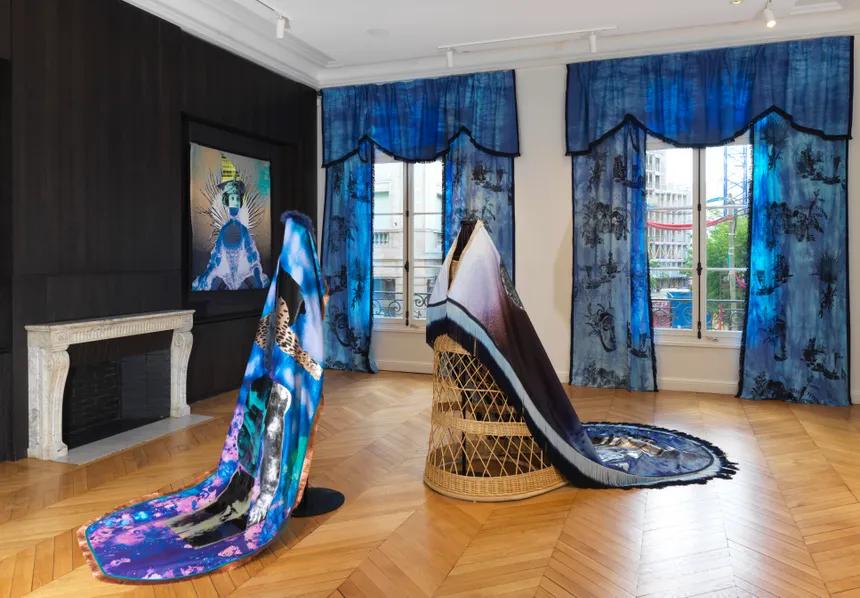
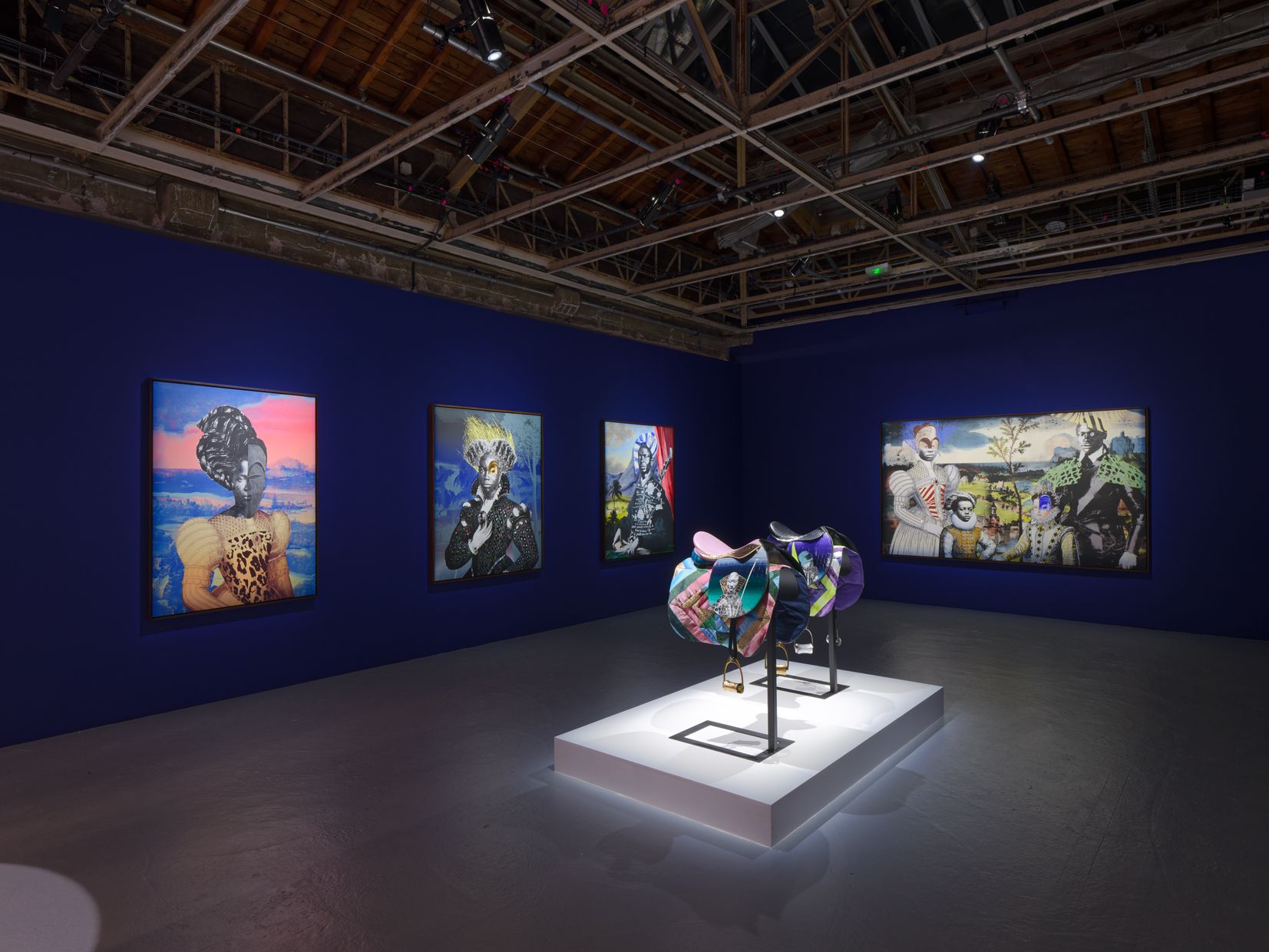
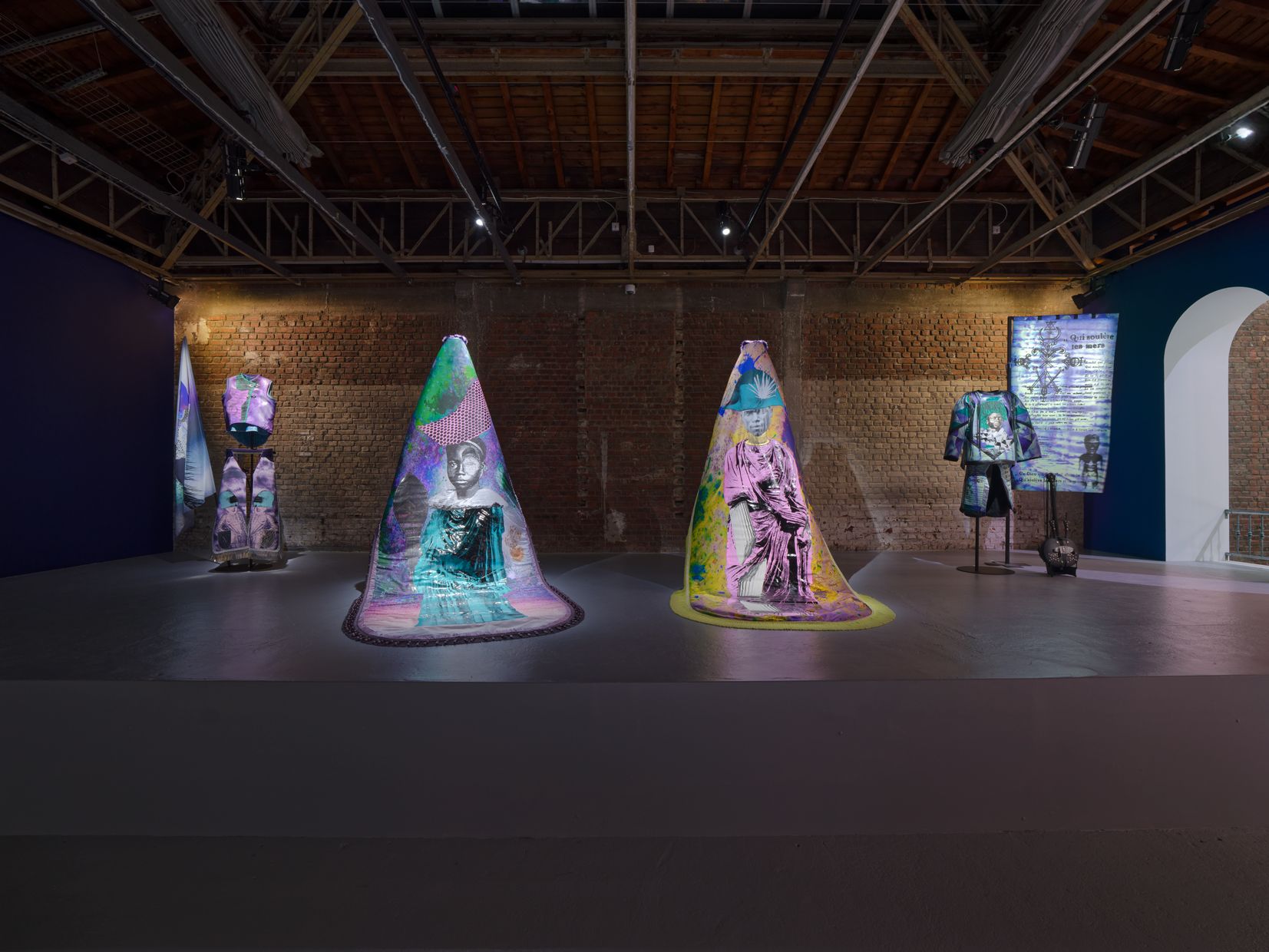
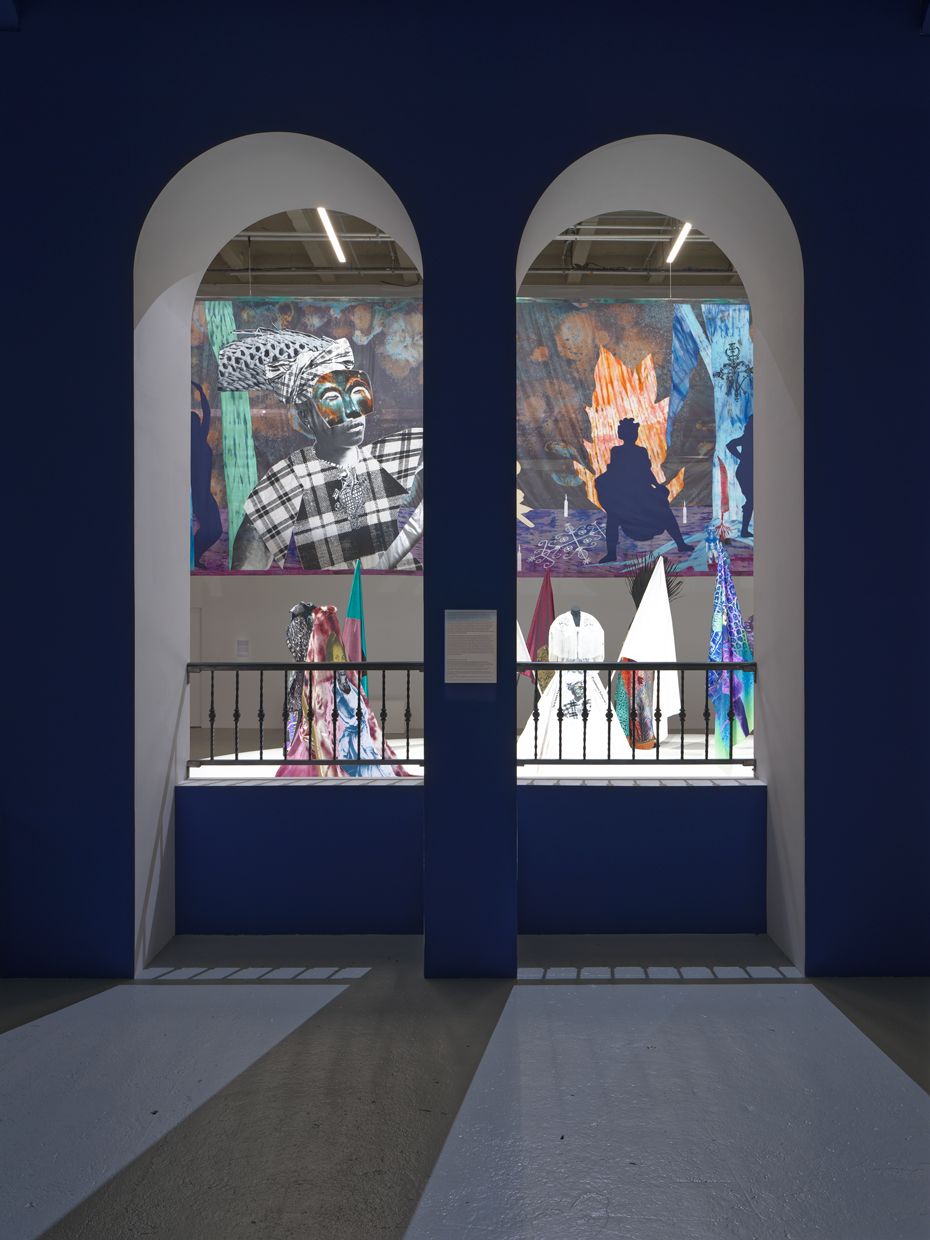
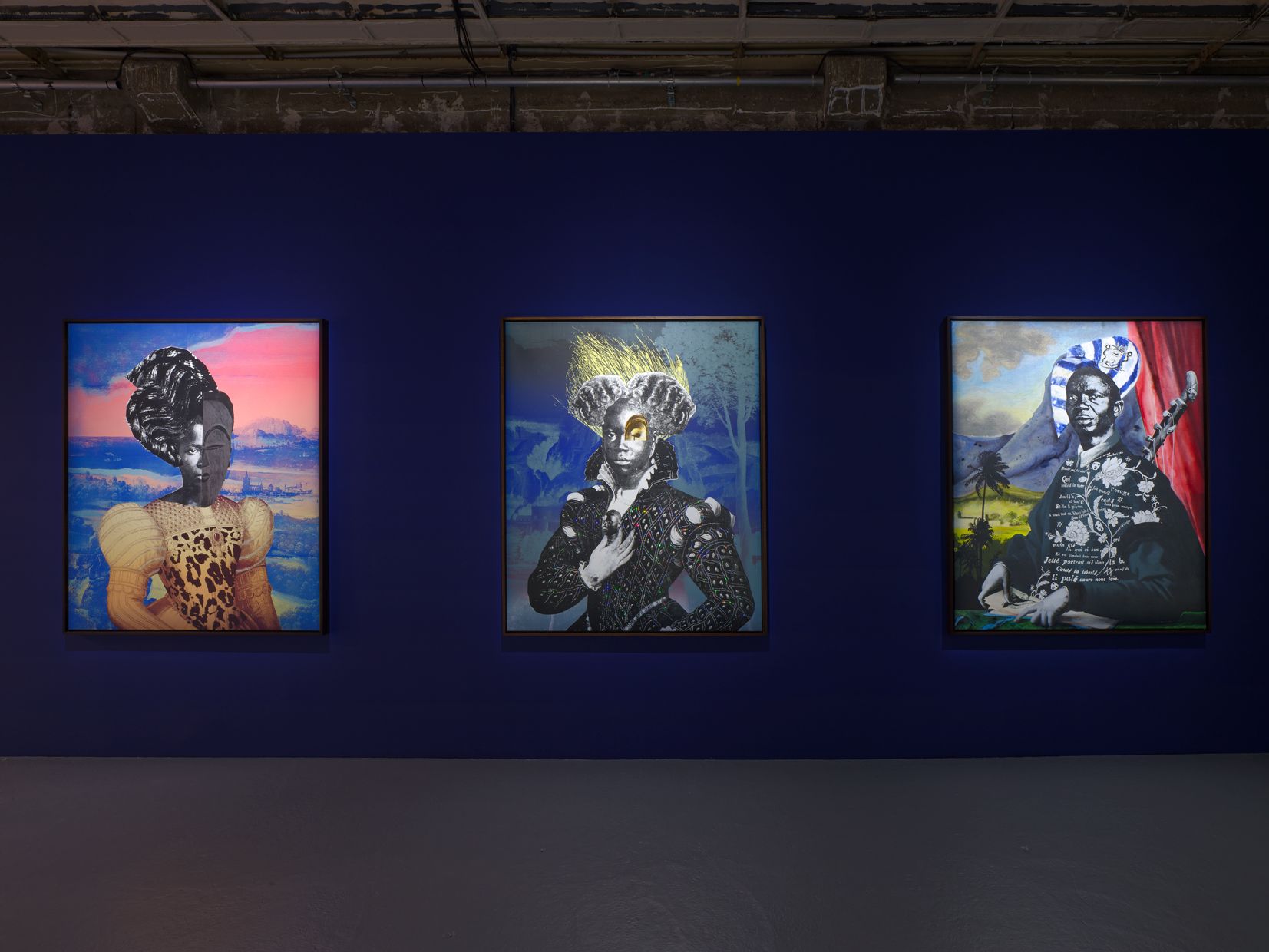
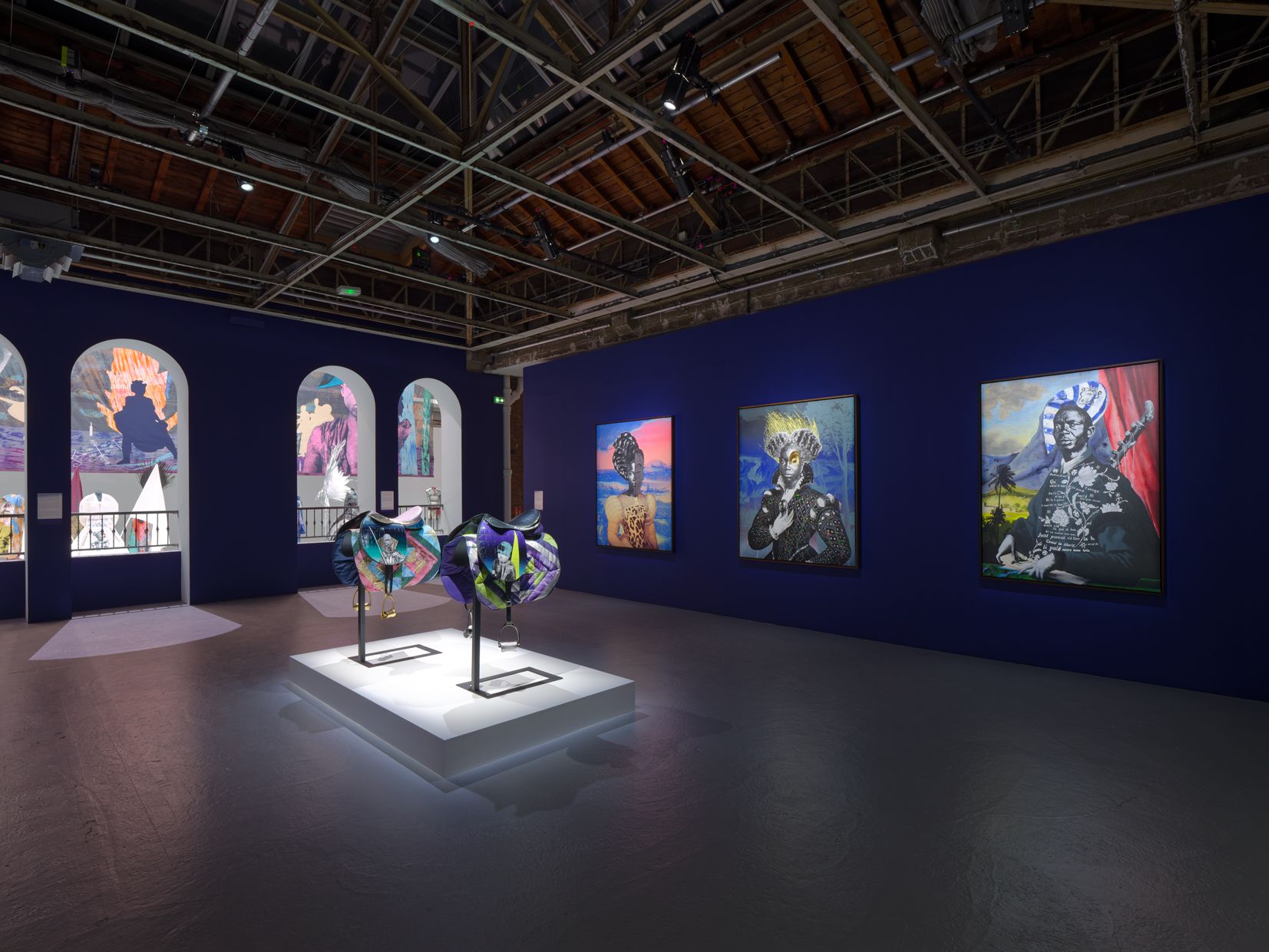
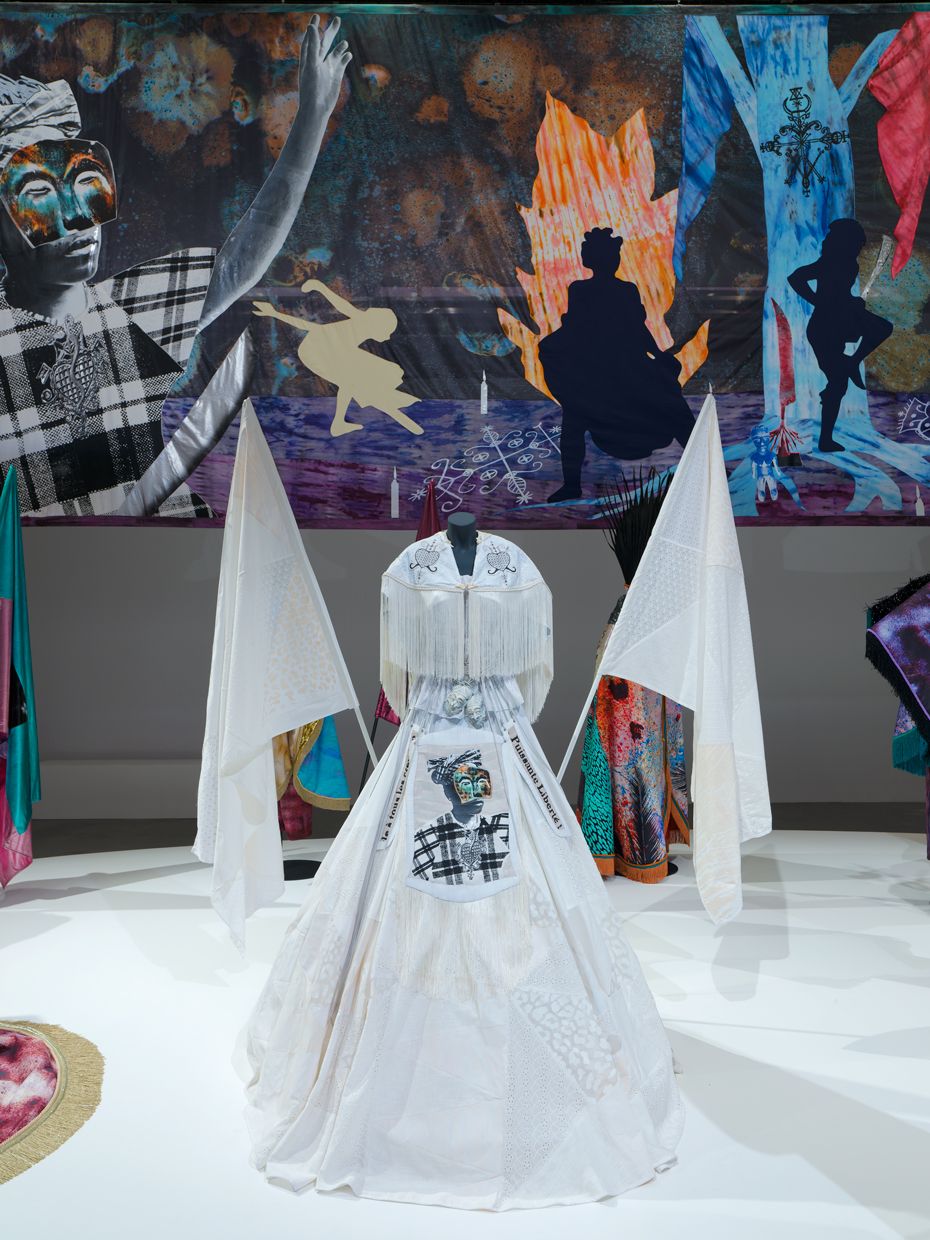
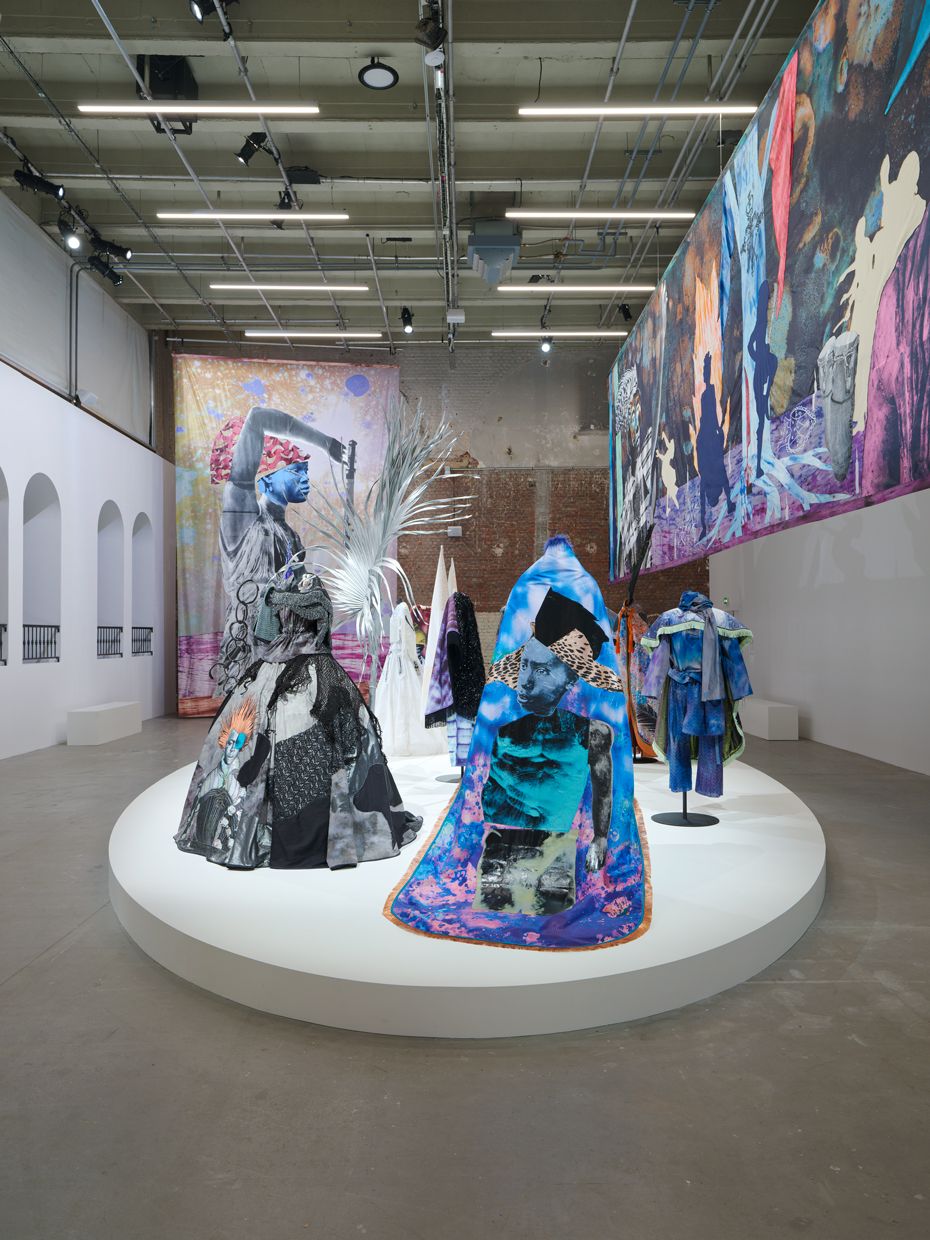
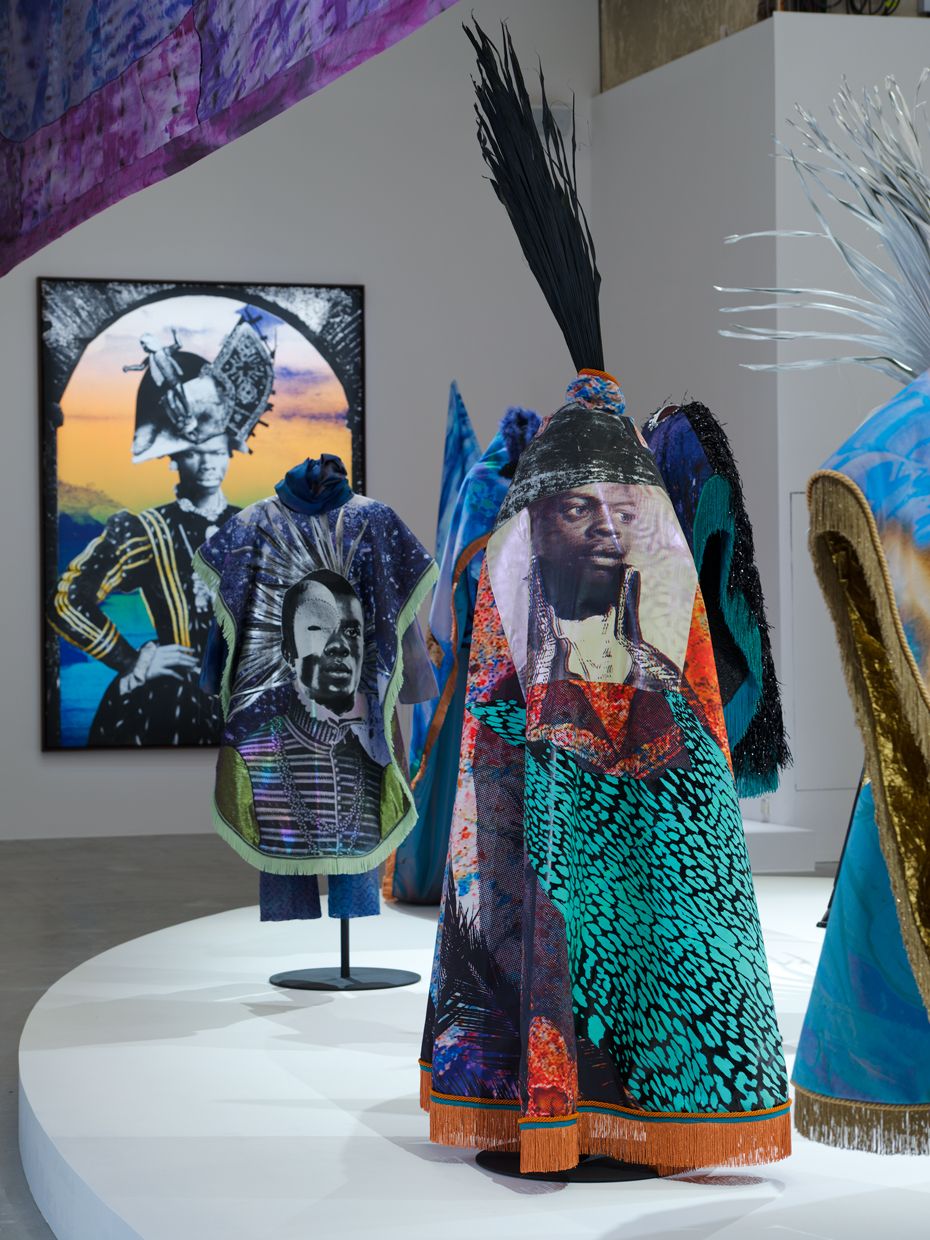
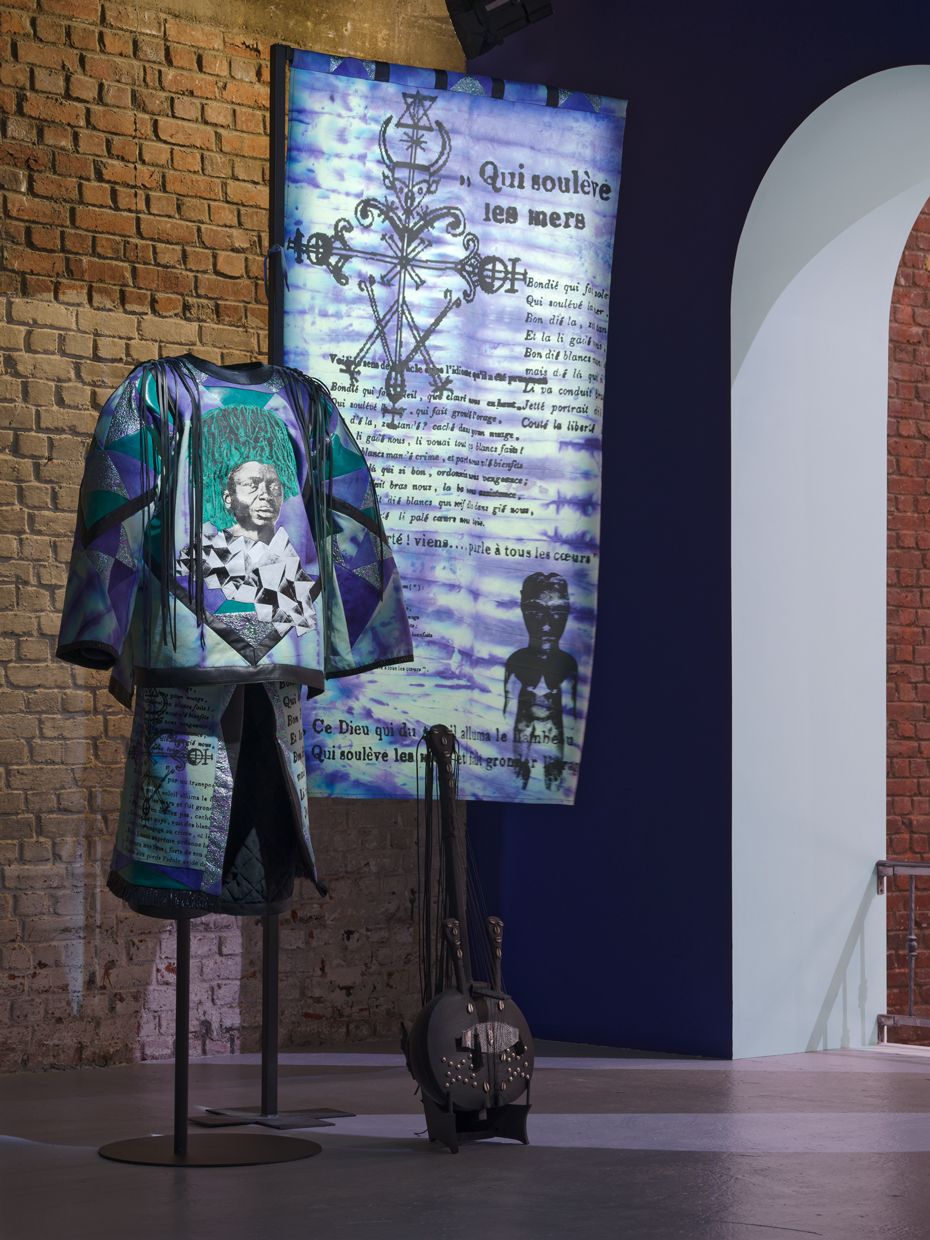
His latest exhibition, Quelque part dans la nuit, le peuple danse, on view at the Palais de Tokyo in Paris until November 5th, is a striking manifestation of his artistic vision. Inspired by Aimé Césaire’s La Tragédie du Roi Christophe, the show explores post-colonial identity, particularly in the context of Haitian independence, and challenges the dominant narratives of colonial history. By fusing memory with creation, Barontini constructs immersive spaces where the past and present collide, bringing forward voices that have been historically silenced. His practice goes beyond historical re-reading—rather than treating the past as a distant archive, he revives it through imagination and collective action. His installations incorporate monumental tapestries, regal textiles, and heraldic motifs, merging royal grandeur with the aesthetics of resistance. Carnival iconography, with its ability to subvert power structures and rewrite hierarchies, plays a central role in his work, serving as a space of liberation and cultural resilience.
In this conversation, Barontini reflects on his his artistic process, exhibition themes, and key influences, exploring how he reclaims history through storytelling and keeps the past alive in the present.
Tell us about your beginnings. How did it all start?
In high school, I loved visual arts but never considered it a career until a teacher encouraged me to apply to art school. After a year of preparatory classes, I was accepted into multiple institutions and chose the École des Beaux-Arts in Paris, where I studied for five years, including an exchange at Hunter College in New York. Being among aspiring artists confirmed my goal of becoming a professional.
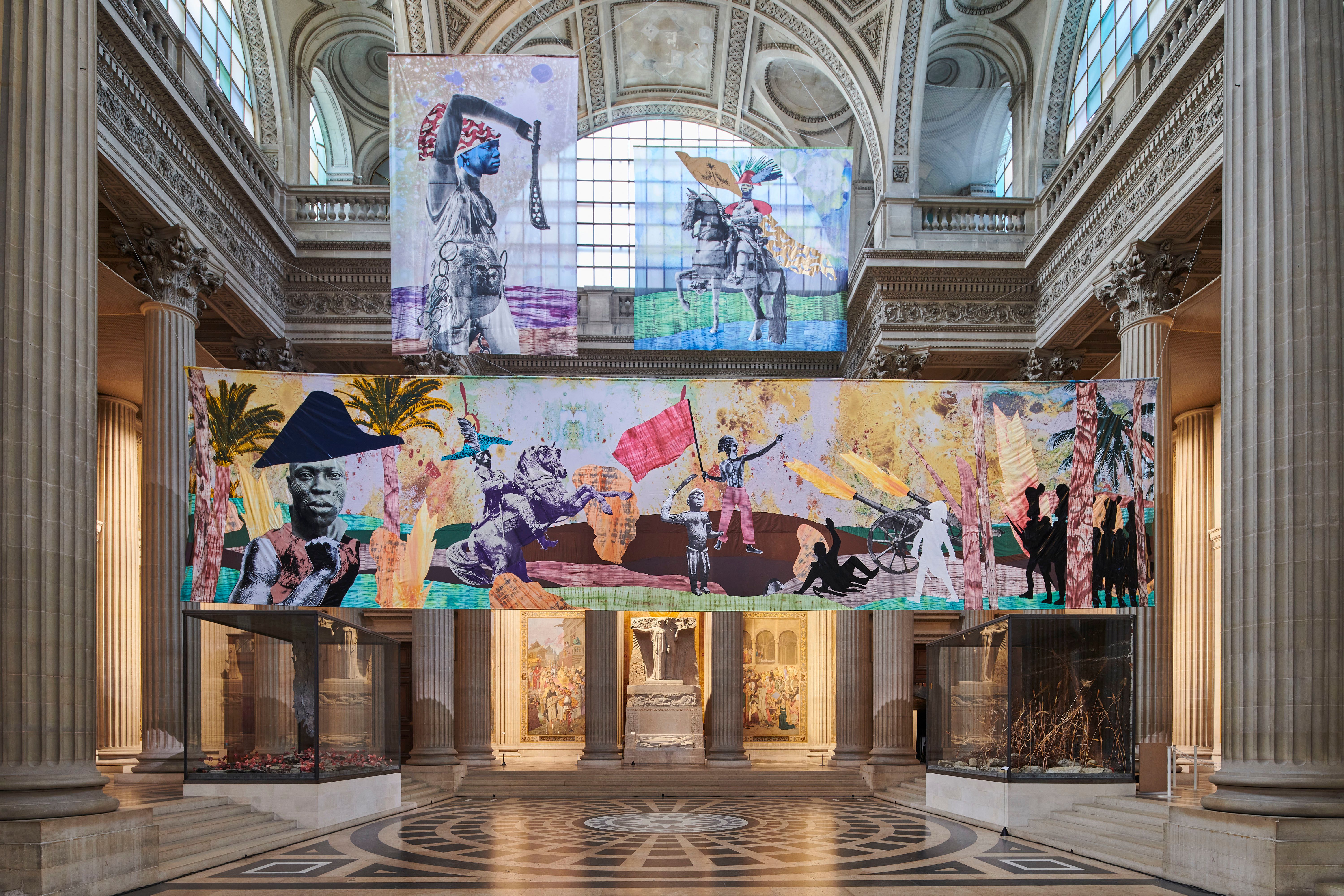
The early years were challenging—learning to navigate the art market and present my work. After five or six years, I had my first solo show in a Parisian gallery, followed by projects with Espai Tactel in Valencia. A major turning point came in 2019 with my first solo show at the SCAD Museum in Savannah, Georgia, which also introduced performance into my practice. That year, I was selected for an LVMH residency in Singapore and began working with Mariane Ibrahim Gallery. One of my most meaningful exhibitions was at the Panthéon in Paris. Unlike a museum show, it engaged visitors who hadn’t necessarily come for contemporary art. Seeing their response reinforced the importance of expanding where and how art is exhibited.
Your exhibition at the Panthéon in Paris was quite unique, as it took place in a historically significant monument rather than a traditional museum space. How did this setting influence your work and the way audiences engaged with it?
The Panthéon exhibition was an intense and interesting experience because it allowed me to connect my artistic intentions with a building that has shaped history. Unlike showing work in a museum, where contemporary art is expected, the Panthéon presented a different challenge—it brought my work into dialogue with a space of deep historical significance.
One of the most fascinating aspects was the audience. Many visitors had come simply to see the monument, not a contemporary art exhibition, yet they engaged with my work in unexpected ways. It was rewarding to receive positive feedback from people who might not typically visit contemporary art spaces. In a way, it reinforced the idea of breaking barriers; sometimes people don't seek out contemporary art, but when they encounter it in an unexpected place, they connect with it in a new way.
You grew up in a family with roots in Guadeloupe and Italy, in a multicultural environment in Saint-Denis, near Paris. How have these diverse cultural heritages influenced your artistic practice and the themes you explore in your work?
At the beginning of my practice, all those intentions were a bit unconscious. I was just bringing together things that I liked, without really conceptualising them. Love for painting probably comes from my father’s side. I remember visiting my family in Tuscany, and my father was always eager to take me to museums, chapels, and churches to see frescoes.
On the other side, I grew up in the northern suburbs of Paris, a working-class area with a huge multicultural mix, but I also spent a lot of time with my family in Guadeloupe, where I witnessed the traditions of carnival, music, and Léwoz. I loved it, but when I got into arts, I decided to focus entirely on painting. Still, all of this stayed with me, as an unconscious background that later found its way into my work. That connection to history, especially the history of slavery, the fight for freedom, and the abolition of slavery, also shaped me. Even if I don’t always speak directly about these themes in my work, they remain a large part of it.
Your artistic practice spans a variety of techniques, including screen printing, digital printing, and painting on textiles. How did you develop this multidisciplinary approach, and why did you choose to explore these specific media?
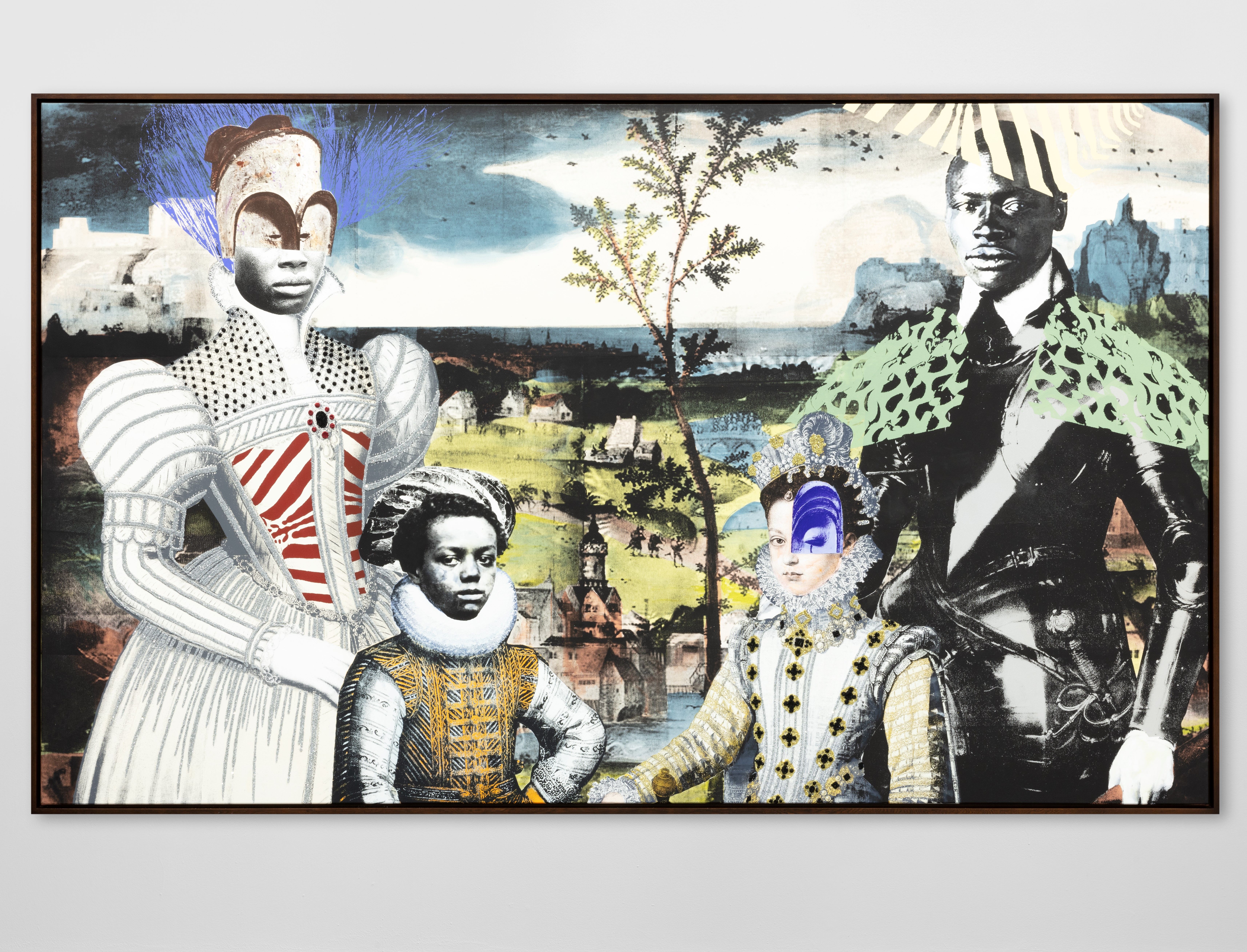
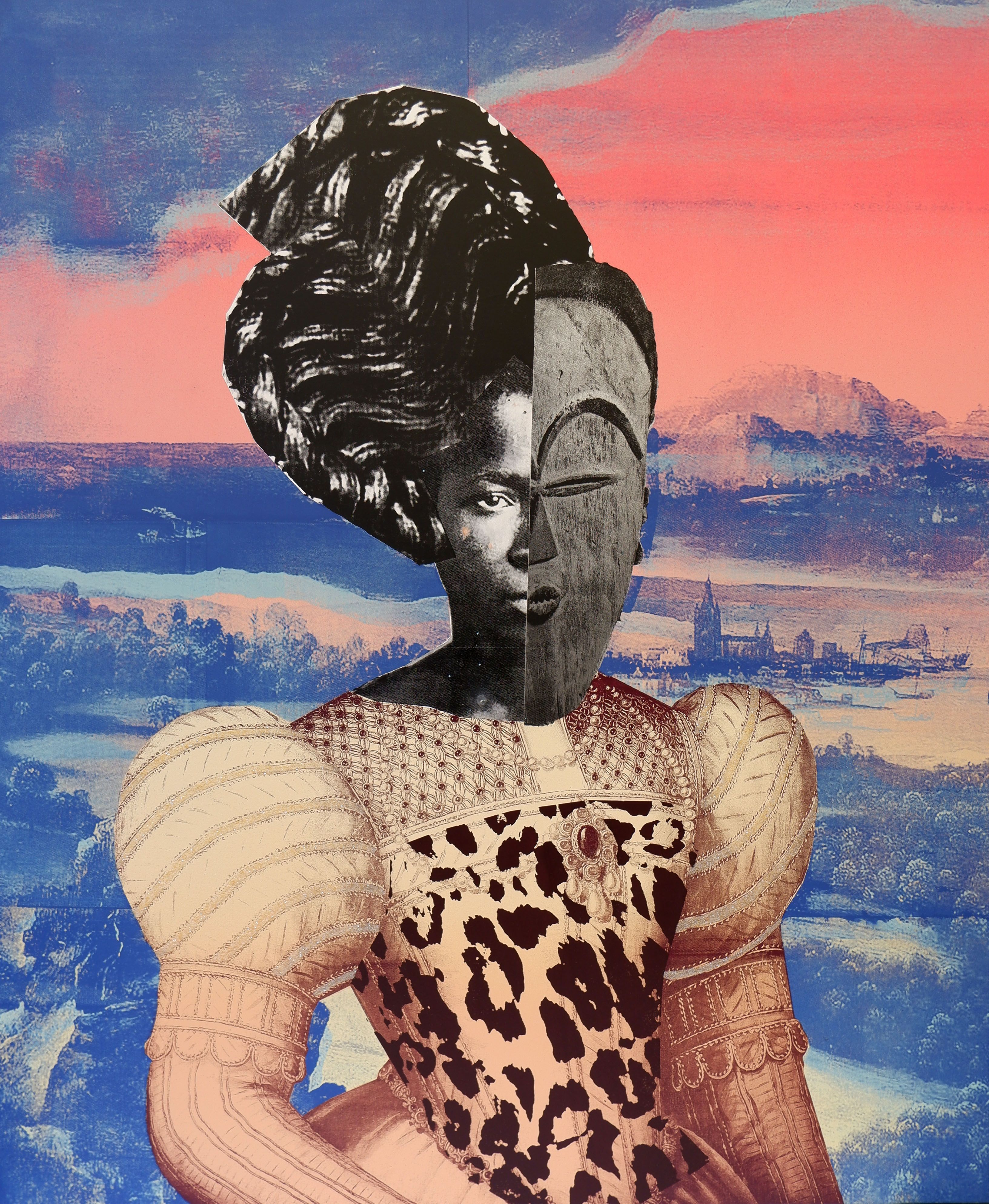
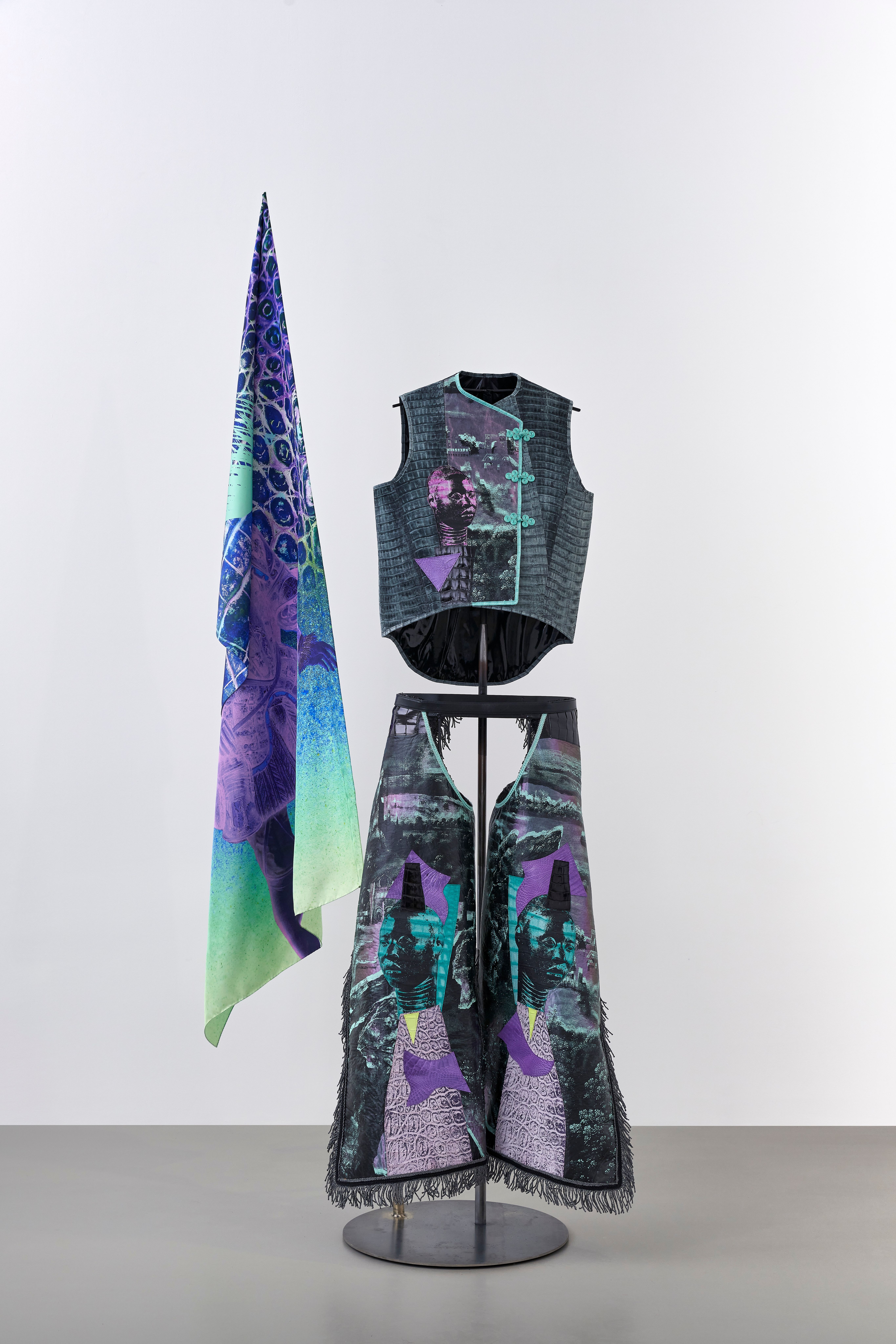
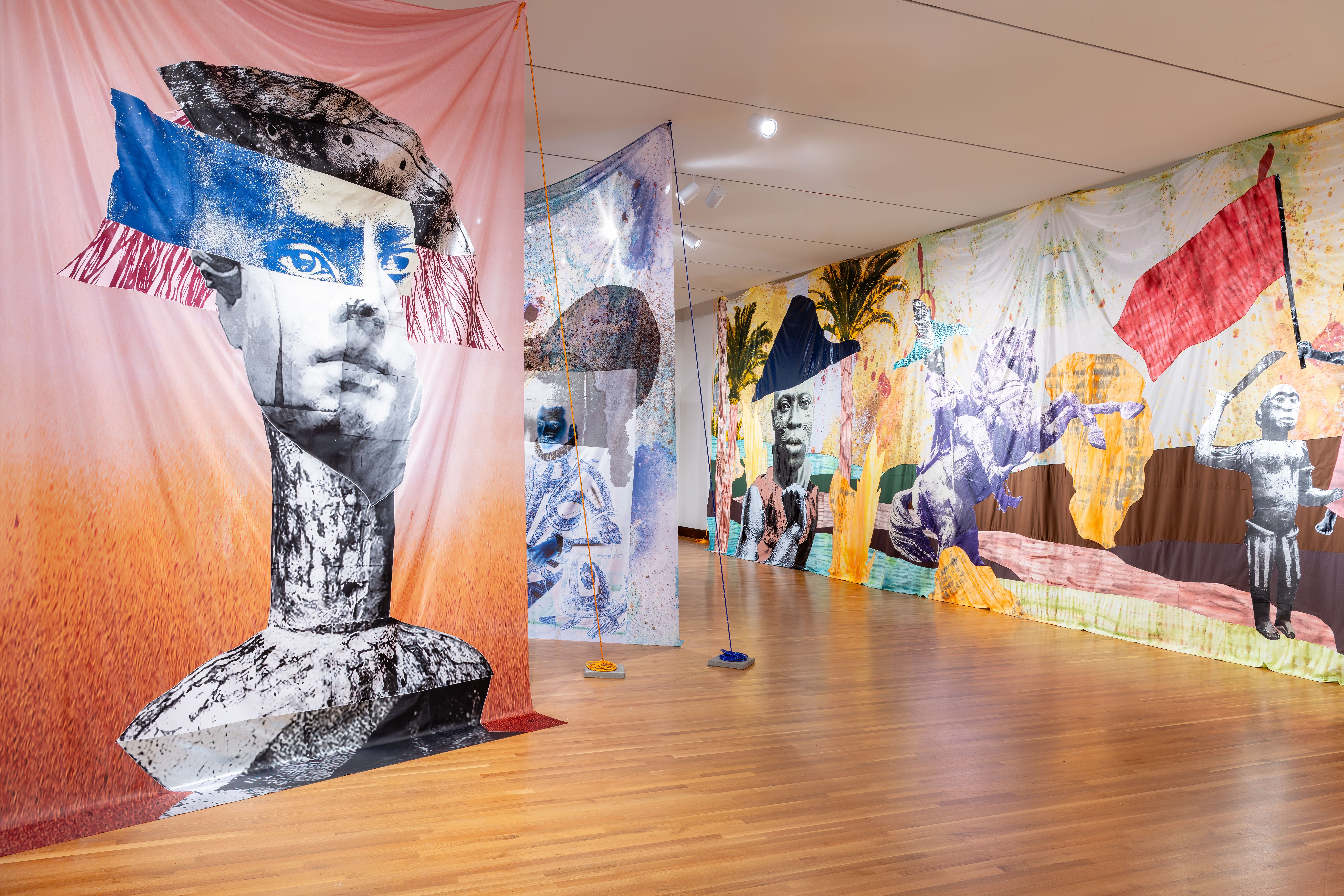
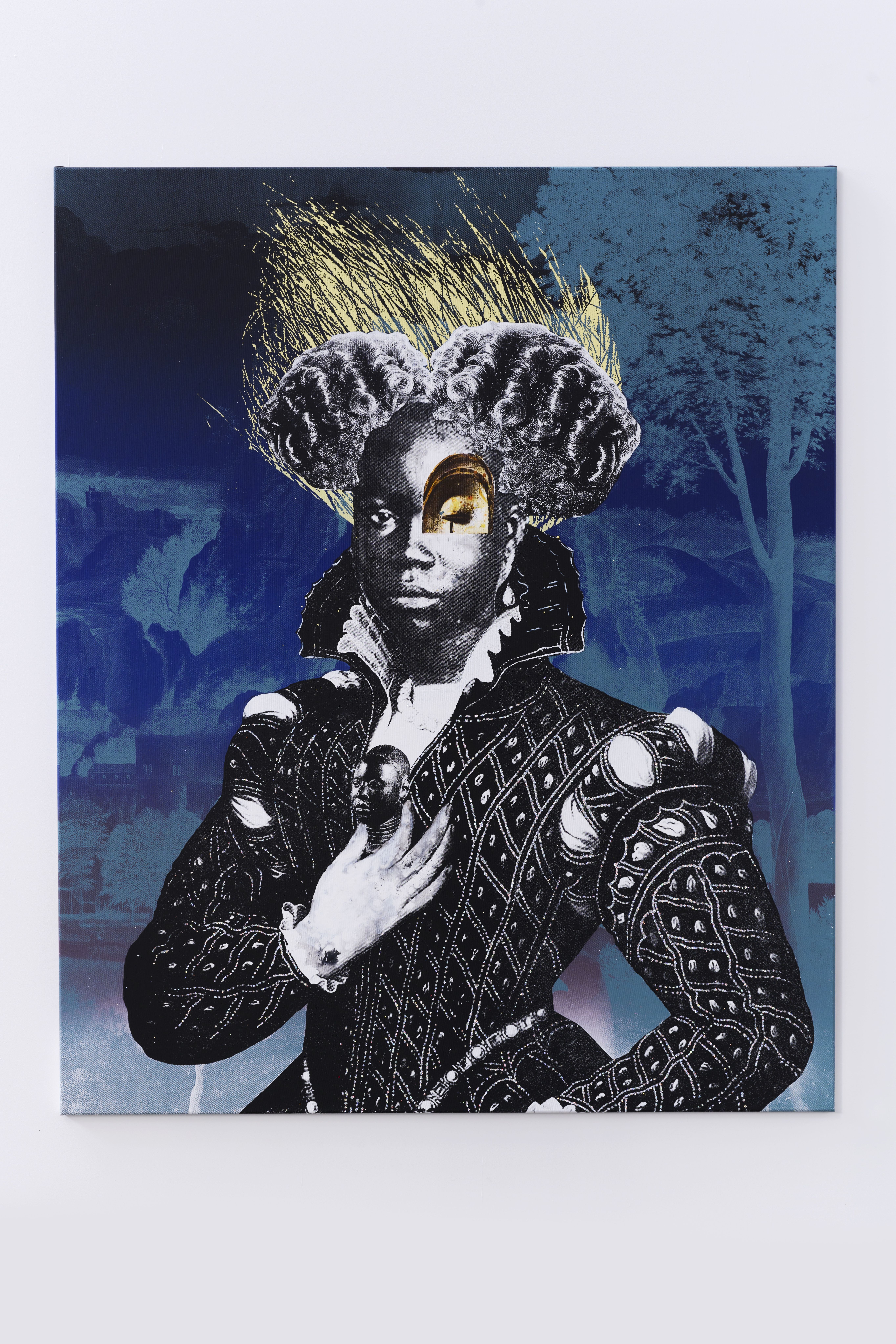
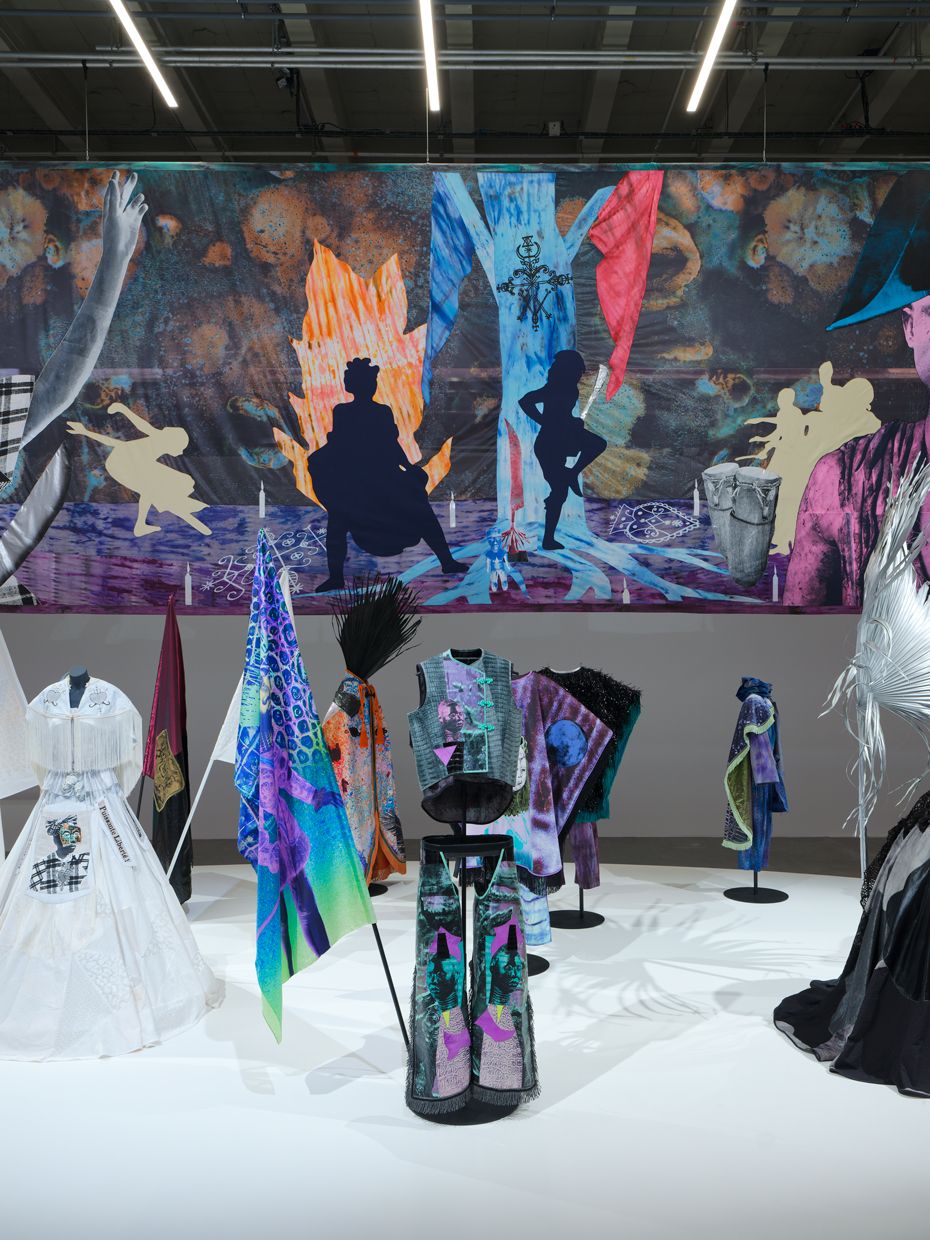
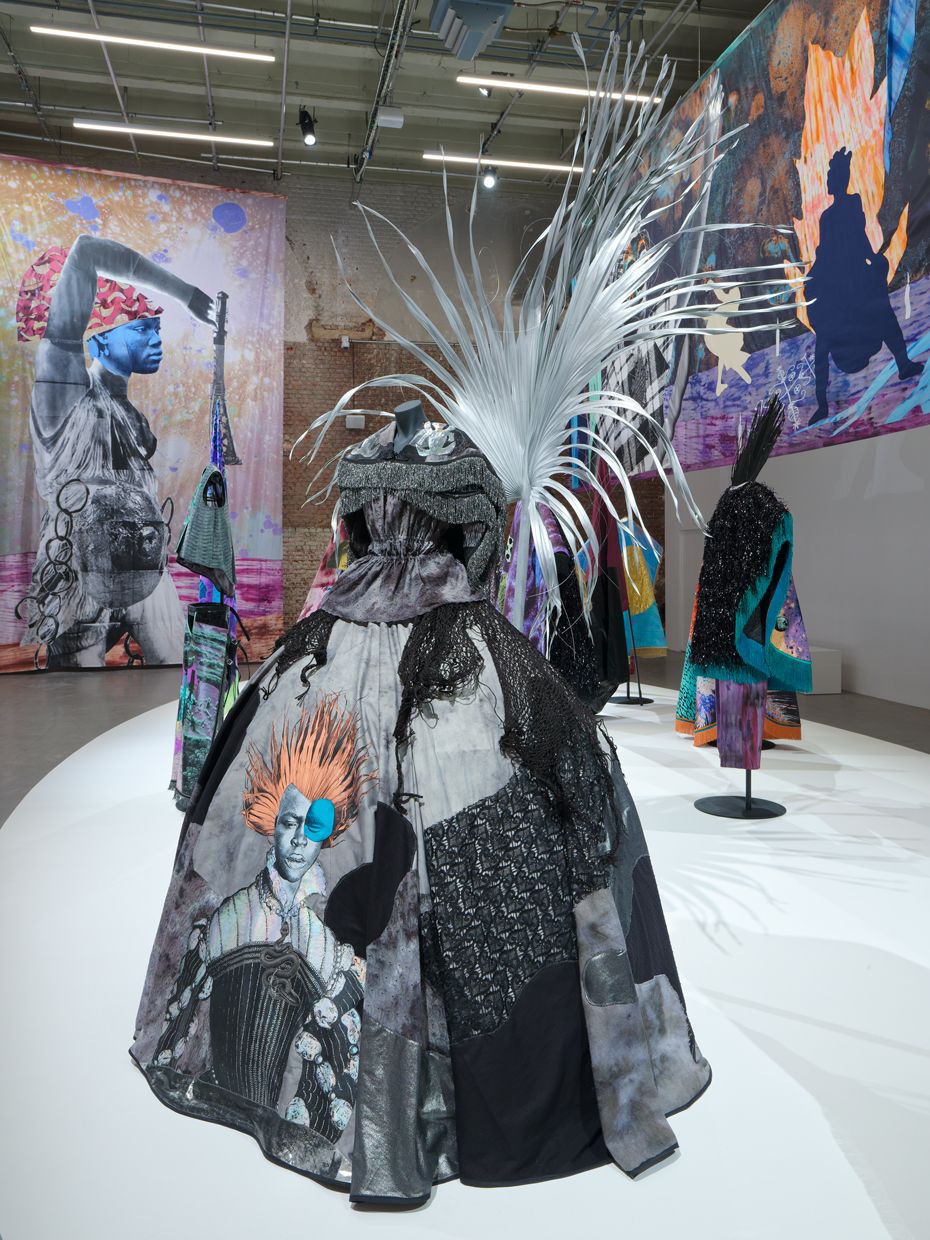
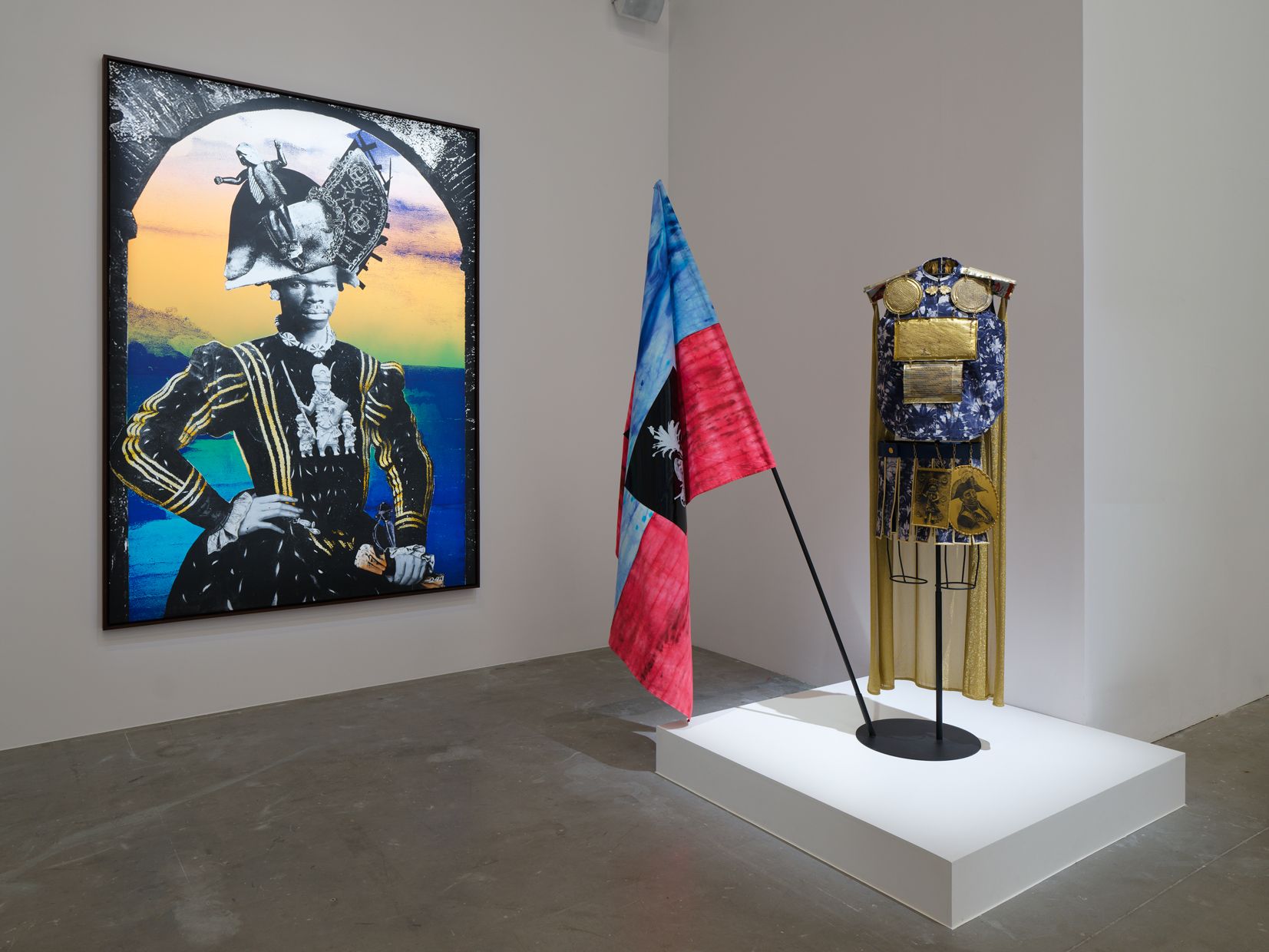
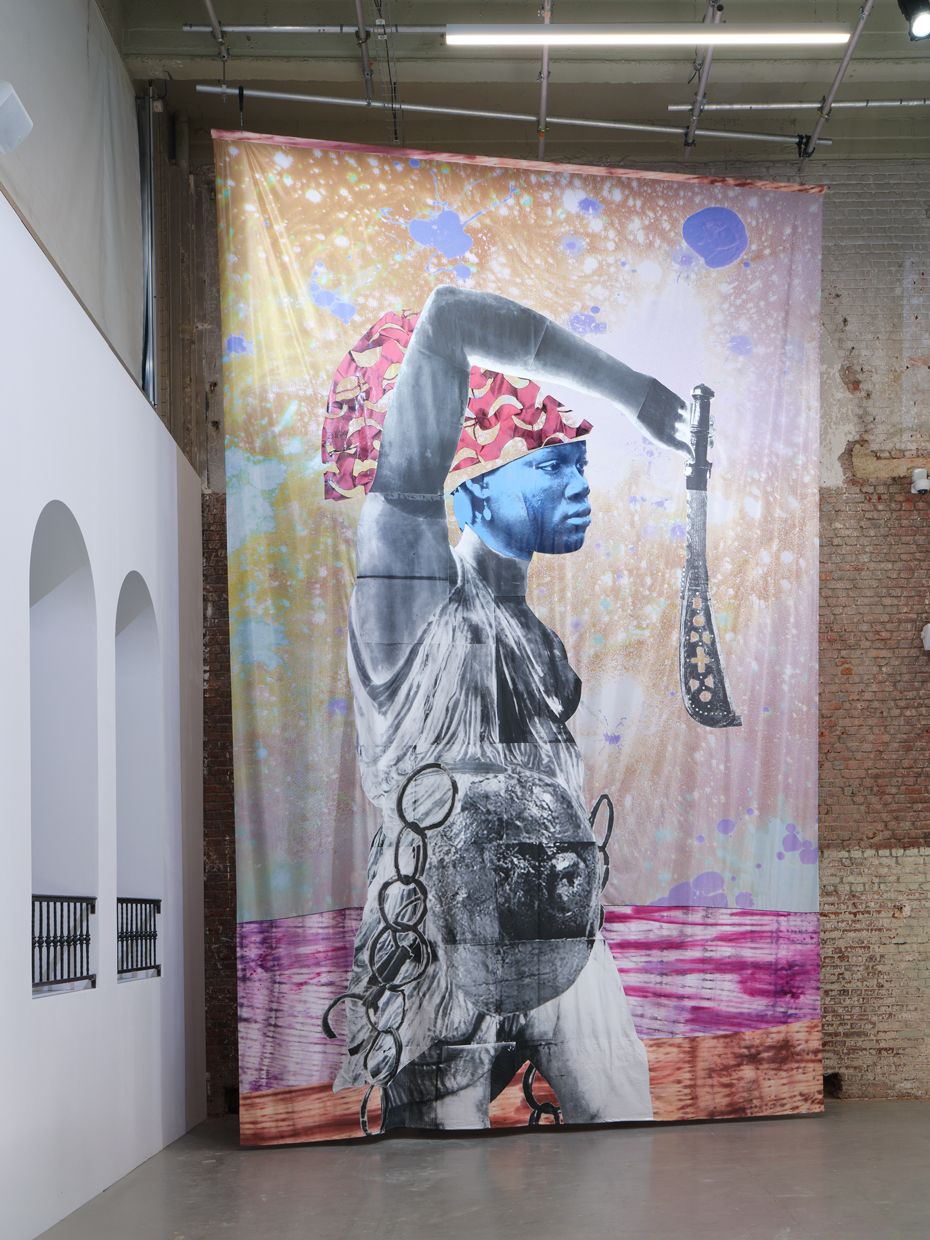
My work has always followed a collage aesthetic, blending iconographies from art history, old sculptures, paintings, historical costumes, and sacred objects—mainly ritual masks and statues from West Africa. I started with small physical collages, later expanding them into layered screen prints on canvas. My final project in art school was a series of banner-like paintings with fringes, printed in layers and left unmounted, giving them a textile-like flexibility. This marked my shift toward working with textiles. After graduating, I experimented with digital printing, photographing abstract paintings and transferring them onto fabric. This technique became essential to my large-scale works, including costumes. The largest pieces in my exhibition combine digital prints with hand-dyed cotton, layered like a patchwork.
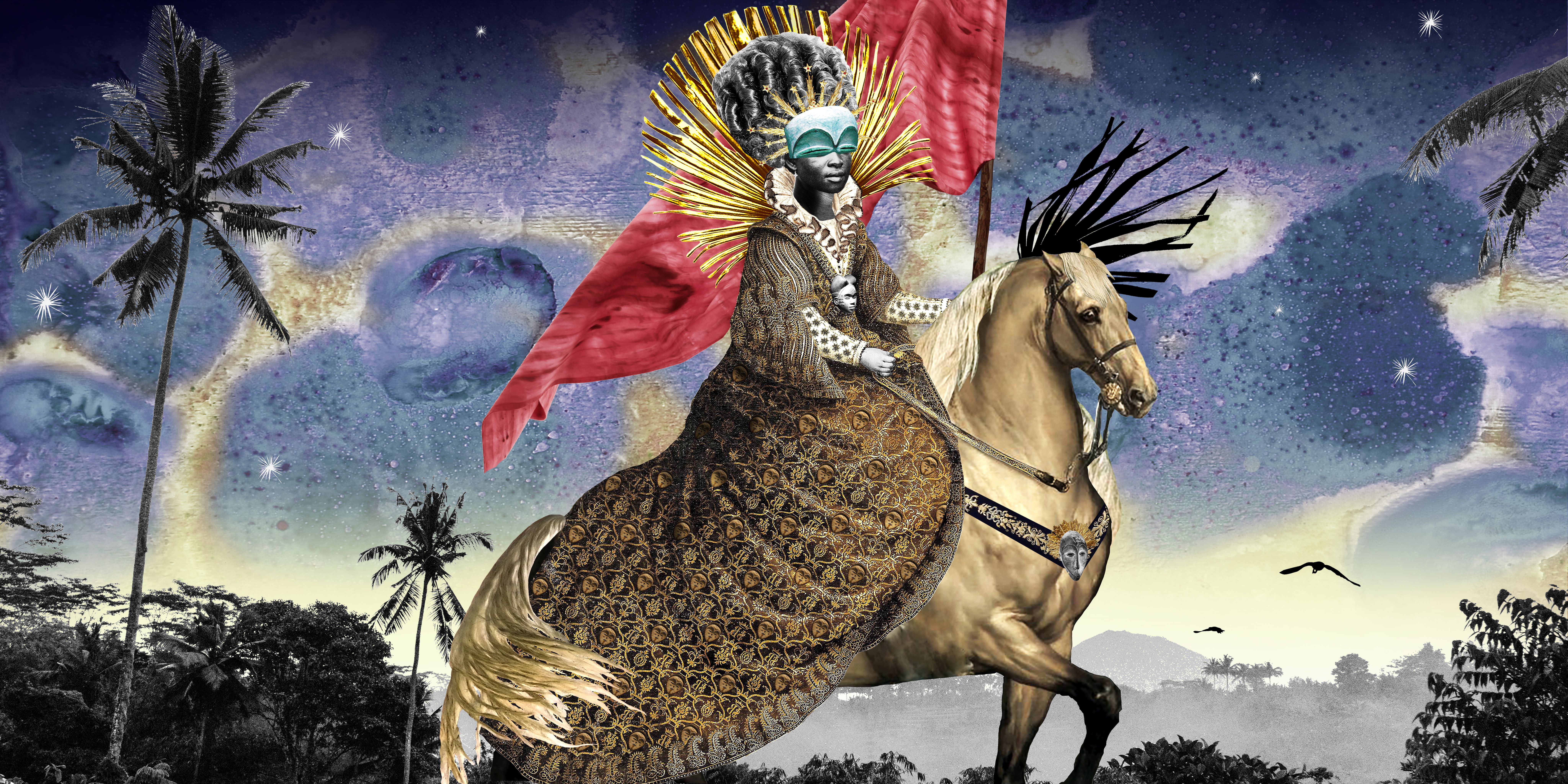
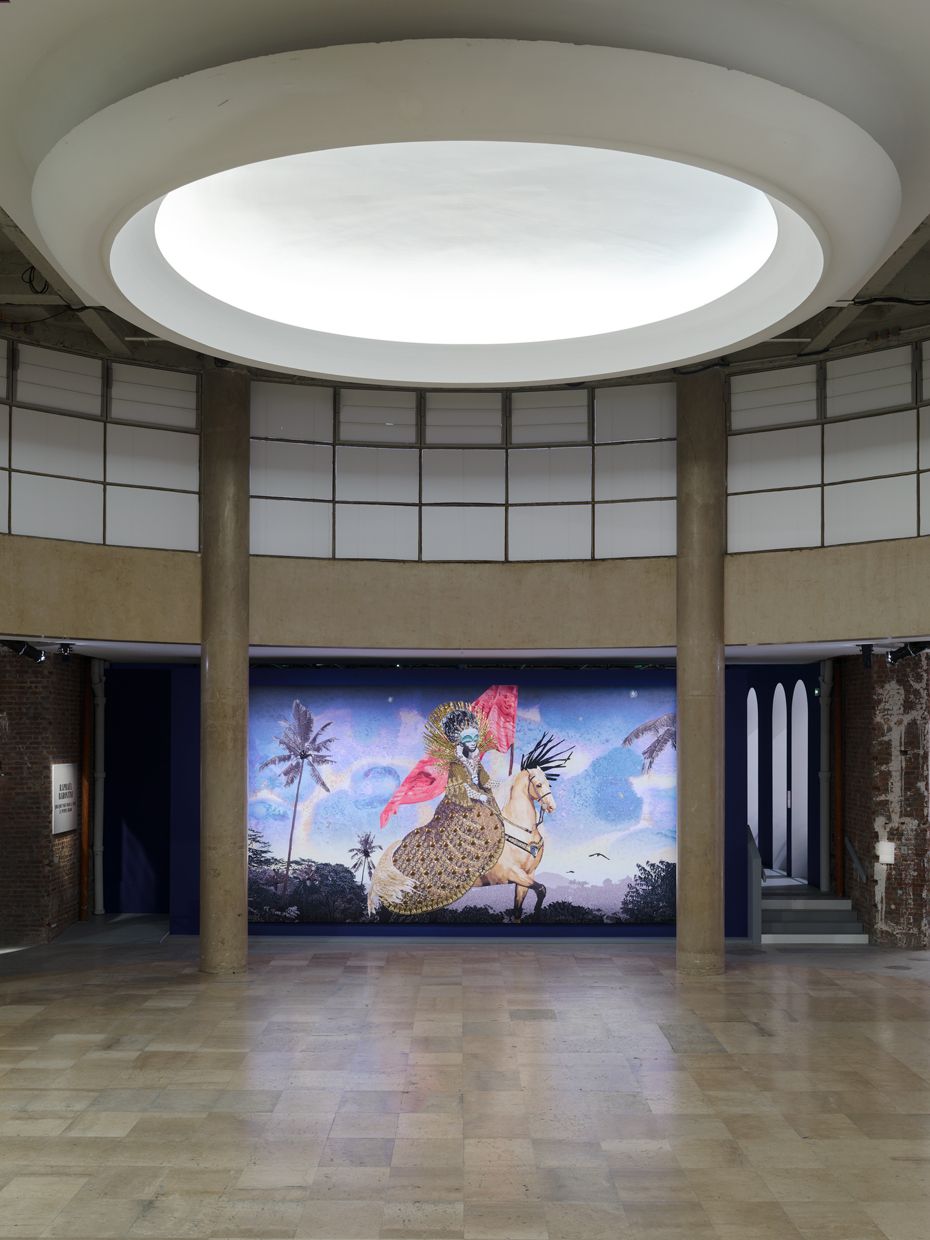
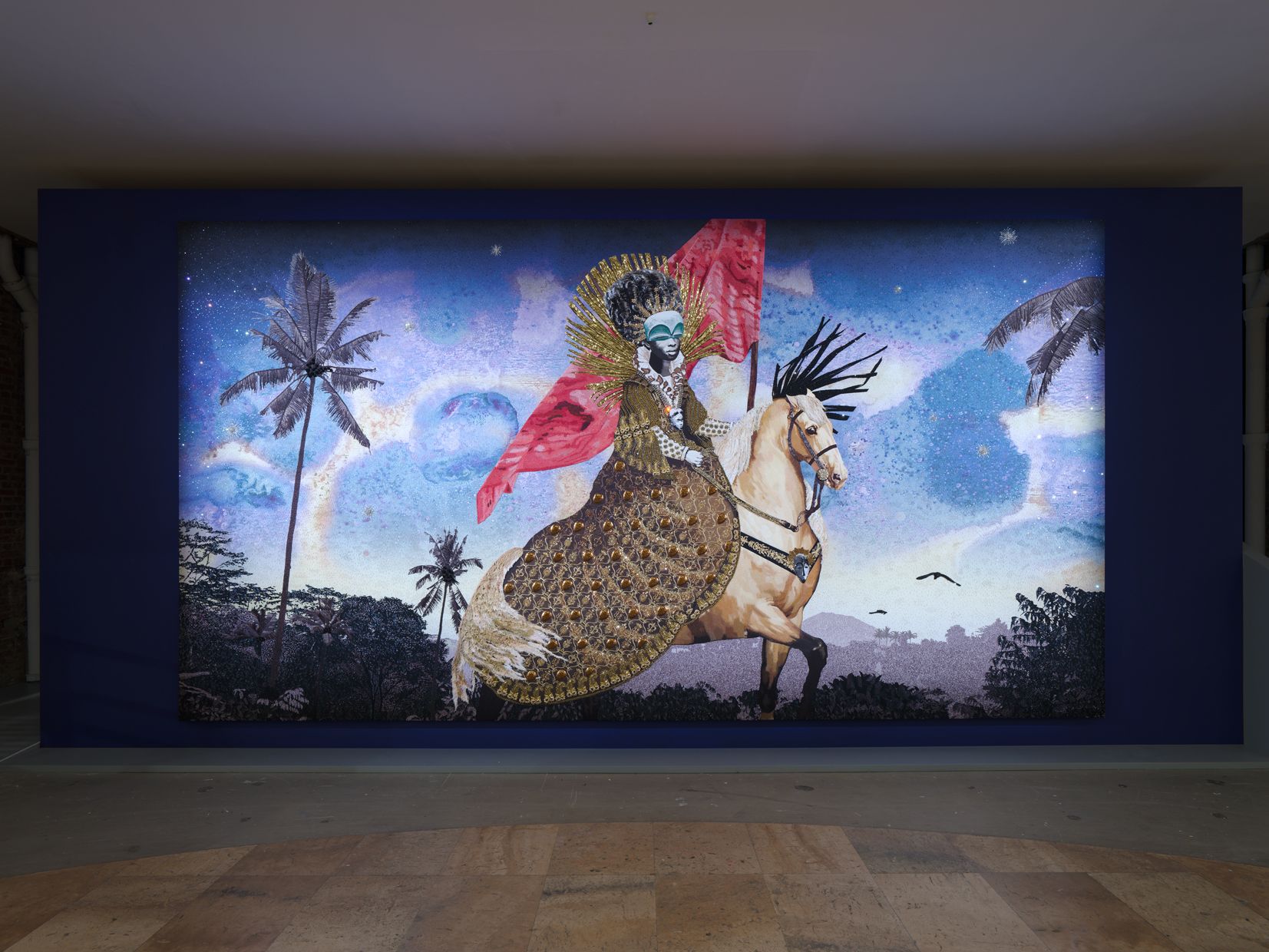
I also use screen printing to add iconographic elements, such as faces and figures, onto the fabric. The only piece produced outside my studio was the large embroidery at the entrance of the Palais de Tokyo exhibition. Made in Mumbai by Amal Embroidery, it took 15 artisans four months and 13,600 hours of work. Large-scale embroidery like this is now only done in India; it’s impossible to produce it elsewhere. It was an incredible process, and I’m really proud of the results.
Throughout your career, you have explored the intersection of history and fiction to create new narratives. How is this idea reflected in Quelque part dans la nuit, le peuple danse? In what ways does this exhibition mark an evolution from your previous work?
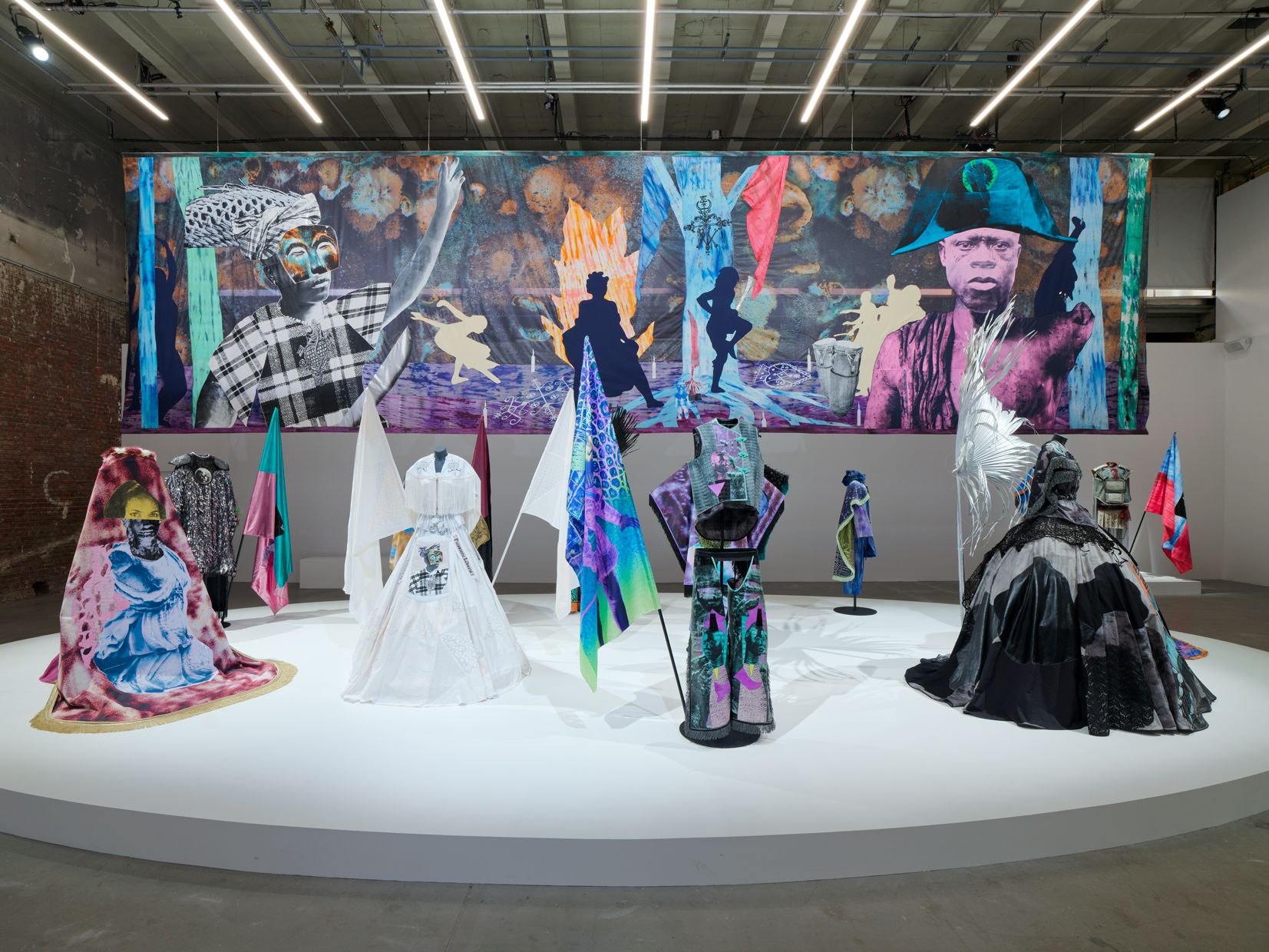
This exhibition was the first time I brought together all aspects of my practice—paintings, costumes, embroidery, and large-scale textiles—into a single cohesive presentation. In past shows, these elements remained separate, but here, they coexist on a grand scale.
A key inspiration was The Tragedy of King Christophe by Aimé Césaire, a book that resonated with me since my student days when I began portraying Black figures as royalty. Though I hadn’t directly referenced it before, the Palais de Tokyo commission felt like the right moment to do so. The exhibition space itself shaped the show’s structure, with the upper gallery as a throne room and the lower level expanding into textile installations, evoking a palace opening onto a vast landscape.
Collectivity is central to the show. Drawing from carnival traditions, I created a platform of assembled figures—suggesting a ball, parade, protest, or insurrection. The circular stage recalls dance formations, voodoo ceremonies, and political gatherings. One major work references the Bois Caïman ceremony, the 1791 voodoo ritual that ignited the Haitian Revolution, symbolising collective spirit and the reinvention of Caribbean identities after slavery. The exhibition also explores self-representation. The court card motif in my paintings reflects carnival’s transformative power. The large entrance embroidery portrays Cécile Fatiman, a voodoo priestess and Haitian revolutionary heroine who was later ennobled as a princess. I was fascinated by how, within a decade, former slaves in Haiti could rise to royalty—an imaginative and aesthetic shift I sought to explore throughout the show.
The architecture of the Palais Sans Souci in Haiti inspired the scenography of the exhibition. What drew you to this place, and how have you reinterpreted its symbolism within the Palais de Tokyo? Were there any particular challenges in this process?
This palace has always fascinated me. While preparing for the exhibition, I researched its history through old photographs and postcards, some of which I found on eBay. Though now in ruins, the structure still holds a strong presence, and I wanted to incorporate elements of its architecture into the exhibition’s scenography. Henri Christophe built not just a palace but a monumental symbol of Haiti’s sovereignty—the first of its kind in the Caribbean.
Beyond its grandeur, what intrigued me most was Christophe’s vision of creating a cultural and artistic ecosystem. He established an art academy, a fine arts school, and a royal manufactory to produce tapestries and costumes, reinforcing Haiti’s position as a nation of artistic and intellectual strength. This deeply resonated with me, and while designing the exhibition, I imagined the large embroidery at the entrance as something Christophe himself might have commissioned, reflecting his ambition to blend political power with cultural expression.
The exhibition is accompanied by a sound composition by Mike Ladd. What does this musical piece bring to the atmosphere of the exhibition?
Mike and I have collaborated for over 12 years, and our connection is especially evident in this project. His sound pieces, like my paintings, function as collages—blending musical traditions and layering diverse influences. This composition includes rara, the Haitian carnival and voodoo music performed with drums and homemade trumpets, alongside Creole singers, electronic beats, and sonic textures. A unique addition is a segment from Jean-Baptiste Lully, Louis XIV’s composer at Versailles. The fusion of Haitian rhythms, Creole vocals, electronic elements, and French Baroque music creates a rich hybrid of sounds, echoing my own approach to mixing historical and cultural references in painting.
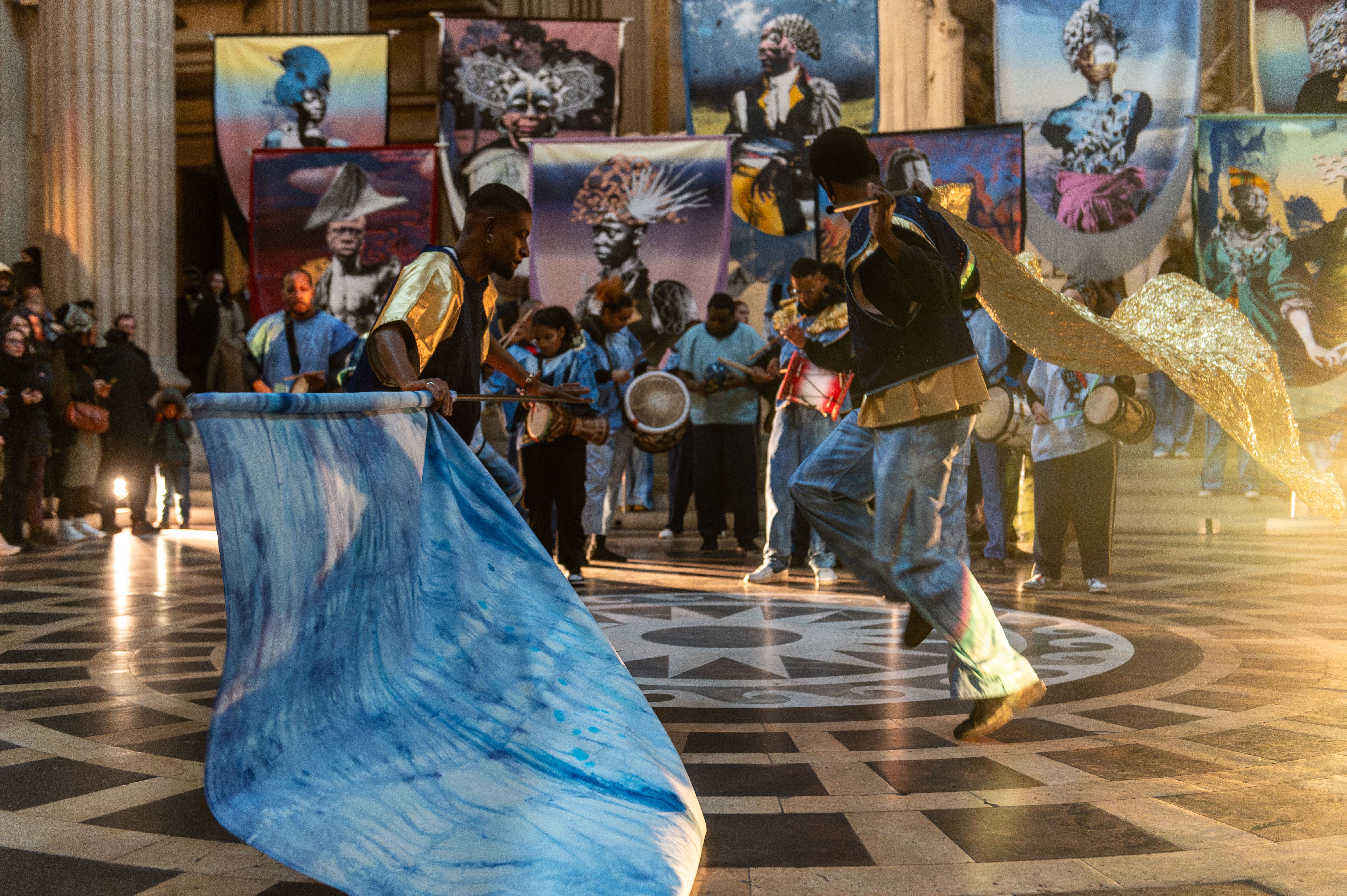
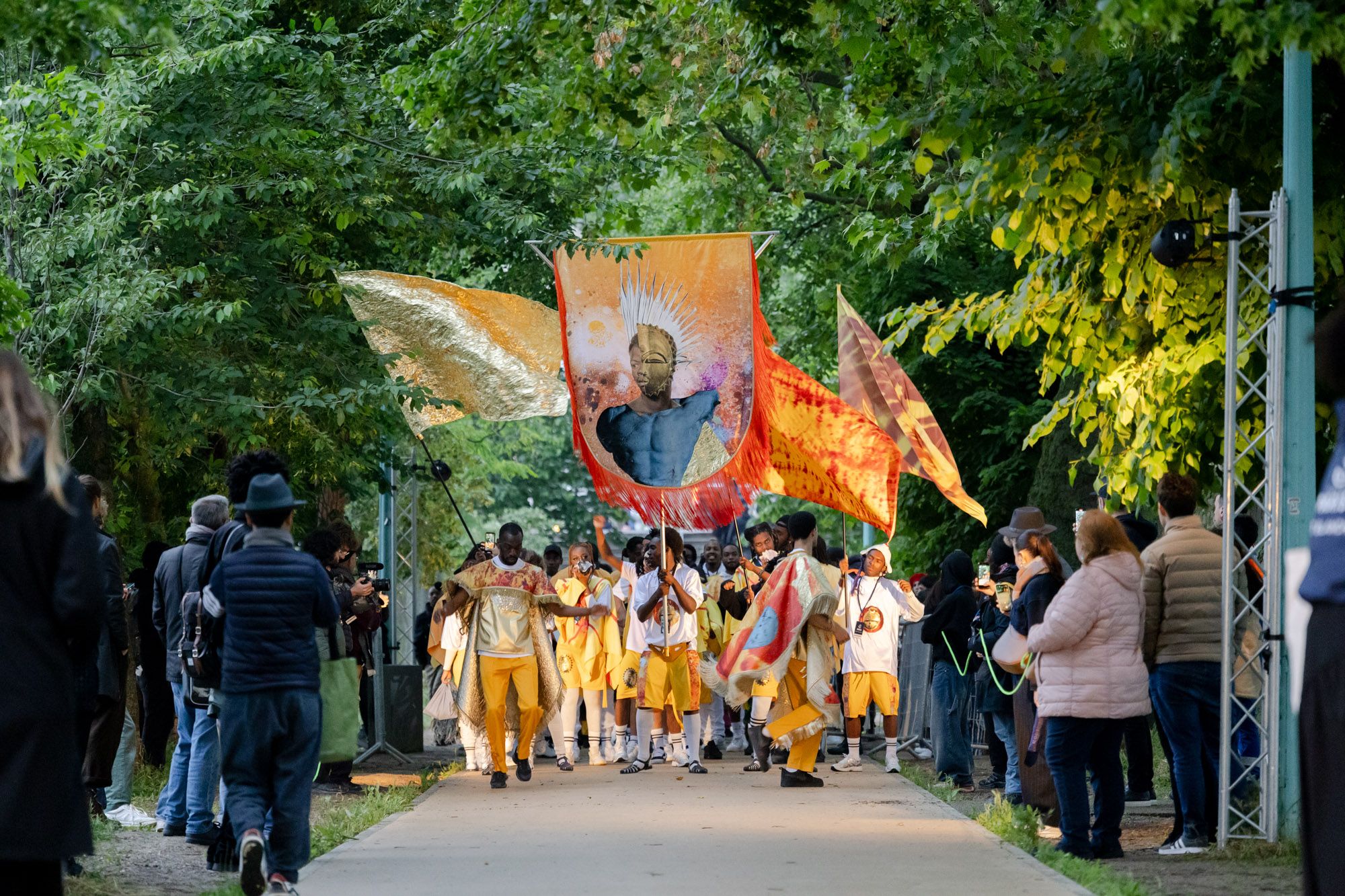
Your exhibition reflects on collective memory and the power of the people through dance. How do you see the relationship between movement, the body, and identity in your work? And how did your performance “Bal Pays” —performed on April 12—expanded on this exploration?
The costumes in my work have always carried a sense of ambiguity. I see them not just as garments but as paintings—paintings in volume, in three dimensions. What excites me is bringing these paintings to life through performance. When a dancer interprets a piece of fabric, its composition and the character depicted on it transform it into something more than just a static artwork. The movement gives it a new meaning.
One of my main intentions is to connect painting with the body. If a tapestry becomes a cape, the character it portrays is no longer confined to the wall, it becomes animated, it exists in motion. Another key idea is linking my work with contemporary art media while maintaining a dialogue with older and popular traditions. I want to reinterpret and recontextualise these traditions within a contemporary artistic framework, playing with symbolism and introducing new perspectives.
I brought together Caribbean dancers with a Parisian group preserving quadrille traditions. Though not professionals, they were dedicated to cultural heritage. Live musicians blended authentic quadrille music with electronic elements, reinterpreting tradition in a contemporary art context.
Have you considered expanding your costume and wearable work beyond the exhibition space?
Yes, absolutely, that’s a great question. I’ve been thinking more about adapting these pieces for other contexts. A few months ago, I did a residency in New Orleans, where I spent almost three months connecting with different creatives and artists. During that time, I started working on a project, though it’s still uncertain whether we’ll secure the funding or if I’ll have the time to fully develop it.
The project involves a group of opera singers, all Creole artists based in New Orleans, who perform music by historically overlooked Black and Creole composers from Louisiana, dating back to the 18th and 19th centuries. Many of these composers were erased from mainstream musical history, and now their works are being rediscovered. We want to collaborate on a project that brings these compositions to life, and my contribution would be in the realm of opera.
In past interviews, you have mentioned Romare Bearden and Sam Gilliam as key influences. What aspects of their work inspire you? Are there any other influences you would like to mention?
Yes, Romare Bearden has been a major reference for me, especially for his approach to collage and mythological narratives. I love how he merged ancient myths with Black history and everyday life in Harlem, creating sophisticated compositions that combined painting, collage, and photography. Sam Gilliam, on the other hand, influenced me through his use of textiles and the theatricality of painting. I’d also mention Kerry James Marshall, whose works, almost like fabric banners, blur the line between painting and textile, which I find inspiring. Another key reference for me is Hannah Höch, a key Dadaist. Alongside Bearden, she helped shape the language of collage, deconstructing and reassembling images in ways that continue to inspire me today.
Looking ahead, how do you envision the evolution of your artistic practice? Are there specific themes or projects you are eager to explore in the future?
There are a couple of directions I want to explore moving forward, particularly in my textile work. In the Pantheon exhibition, I created large-scale textile pieces, and I see this evolving into a series—a kind of visual history of the Caribbean. There is a significant lack of visual representation of this history, not just regarding slavery but also its traditions and cultural heritage. My goal over the next few years is to build this series, culminating in a major exhibition showcasing these large-scale works. Next year, I’ll create a new textile piece focused on the history of Guadeloupe as part of this ongoing project. Ideally, in ten years, I’d love to exhibit the entire series together!
As for upcoming exhibitions, I have a group show in Zurich, but no solo exhibitions planned at the moment. I’ve kept my schedule open, hoping a major museum will propose a large-scale project.