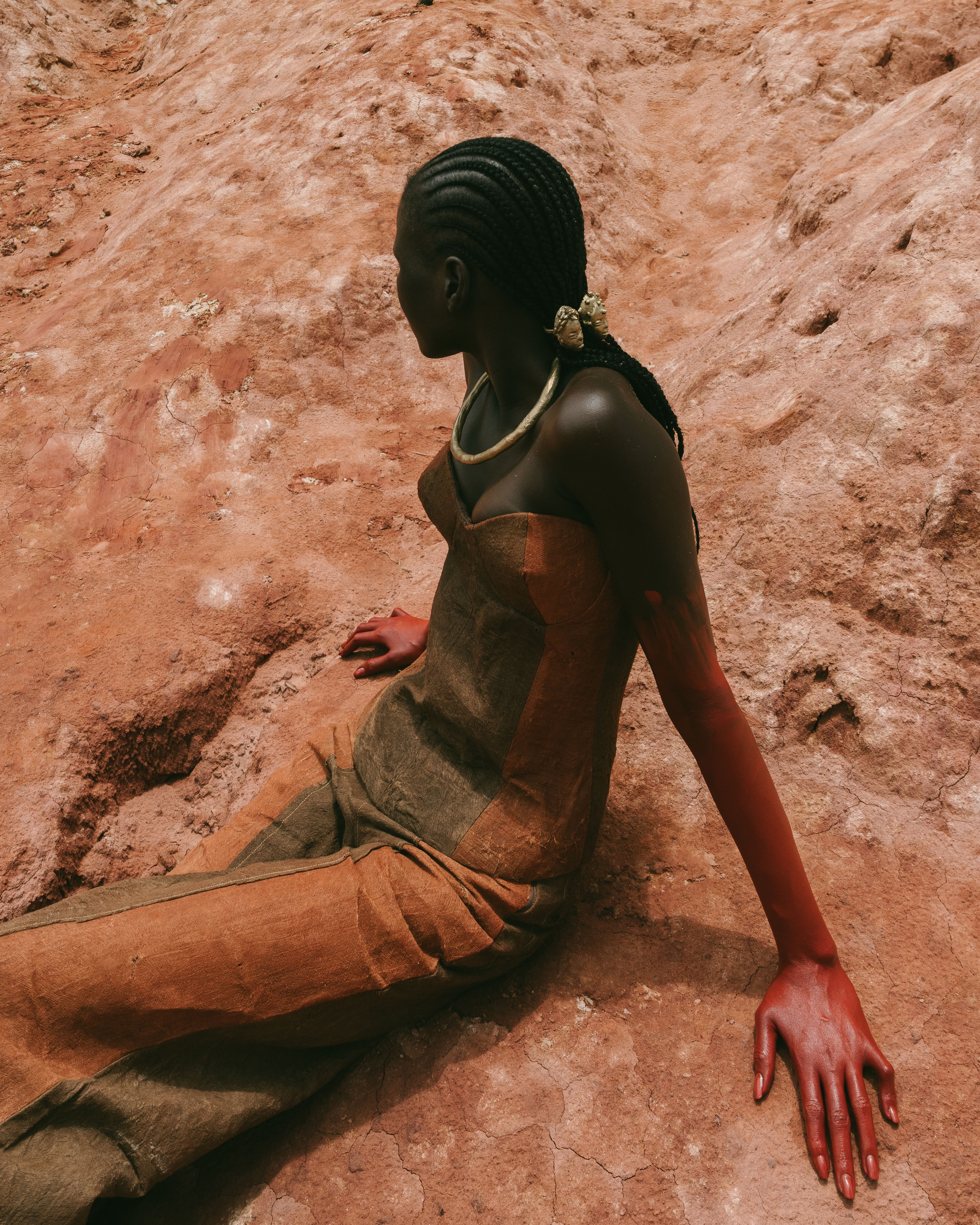
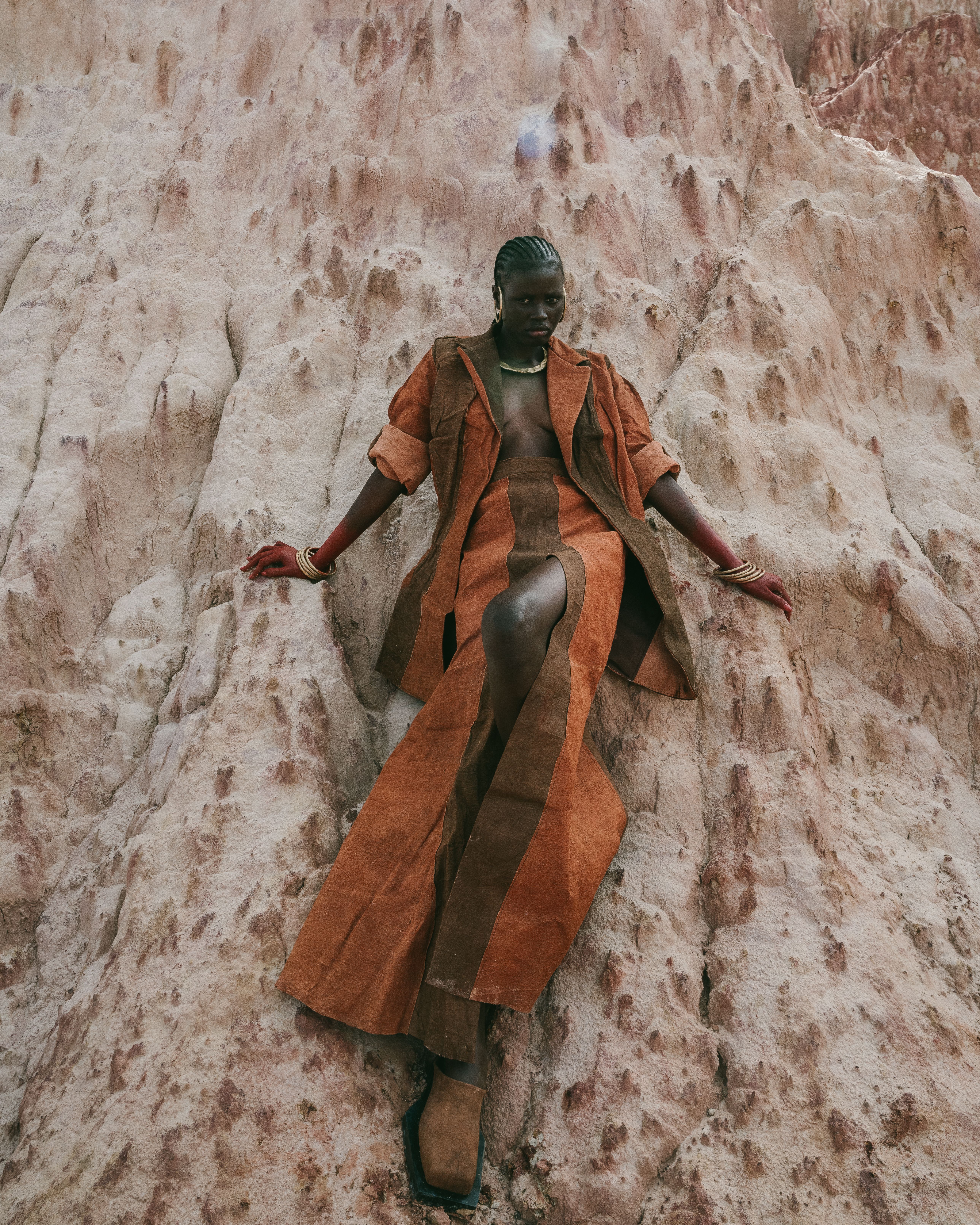
When Fashion enters the Museum
Published in Luxiders Magazine Print #14
Fashion is no longer just about setting trends, it has recently become a language that thinks about the world and projects it forward. More than adorning, today’s fashion unsettles, activates, and proposes. And instead of shop windows, we now find immersive installations, performances, and rituals that invite us to inhabit space with our bodies.
Museums have stopped showing fashion as a relic or a mere object of contemplation. They now present it as a living device that crosses disciplines like art, design, technology or science, to activate urgent questions: How is our identity built? What bodies fit in the future? What traces do our modes of production and desire leave behind?
From exhibitions exploring fashion’s environmental impact to artists using it as a tool for thinking, fashion has d from the shop window to the museum to become a critical device. In a time marked by textile overproduction and climate urgency, the museum becomes a place where these tensions are made visible, a space that invites us to rethink the logics of consumption and imagine more sustainable systems of production.
Artists Turning Fashion into Material
Fashion in the museum is no longer static, it becomes territory, body, and experience. Many artists use it to expand gesture, transform space, and engage the viewer. At this intersection of art and fashion, fabric, clothing, and movement cease to be mere adornments and turn into vehicles of memory, tension, and transformation.
Klára Hosnedlová translates traditional embroidery techniques into large-scale installations, weaving narratives that oscillate between the artisanal and the futuristic. In embrace, presented at the Hamburger Bahnhof last Autumn, this research becomes a choreographic experience. Nine monumental linen and hemp tapestries, dyed with natural pigments, hang from the ceiling and force visitors to traverse the space as if entering a forest of fabric. The floor, covered with more than 3,000 concrete tiles interrupted by pools of epoxy resin, paces the movement and evokes the passage of time. Billy Bultheel’s sound composition, with chants, bells, and Czech rap, works as an invisible score, guiding the body’s drift and turning the installation into a collective performance where body, territory, and memory are simultaneously activated.
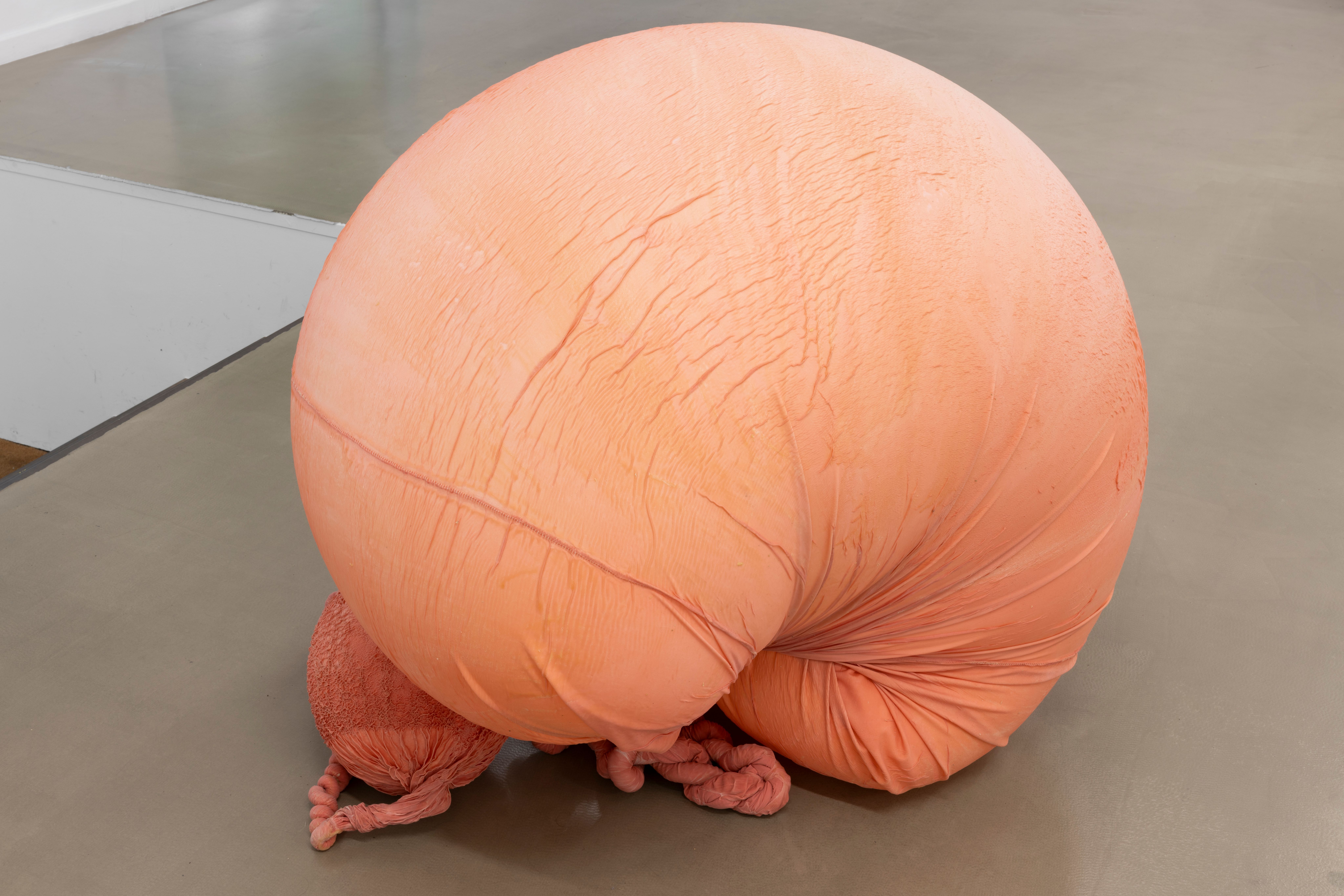
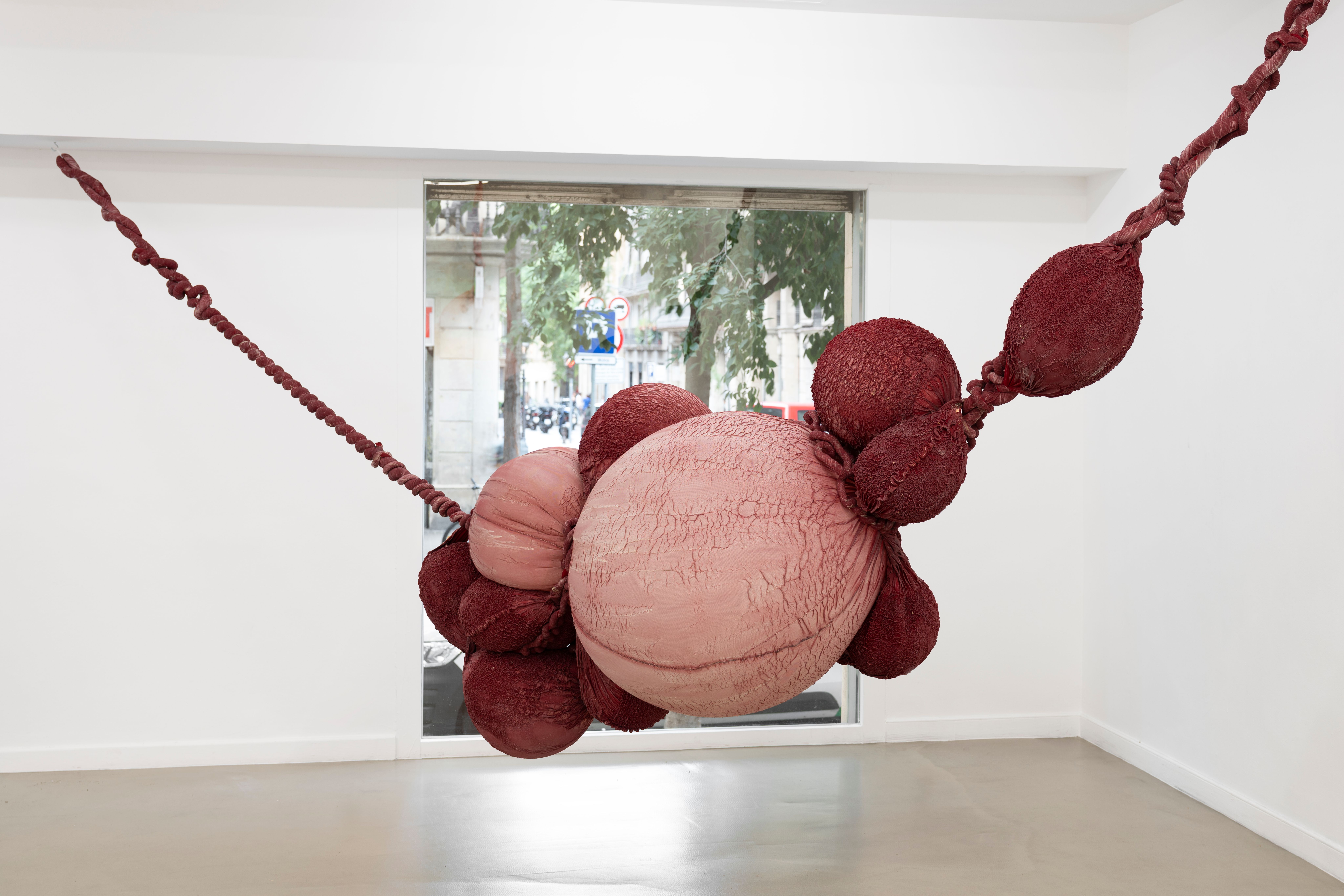
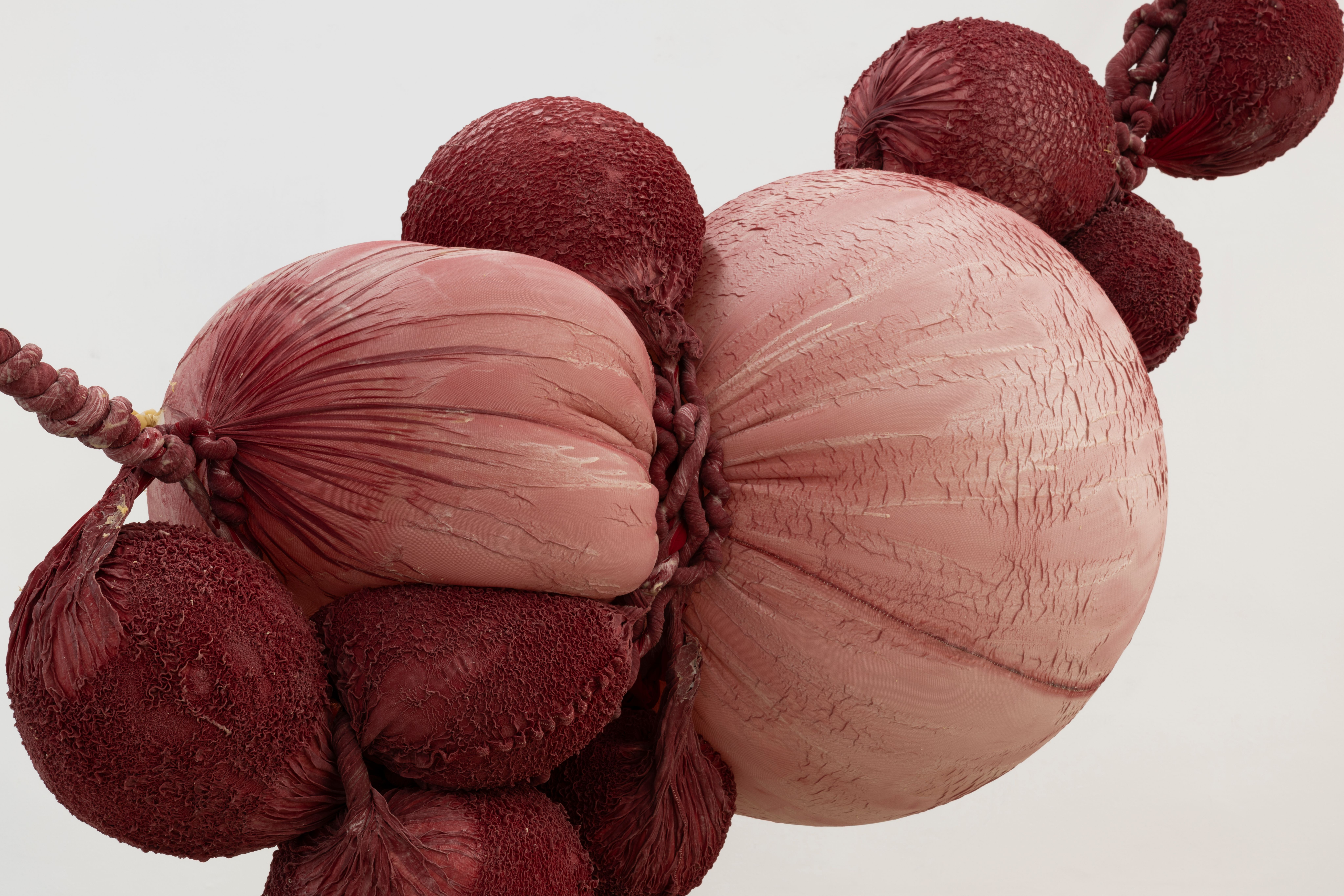
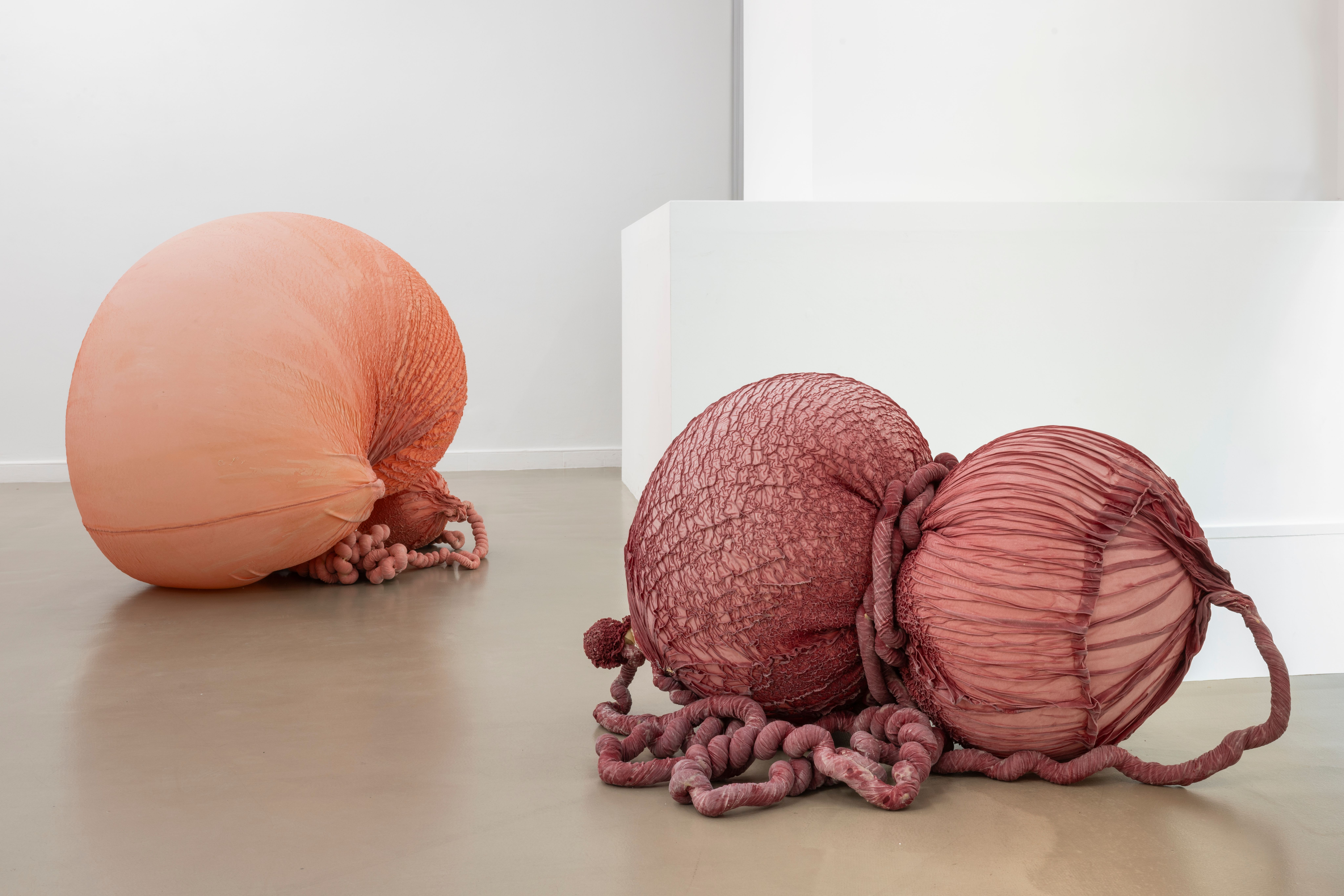
In a different yet equally corporeal register, Eva Fàbregas uses soft materials and textiles to create sculptures that suggest an expanded body, exceeding the human silhouette and bordering on the biomorphic. Air becomes another material, giving shape to volumes that breathe and pulse, altering our perception of space and of our own body. Her pieces allude to biological processes such as digestion, gestation, or metamorphosis, generating mixed emotions — between threat and care, playfulness and unease — and proposing a somatic relationship with art. Rather than being merely contemplated, her sculptures invite a physical experience, asking the viewer to synchronise their breathing with them and to think of the body as a space in transformation.
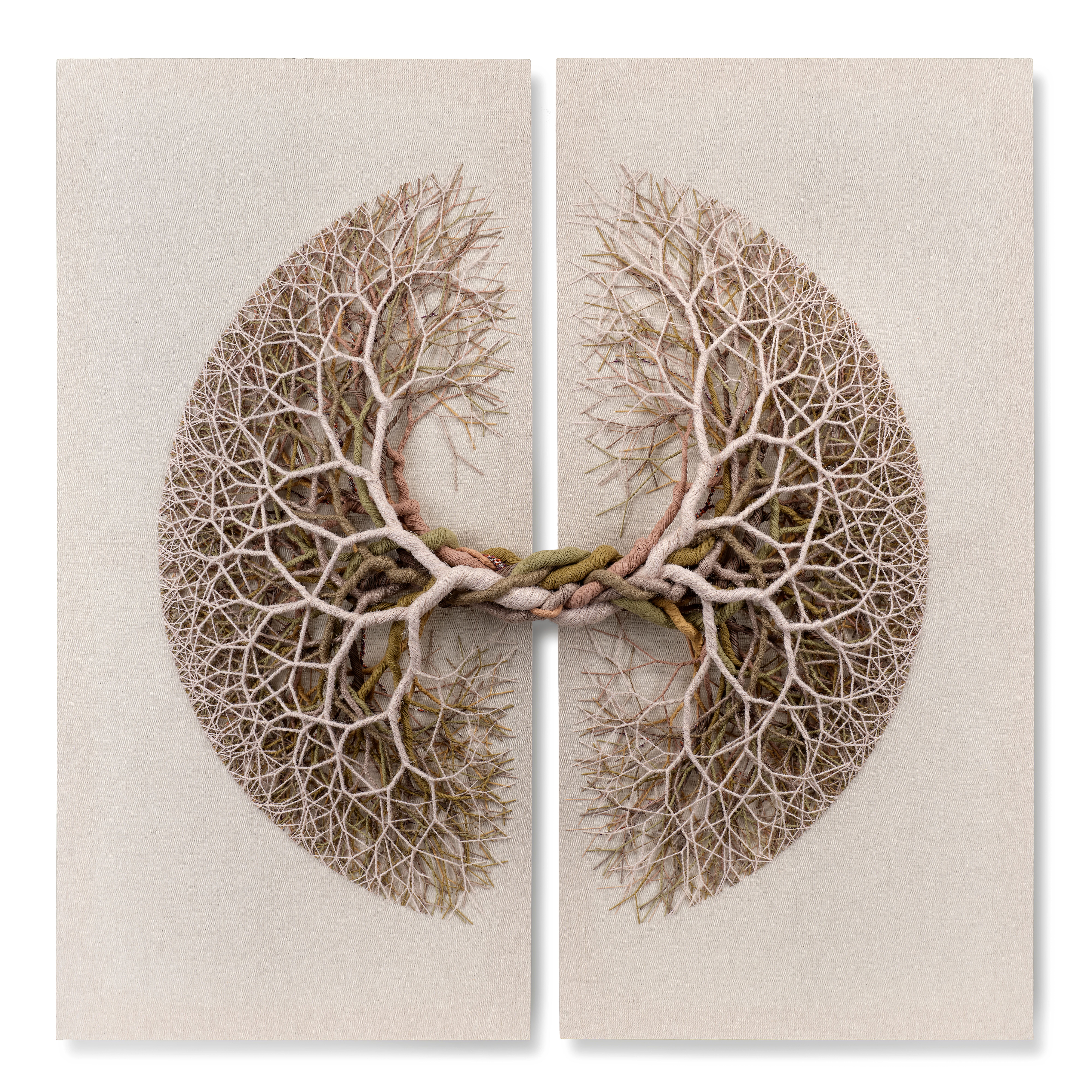
From another perspective, Jeanne Vicérial explores textiles as a medium to speak of the body, memory, and metamorphosis. A pioneer in developing new ways of weaving and producing zero-waste garments, she questions mass production and reclaims the made-to-measure gesture as a poetic and political act. Founder of the research and design studio Clinique Vestimentaire, Vicerial conceives dressing as an investigation into the relationship between body, memory, and transformation. In Pupation, her recent exhibition at Galerie Templon in Paris, she filled the gallery with “presences”: black thread sculptures suspended in a state of transition, evoking bodies in gestation, in embrace, or in their twilight. Like a moment frozen in time, Vicérial attempts to capture the metamorphosis that paves the way for the (re)birth of these unclassifiable beings, supernatural nymphs, half-plant, half-animal. The French artist transforms the gallery into a space of near-ritual contemplation, confronting visitors with fragility, transformation, and the mystery of becoming.
The works of these artists are not just seen, they are crossed, inhabited, and they affect us deeply. The next step is to think of fashion not just as material but as action, rite, and collective choreography.
Performance and Ritual
In the museum, fashion can act as a living gesture, a ritual that activates space and turns the body into an artwork. Beyond the runway, it becomes choreography and collective ceremony, calling the viewer into action. This performative dimension signals a shift in the relationship between fashion, art, and the museum. It is no longer just about contemplating objects but inhabiting them, experiencing how they alter space and the body. Fashion becomes a device that invites movement, participation, and feeling, turning the museum into a stage for encounters, tensions, and new ways of imagining identity, power, and beauty in real time.
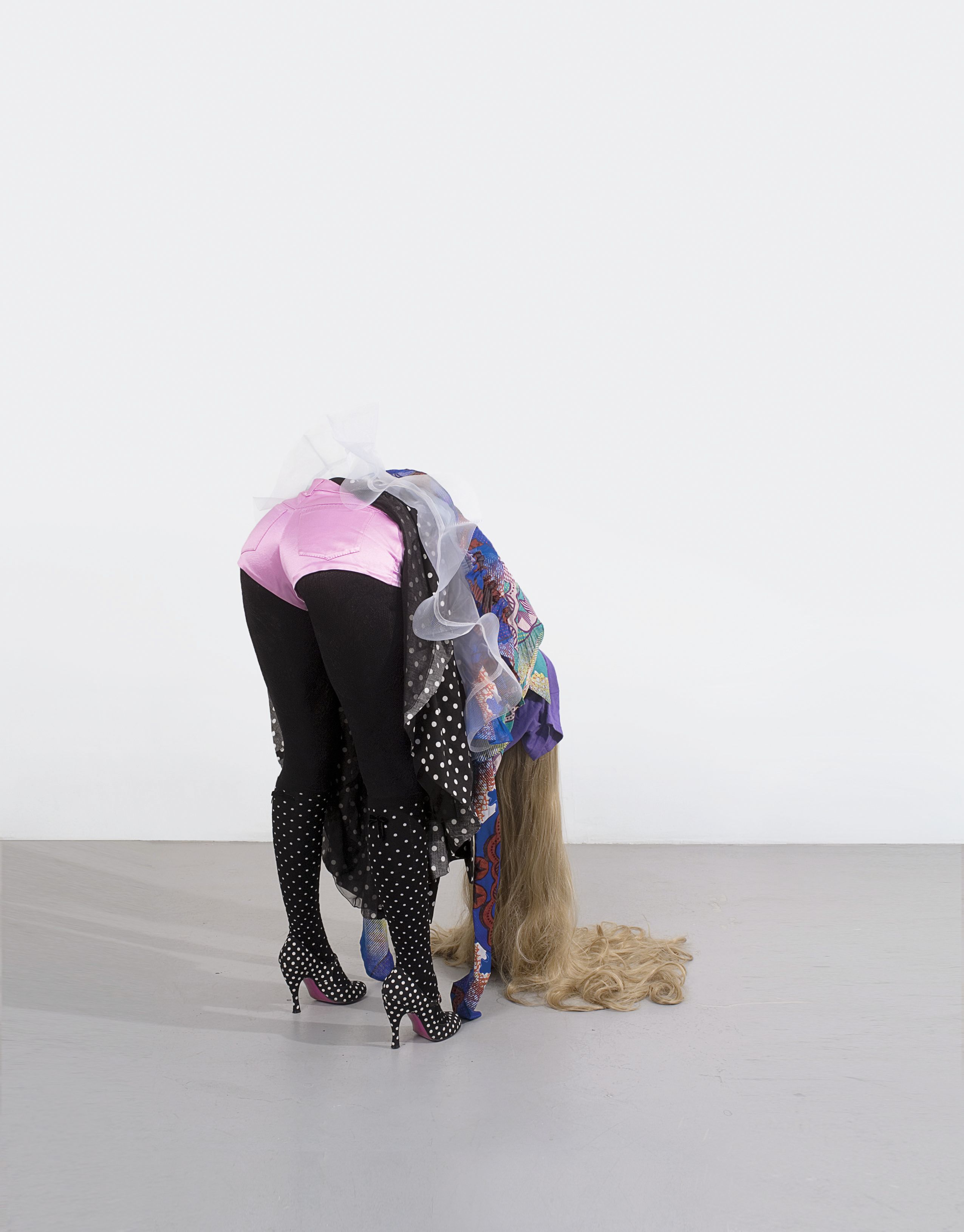
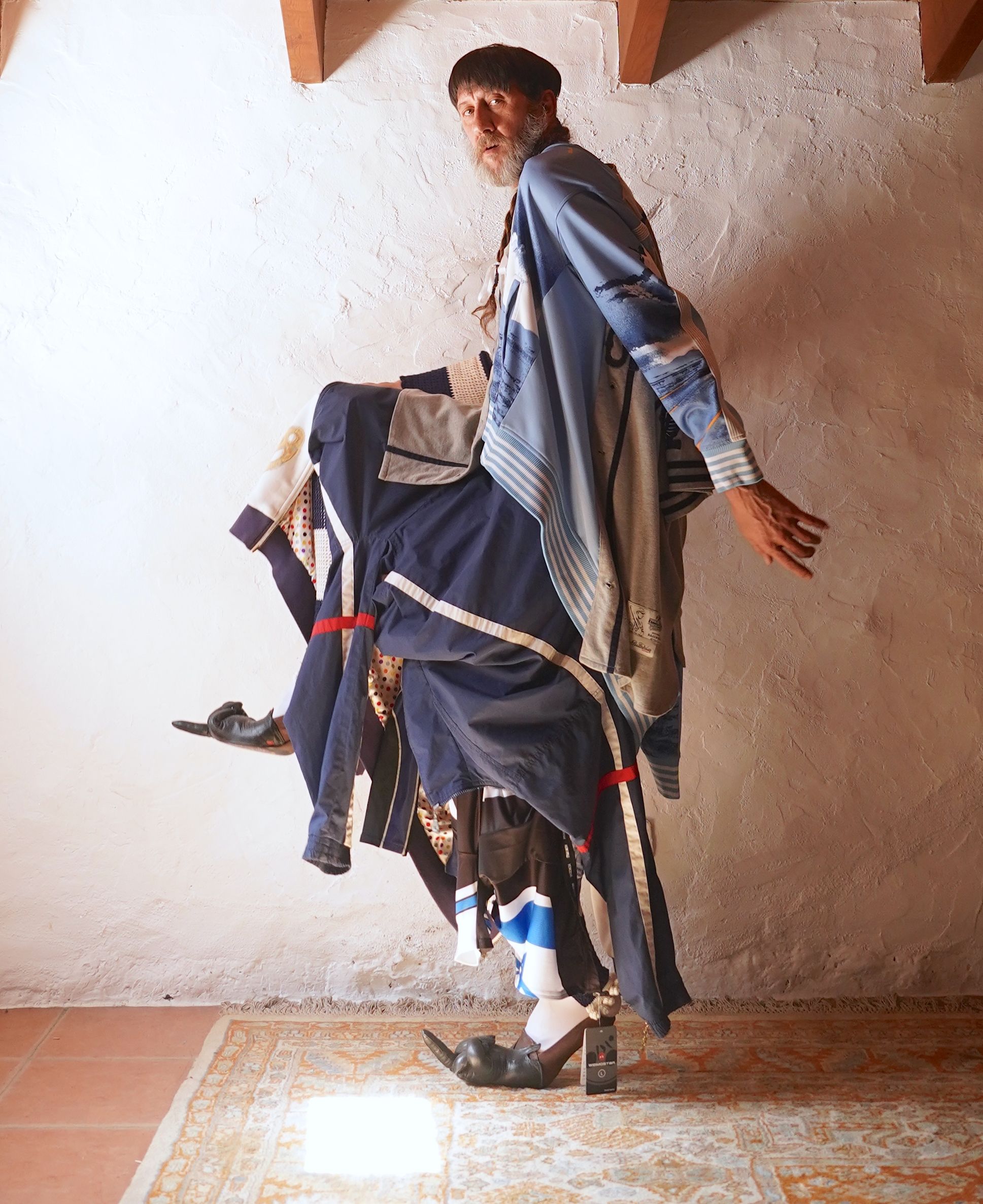
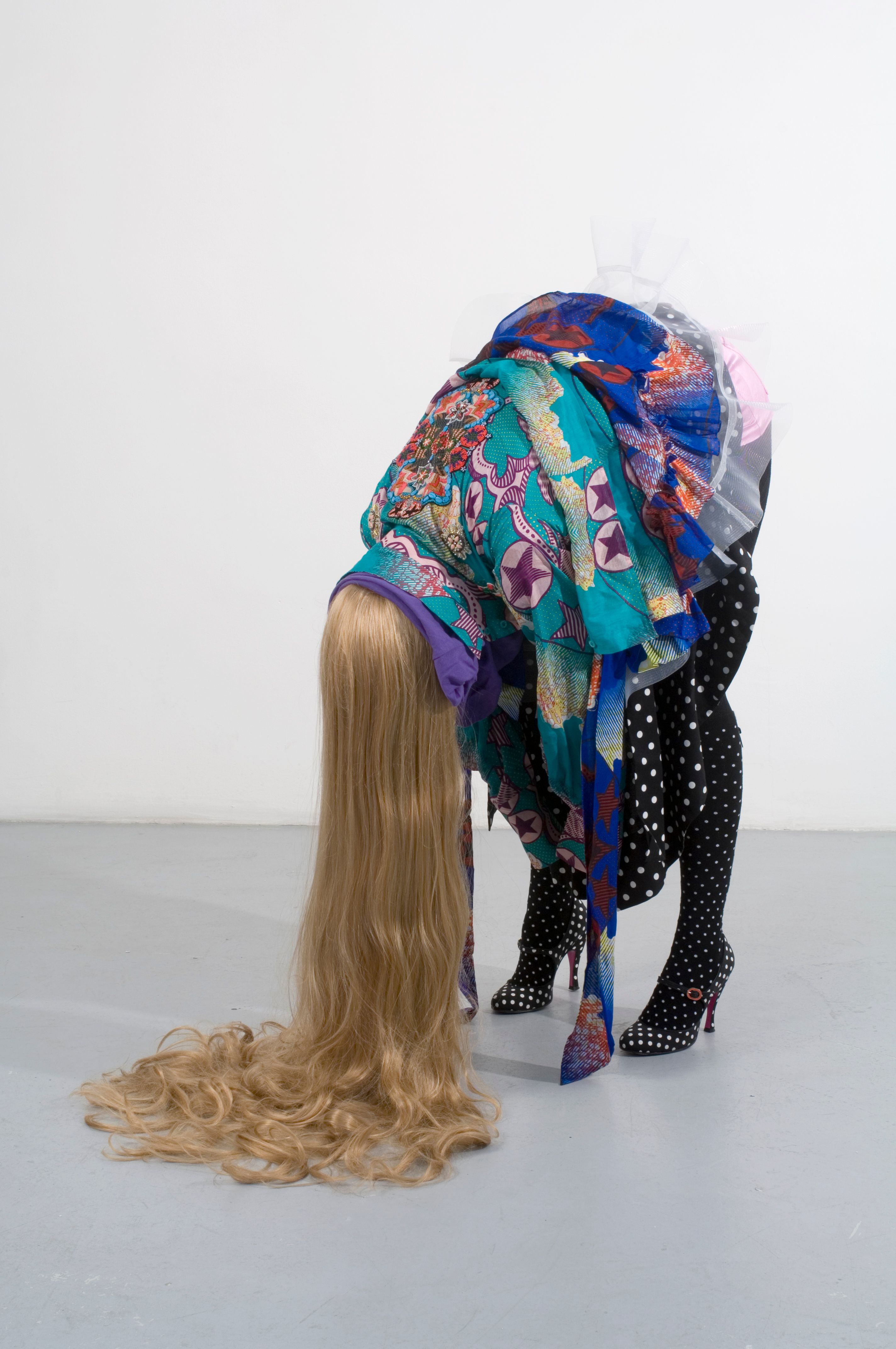
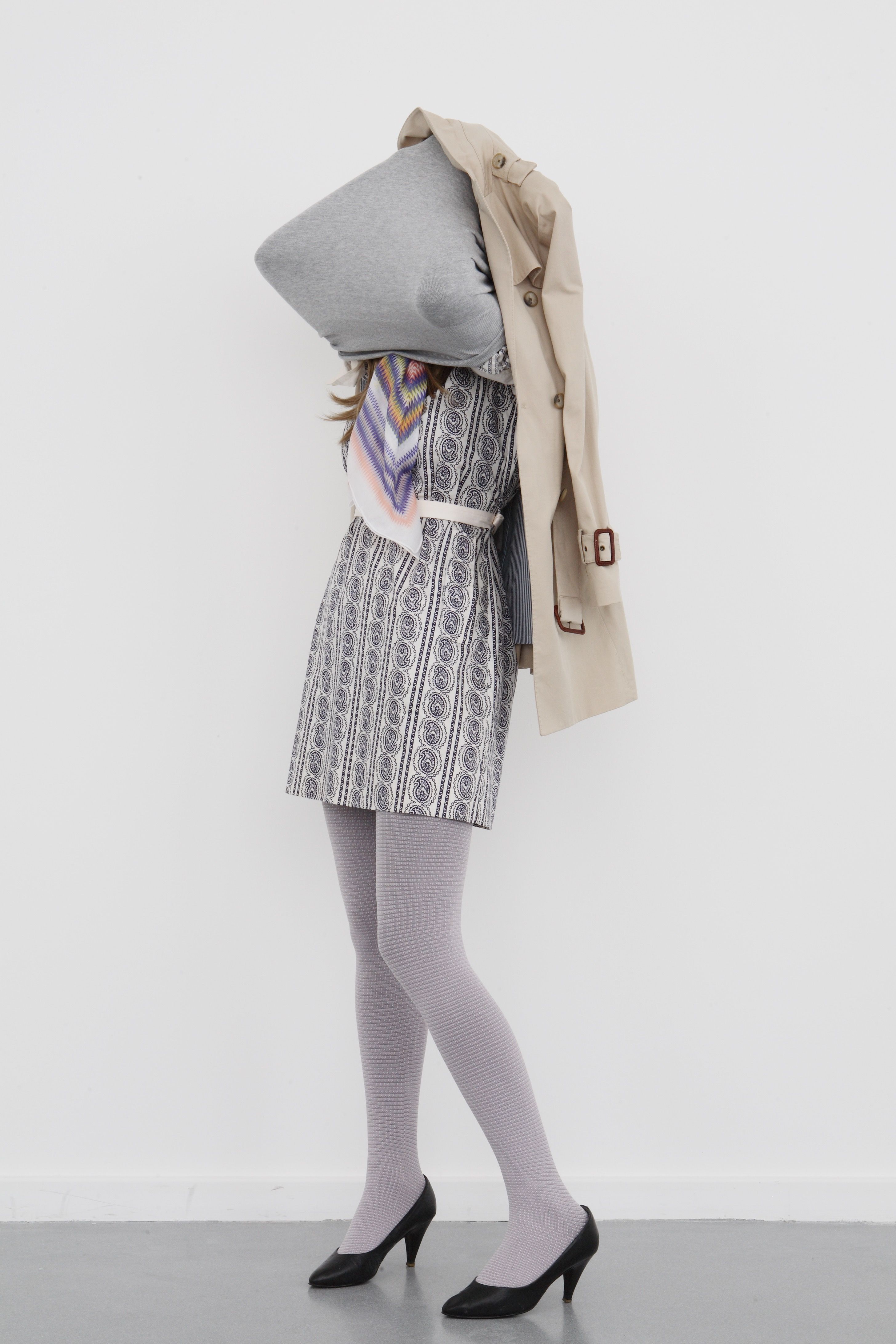
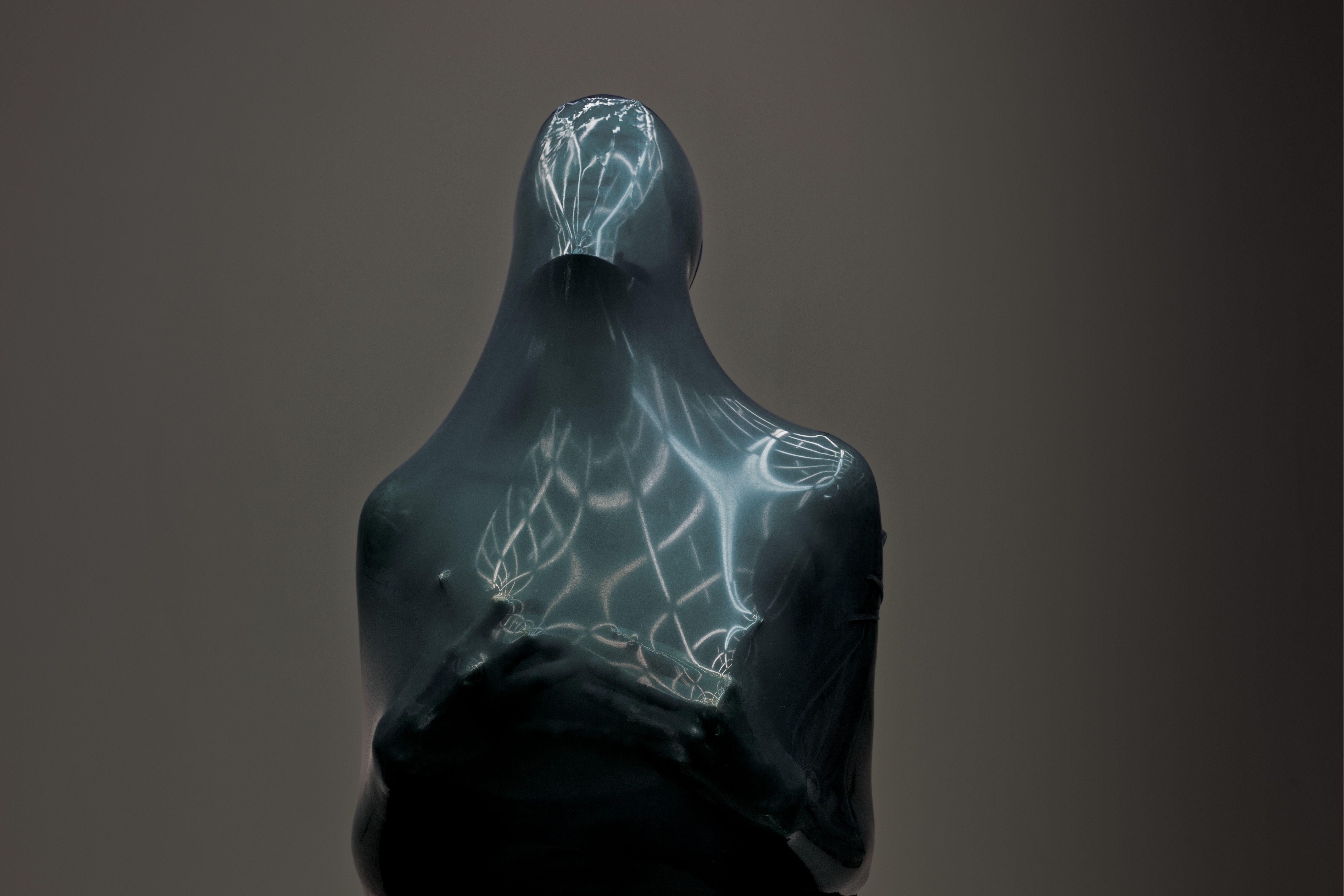
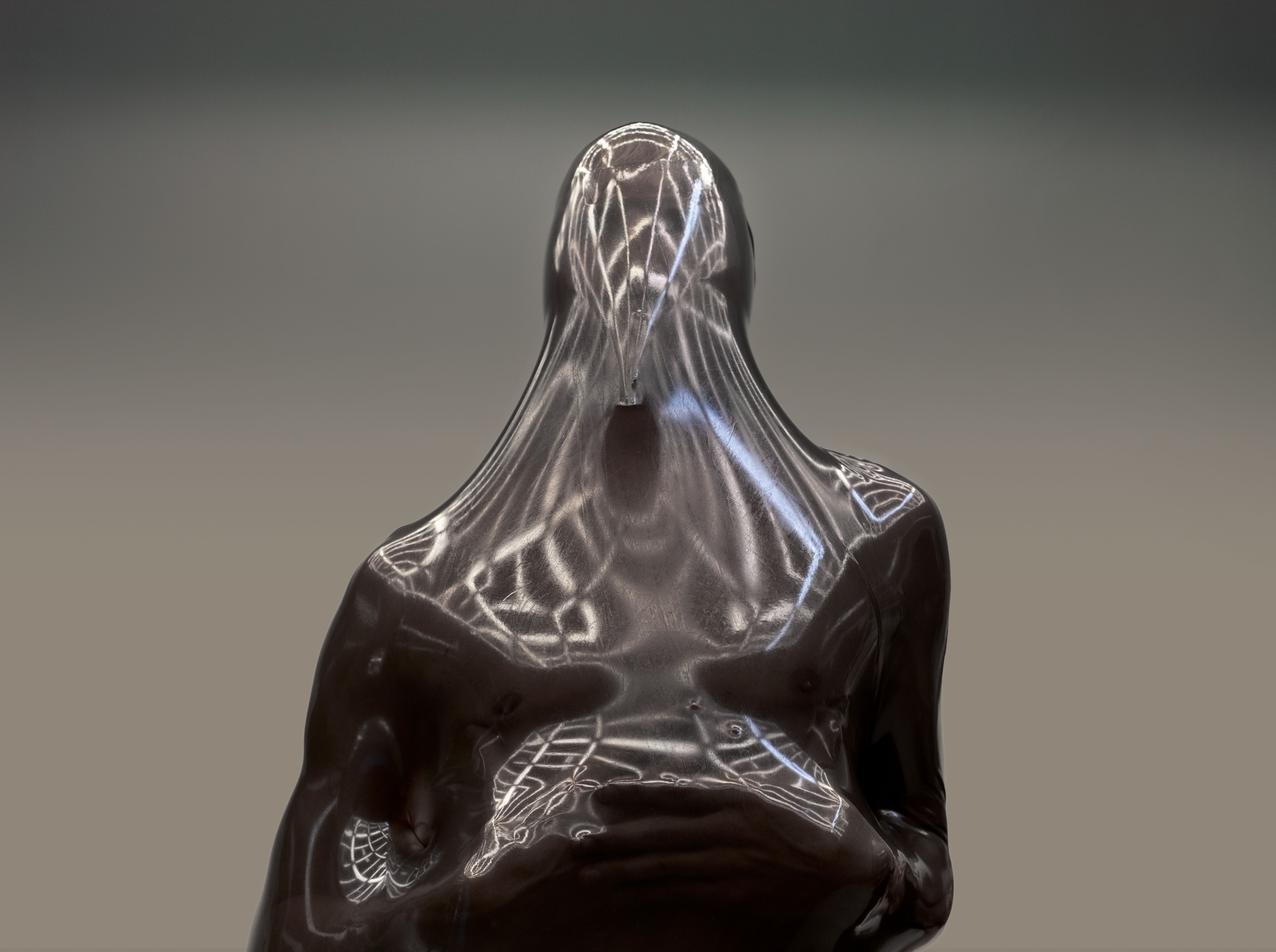
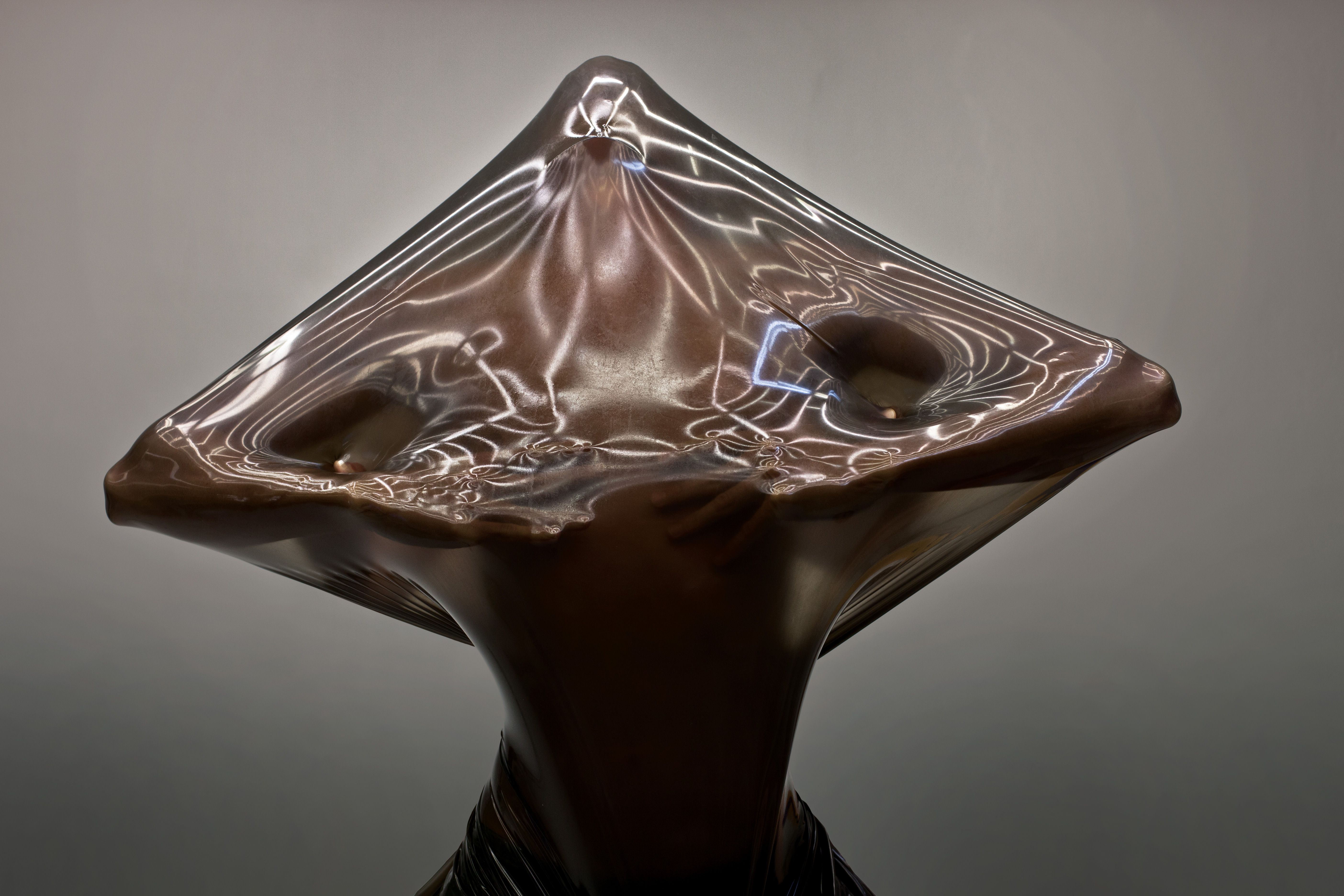
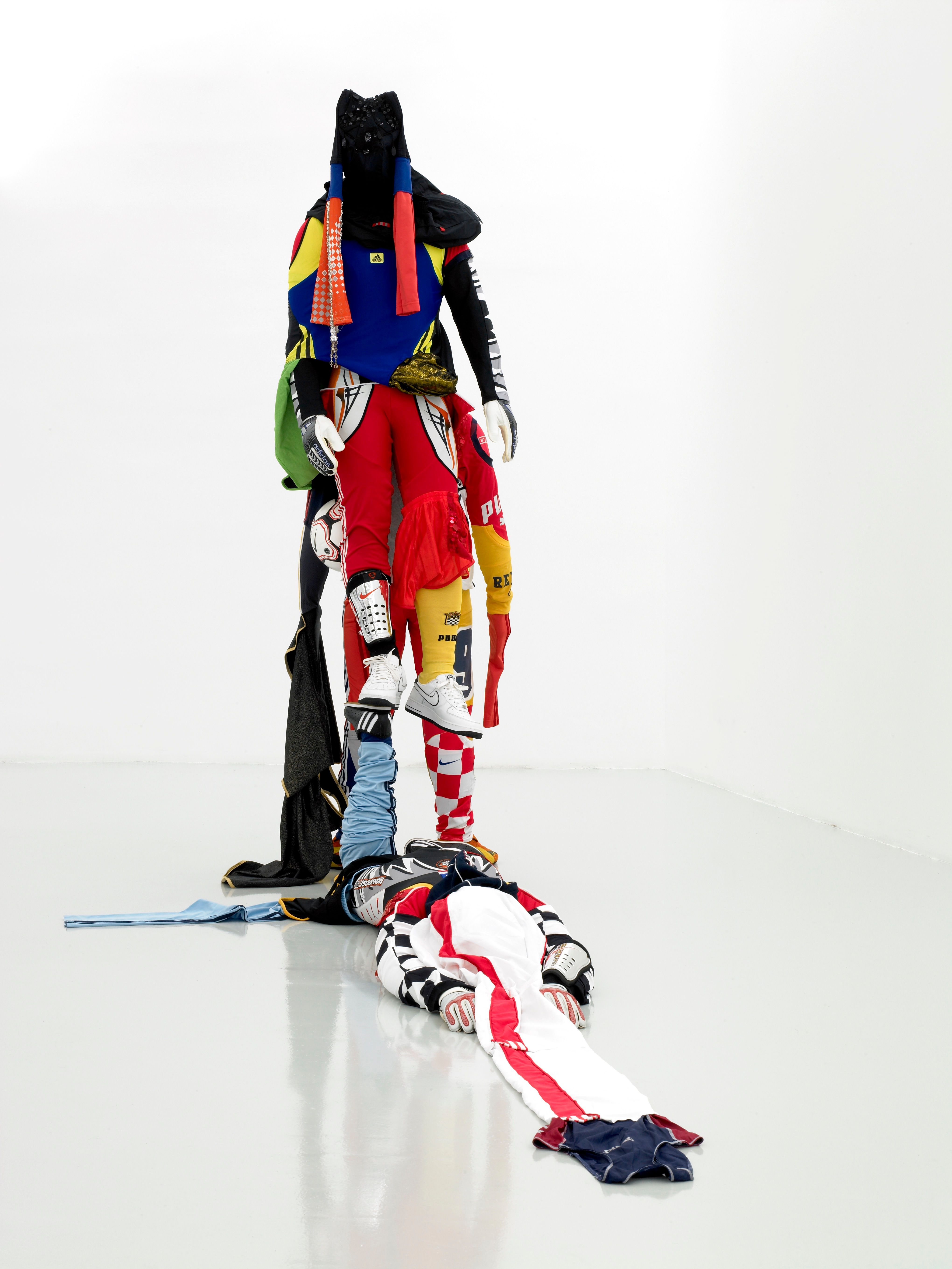
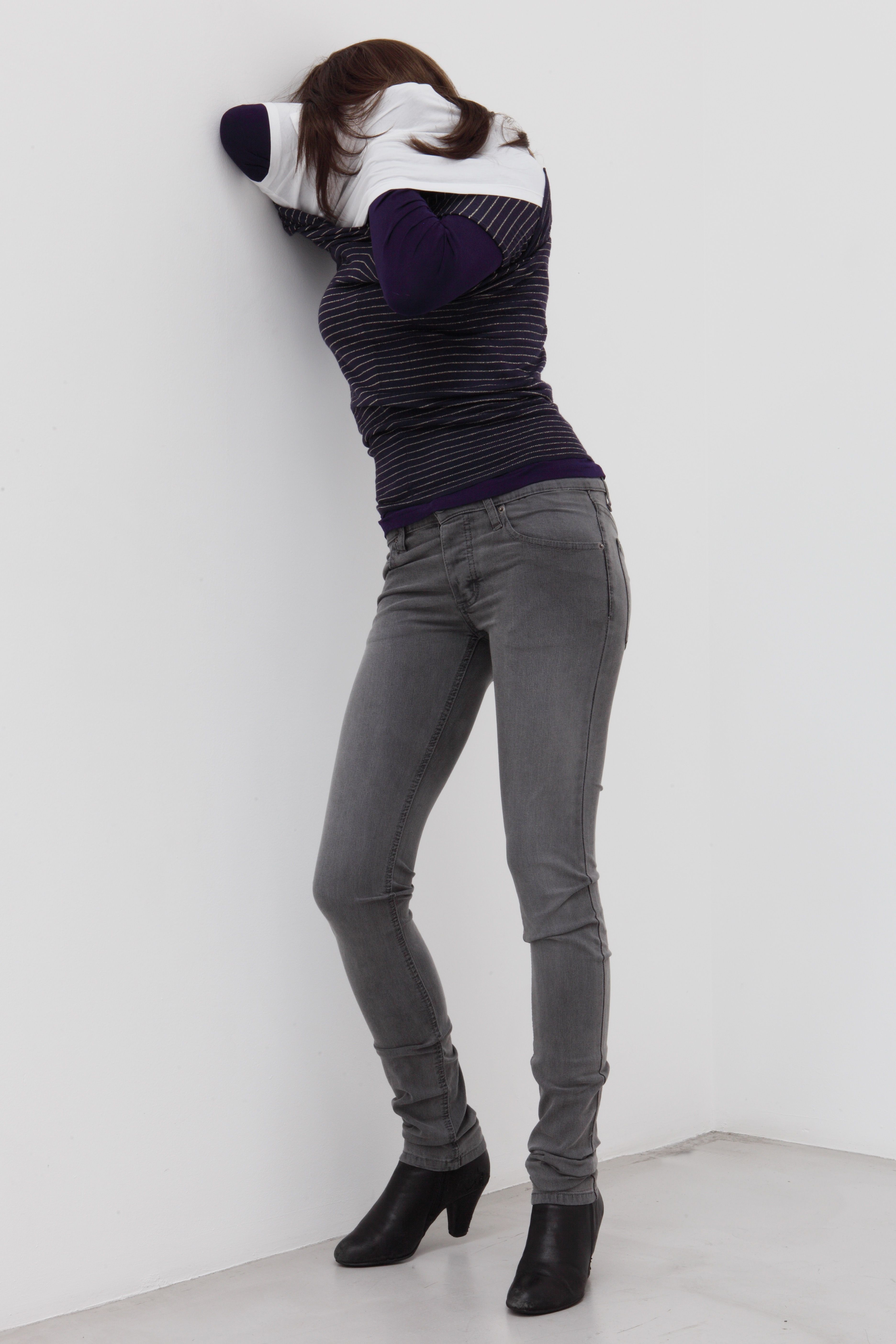
Daniel Firman, known for his sculptures of bodies wrapped in garments and objects, turns clothing into a metaphor for the weight of the everyday and the way the body is shaped by its surroundings. His earlier Attitude series already explored this by freezing ordinary gestures mid-motion, casting bodies in real clothes to transform fleeting poses into sculptural portraits of contemporary life. In his series Saisir l’impossible (cutting), the artist uses digital scanning to create impossible gestures, as if the figures were holding their own doubles. This frozen choreography recalls both the staging of a runway and fashion patternmaking, where cut and form reveal the construction of the body. Likewise, his iconic Mini-Gatherings present small human figures carrying piles of disposable objects on their shoulders, as if the body had become a support for our material excesses. Firman explores the paradox between obsessive accumulation and the hyper-dematerialisation of our digital lives, oscillating between anxiety and humor. This performative origin gives his works a kinetic charge even when the bodies appear immobile. Whether an elephant suspended in midair or a human body testing its balance under the weight of objects, Firman turns the exhibition space into a stage where time, gravity, and the body are put to the test.
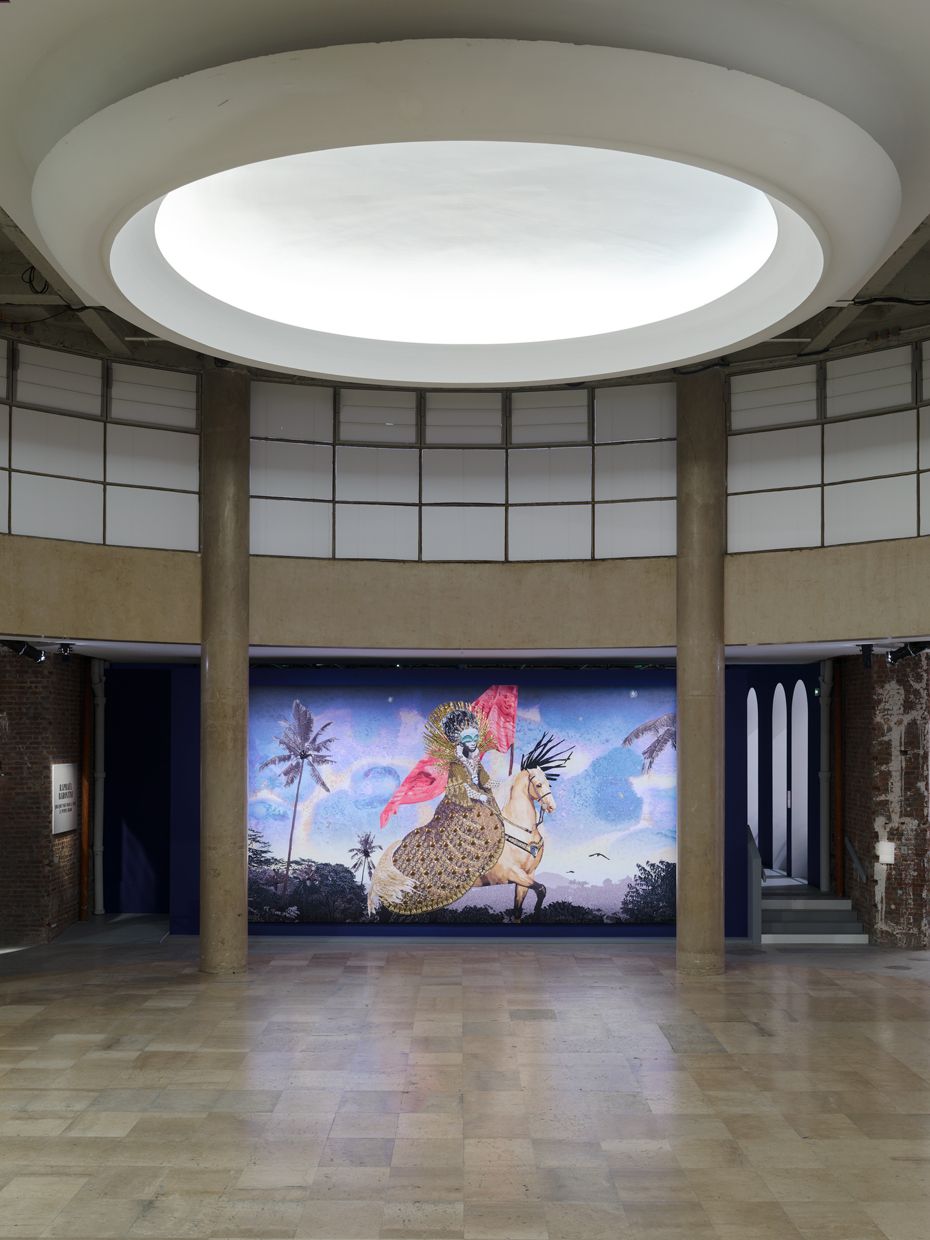
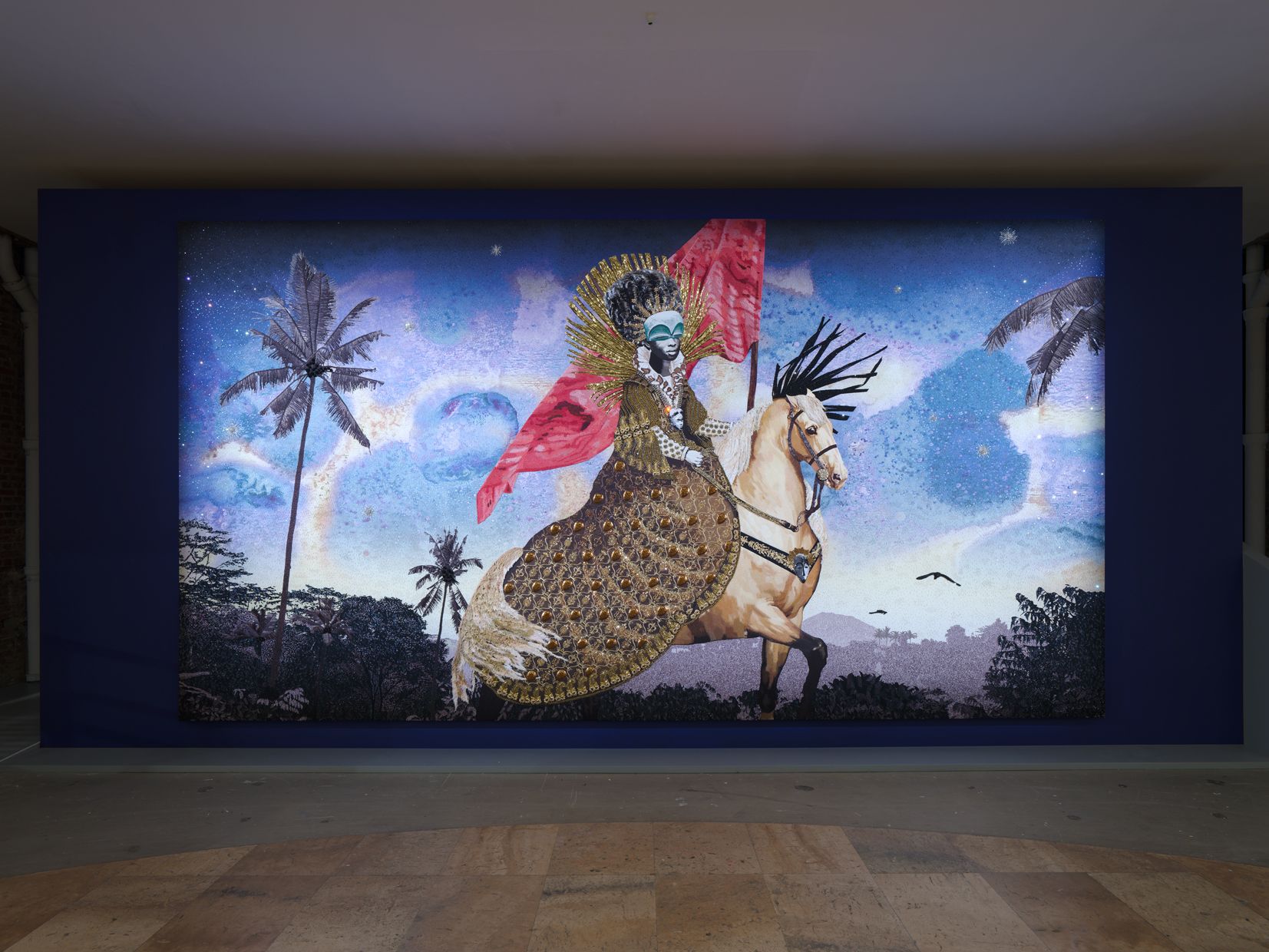
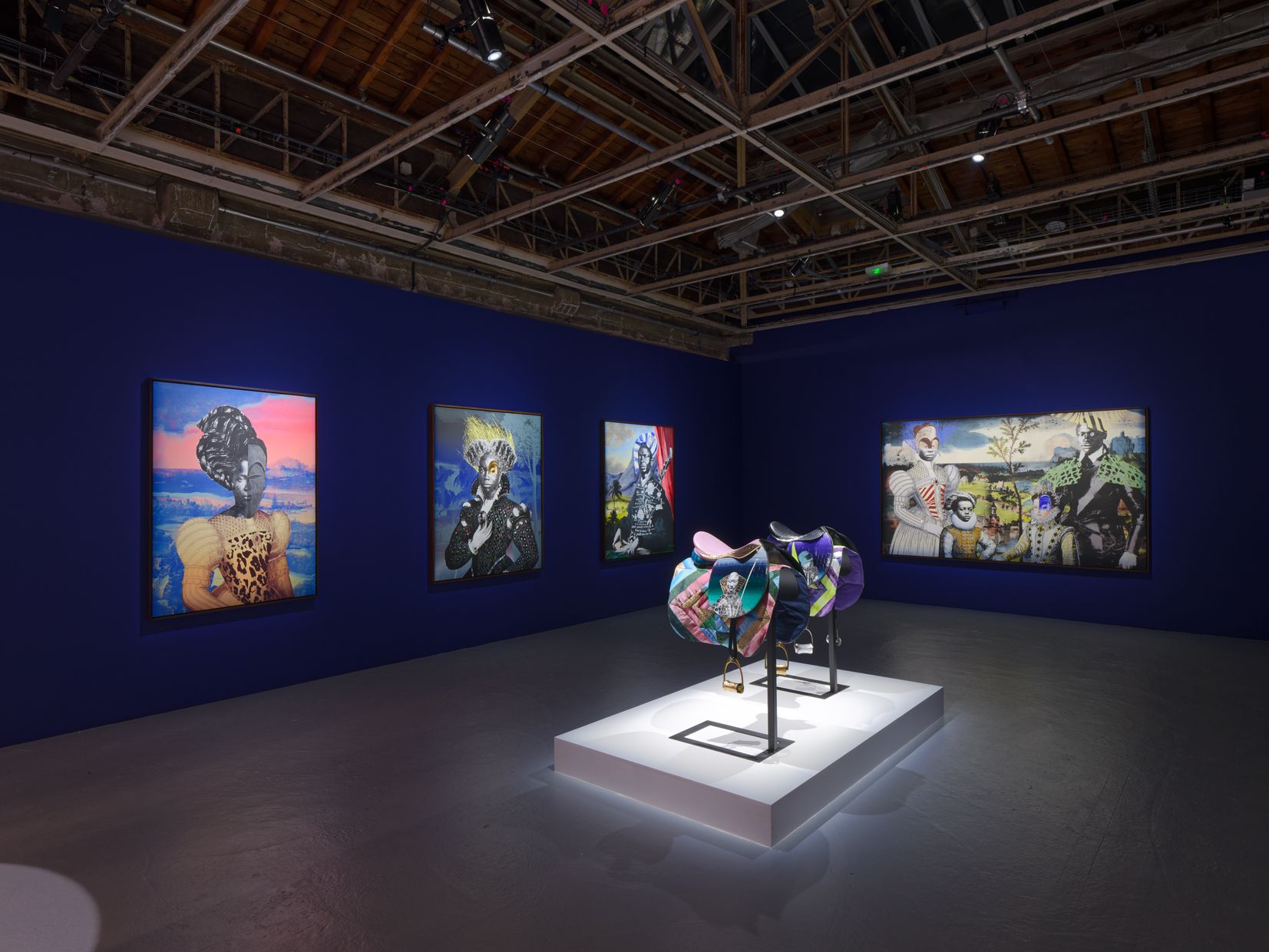
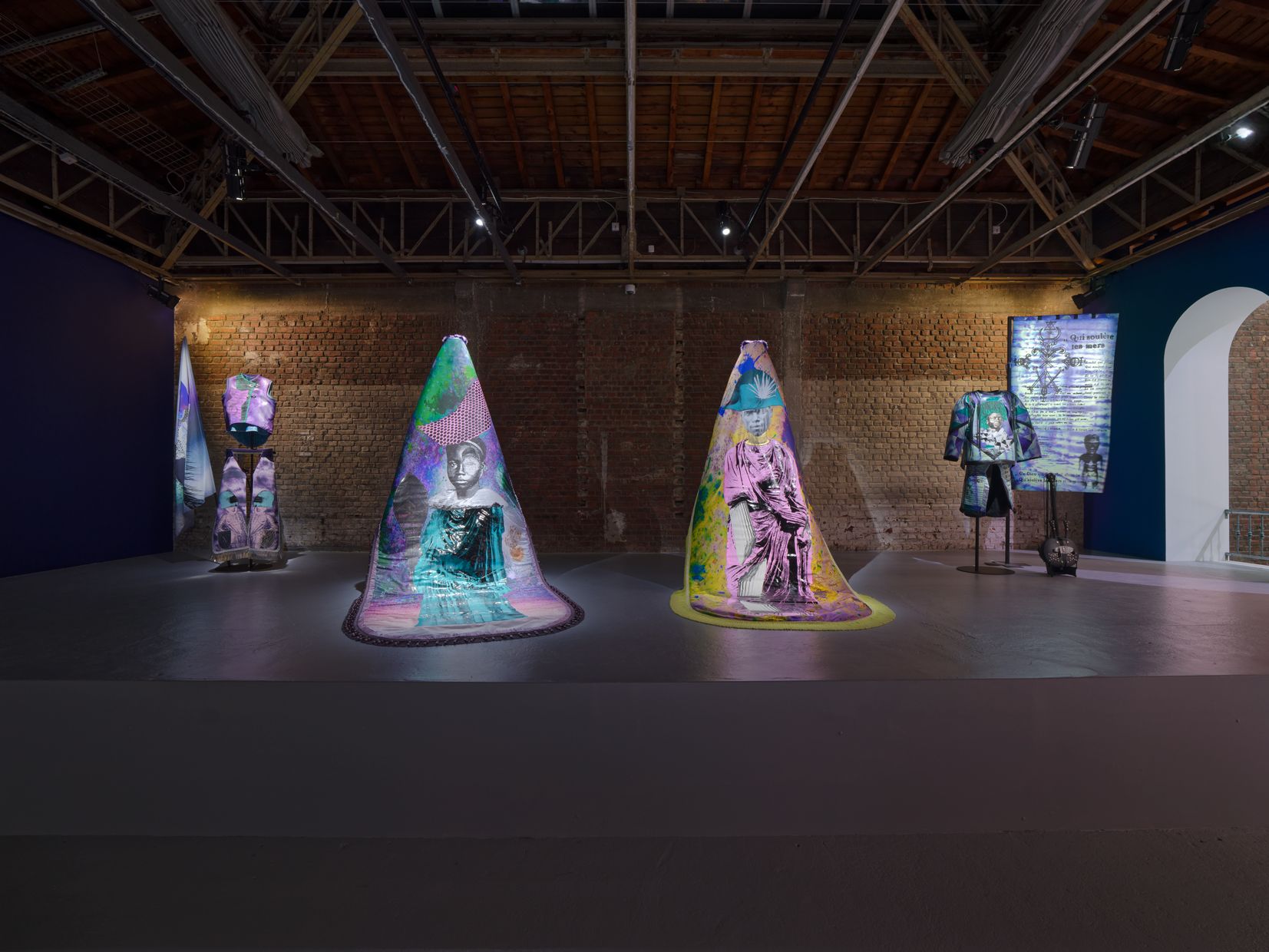
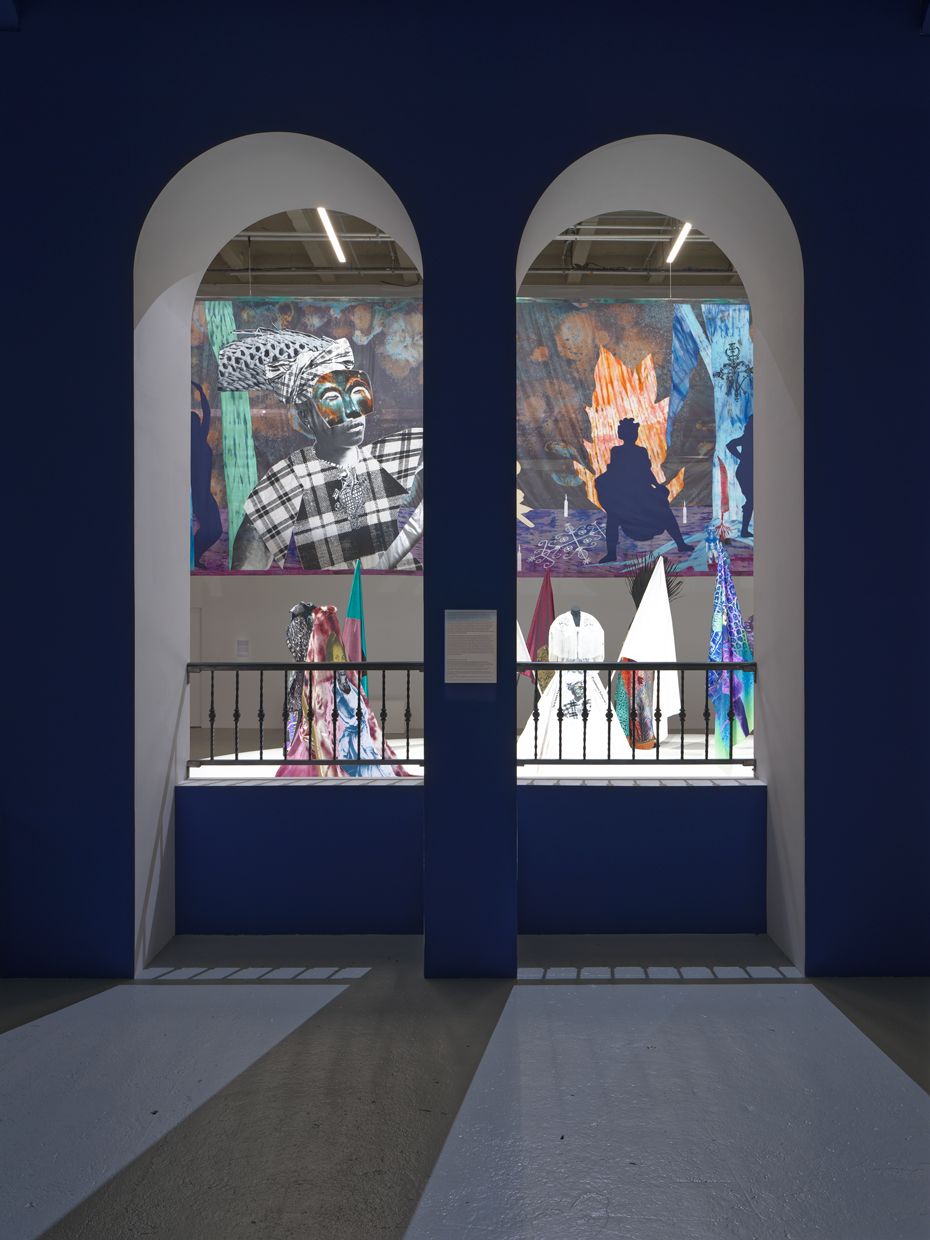
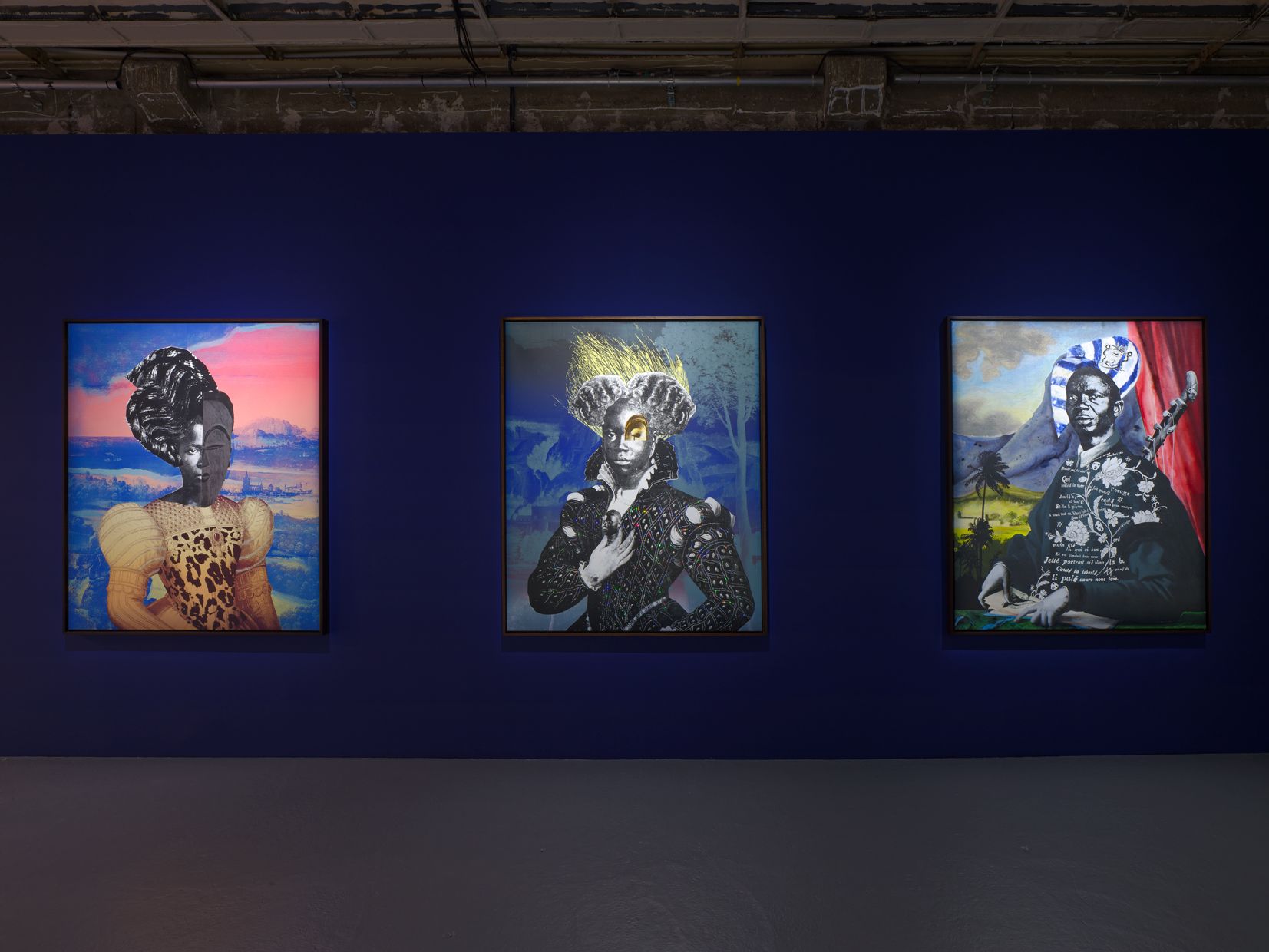
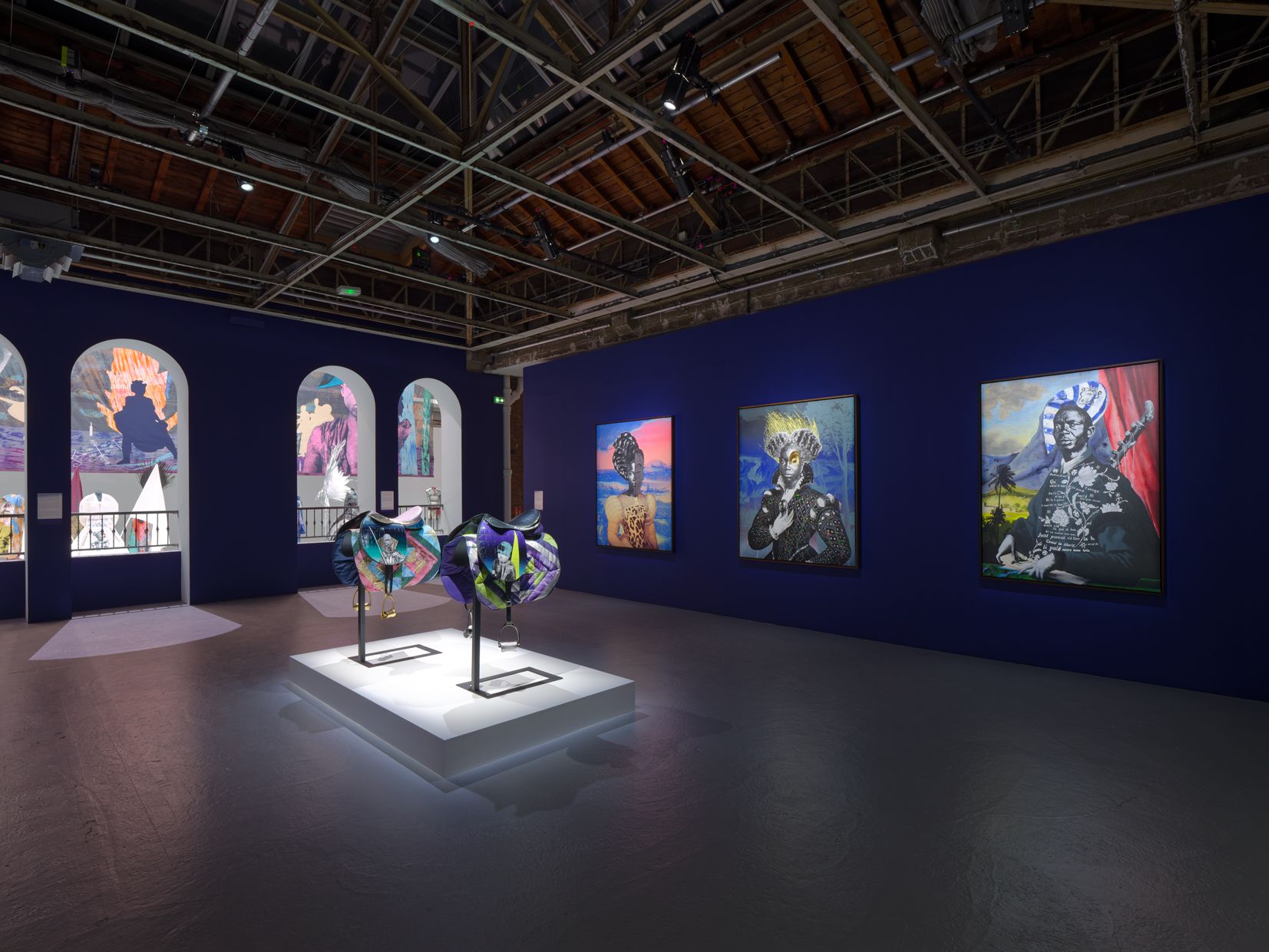
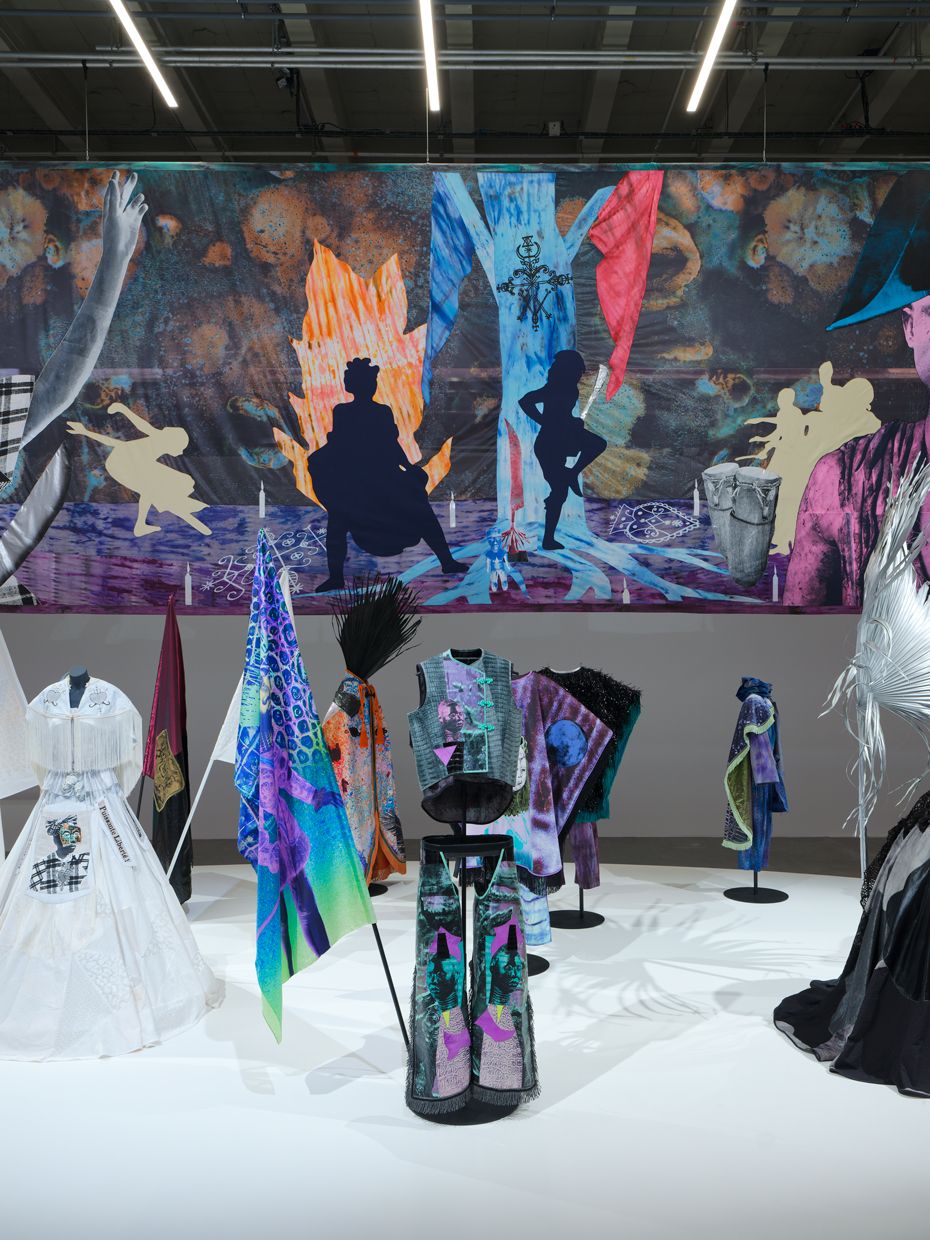
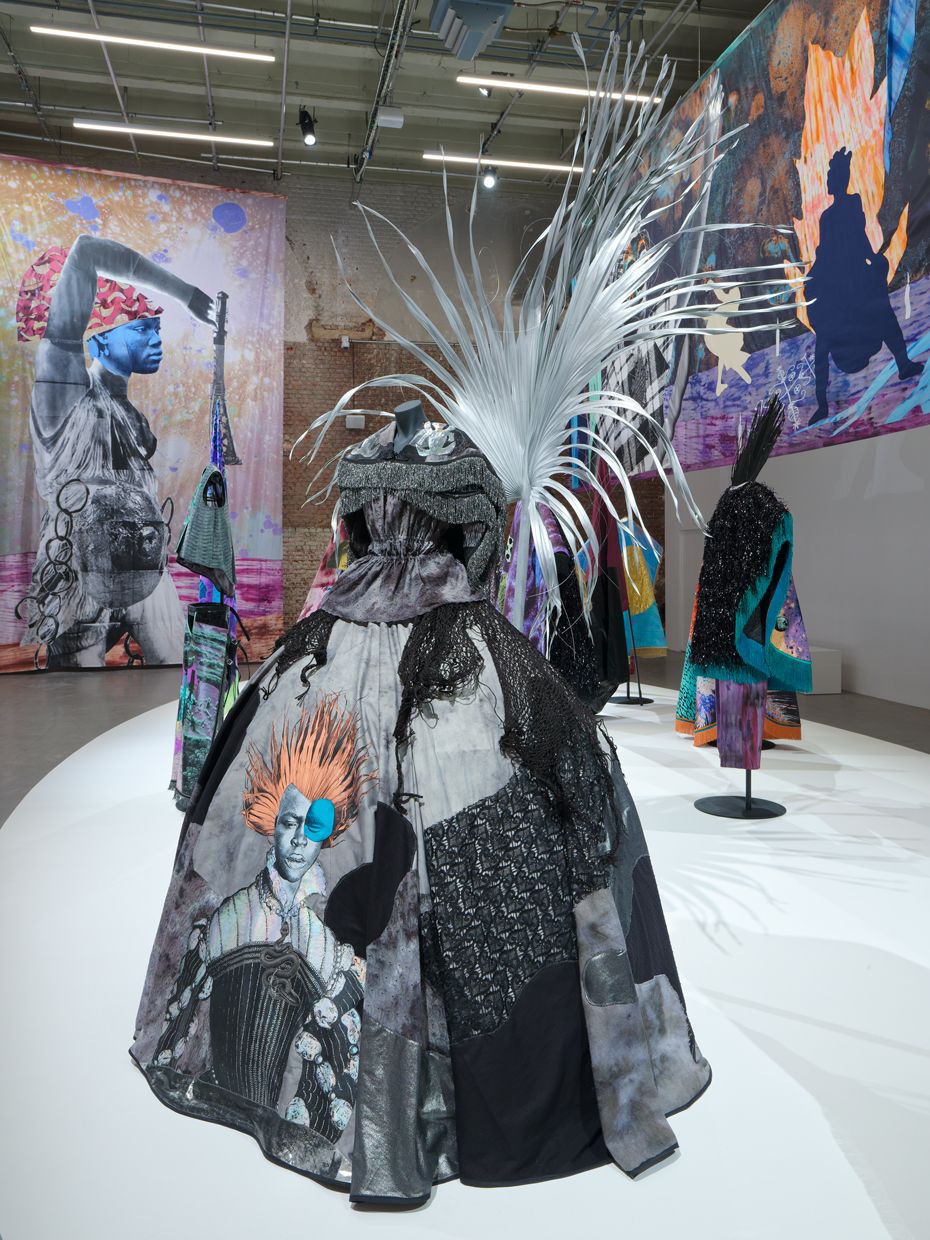
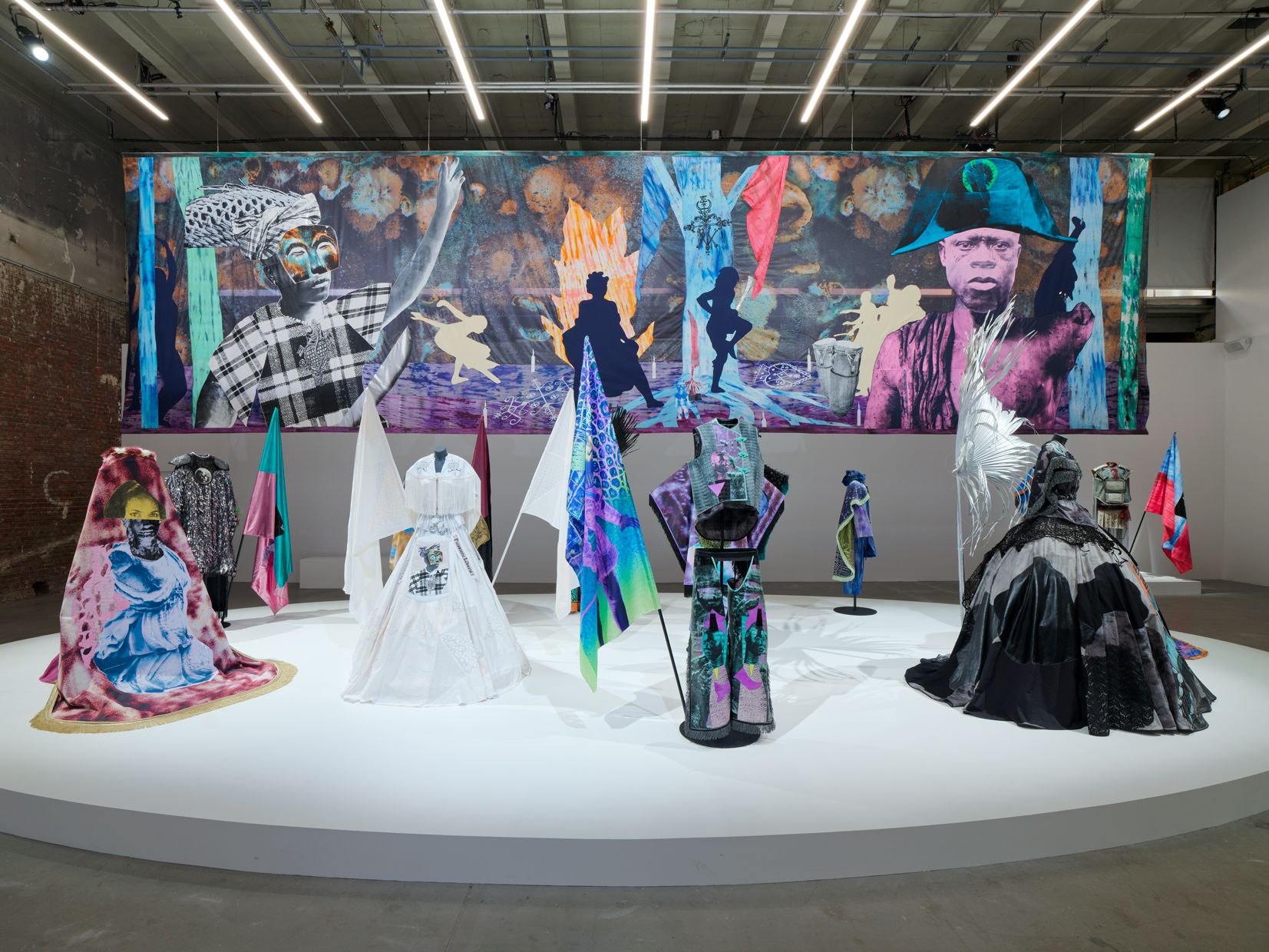
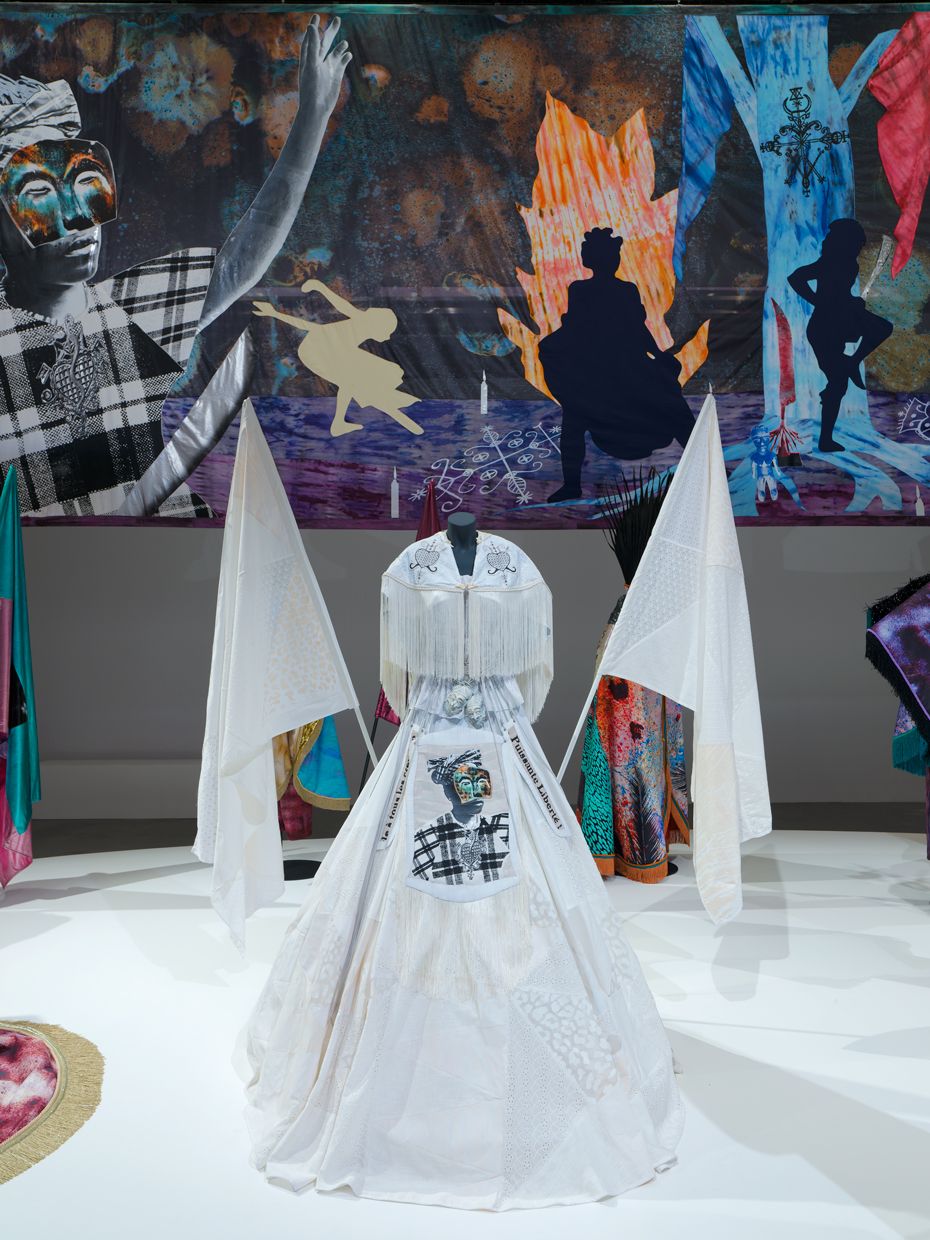
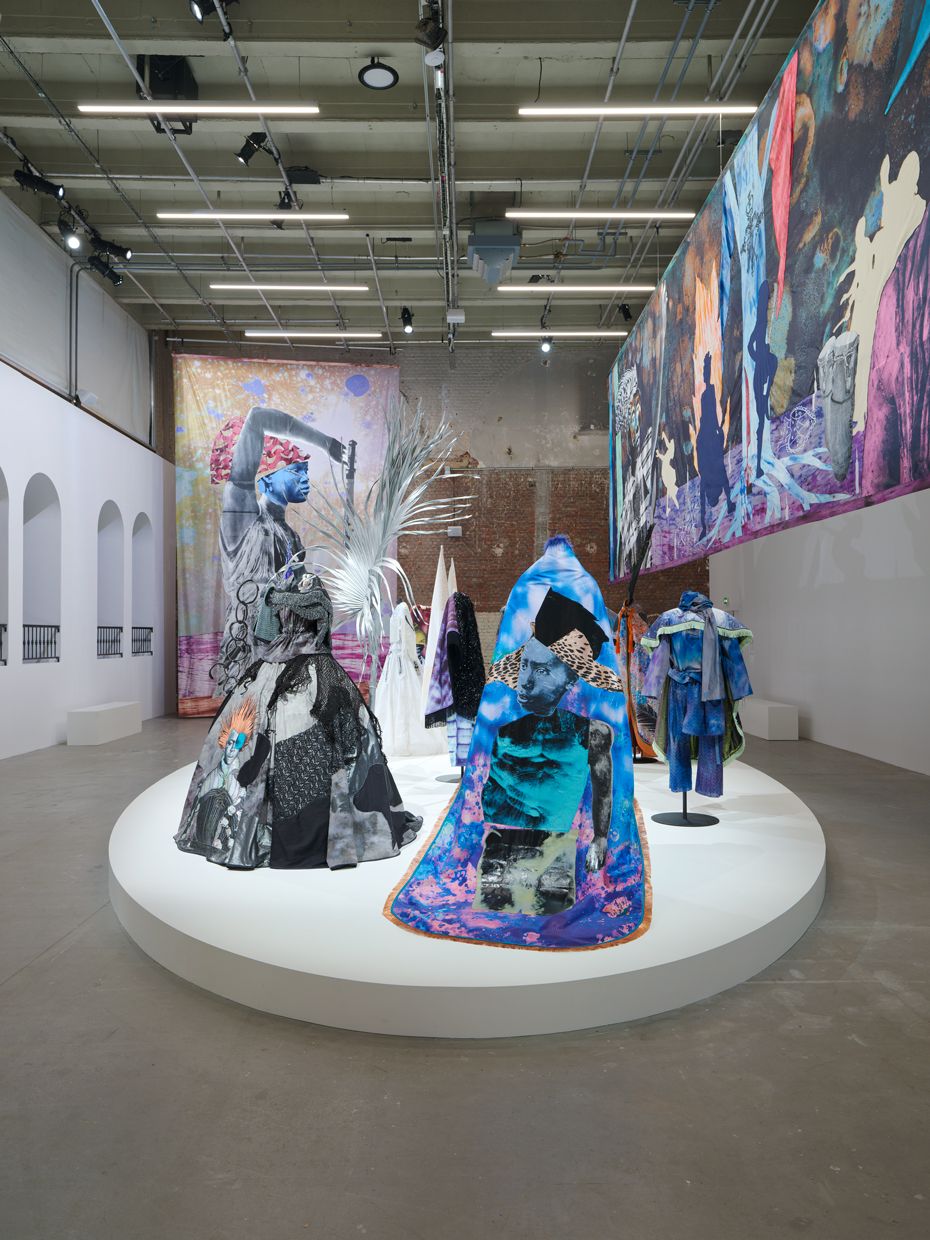
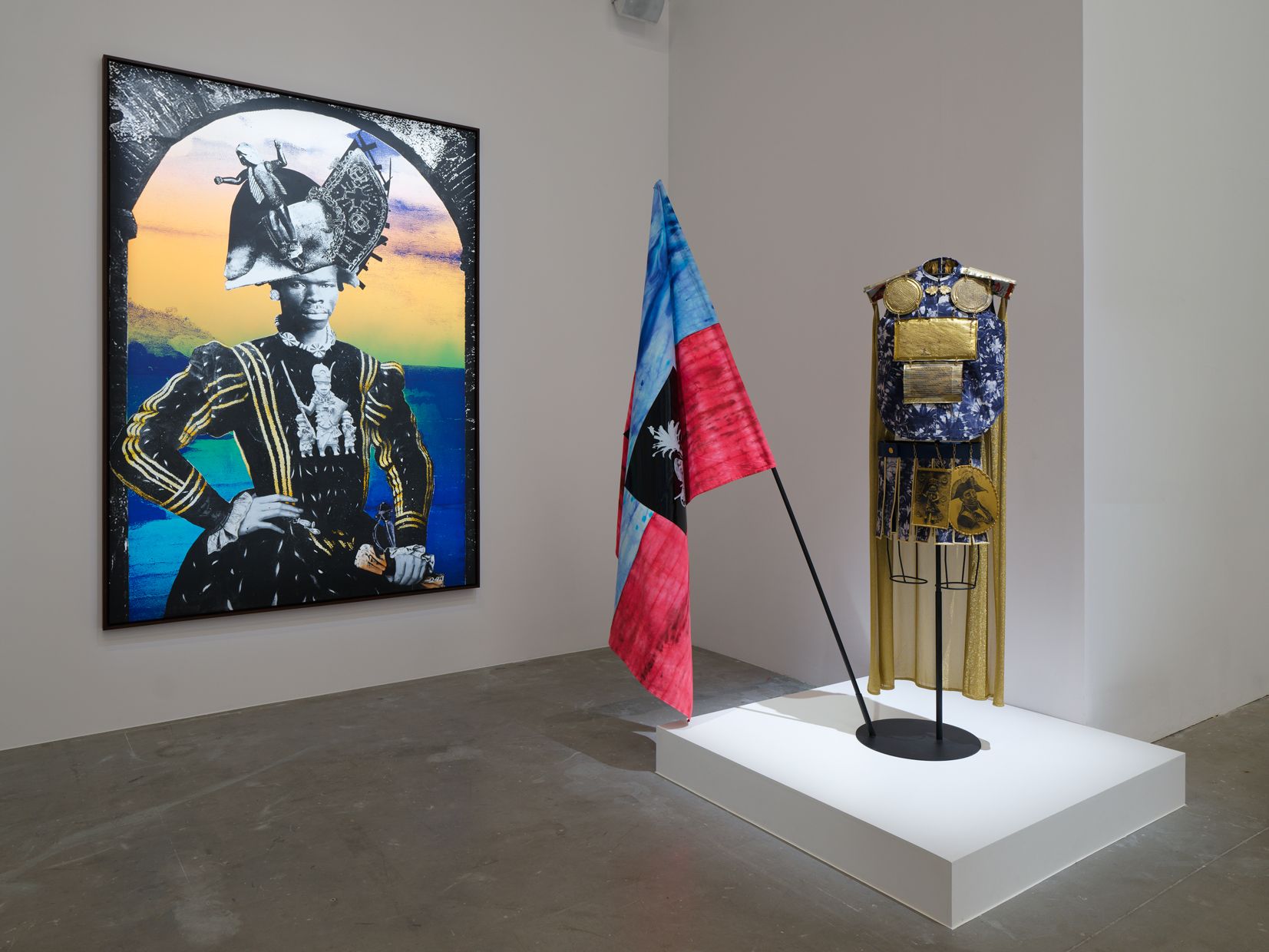
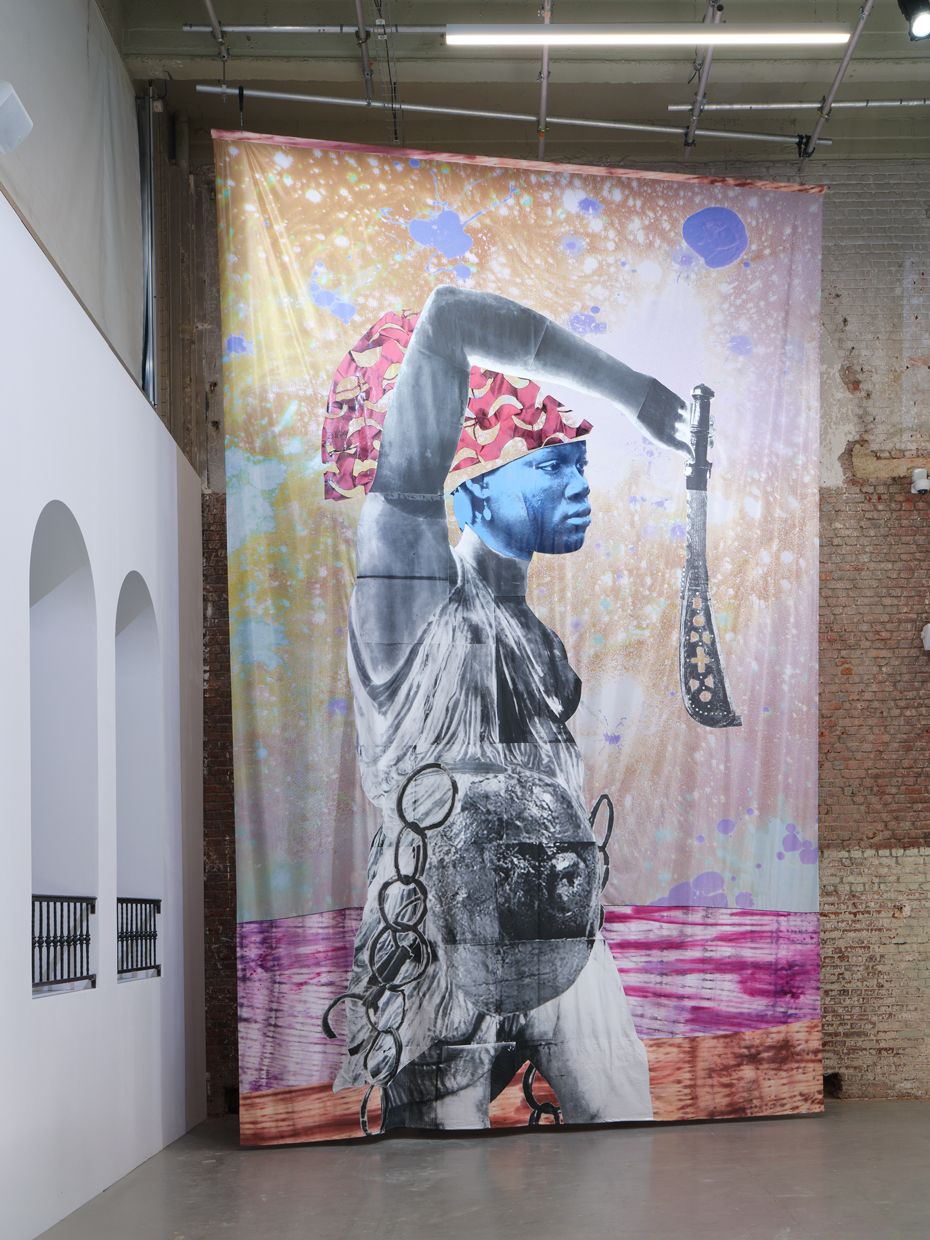
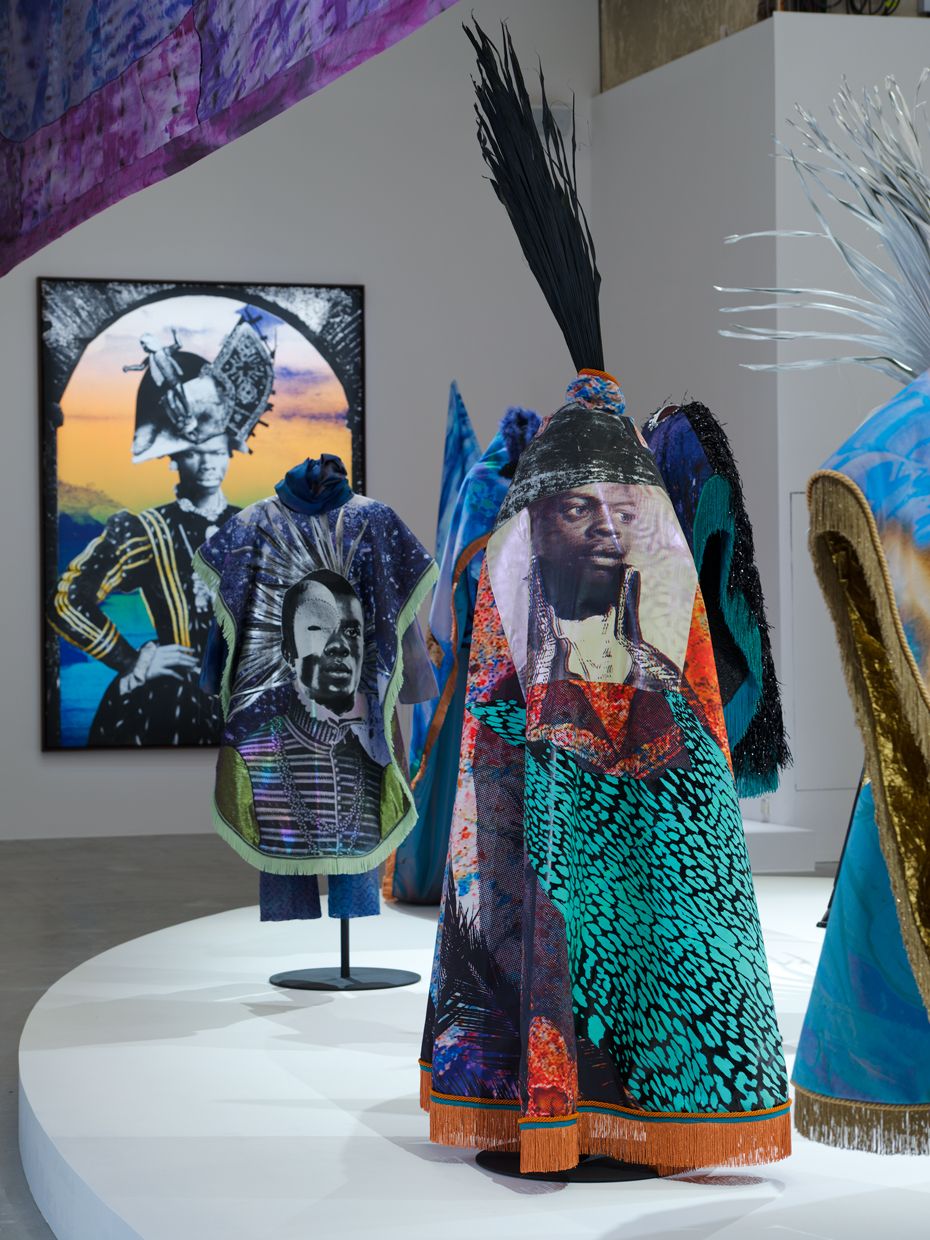
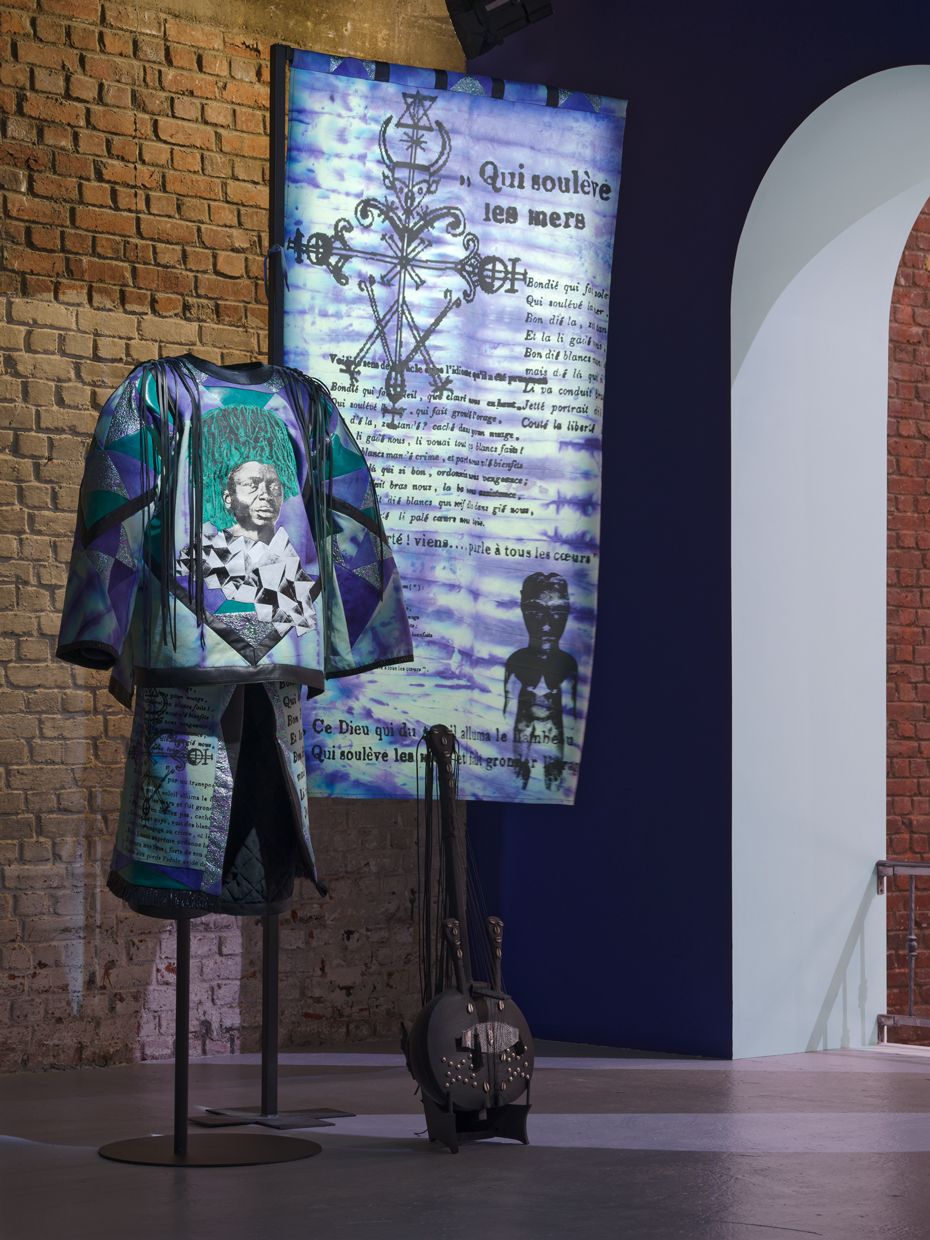
Raphaël Barontini, meanwhile, combines banners, textiles, and silkscreened portraits in parades and installations that rewrite colonial history through the festive gesture. His processions, halfway between carnival, ritual, and performance, turn fashion into an act of memory and emancipation, where the viewer is invited to follow the route and take part in a kind of contemporary liturgy. Drawing on figures from the African and Caribbean diasporas, Barontini overlays heraldic symbols, monumental fabrics, and painterly surfaces to create scenes that are both celebratory and subversive. The exuberance of sequins, stones, and ceremonial costumes contrasts with the weight of historical trauma, offering a reimagined iconography where power is inverted through festivity. In this sense, his work does not simply recall the past but reactivates it in the present, transforming the exhibition space into a stage where memory becomes collective ritual and resistance takes the form of celebration.
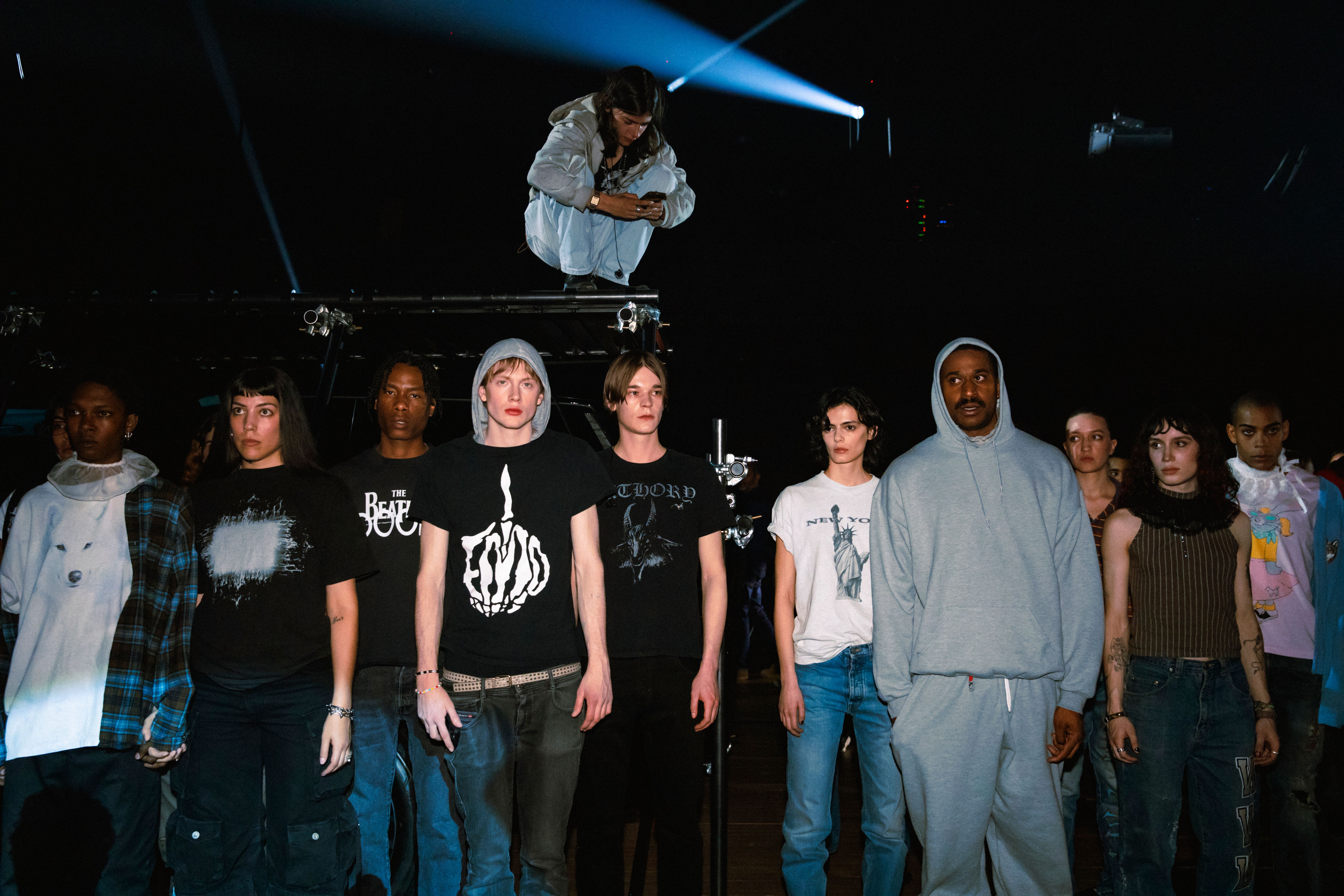
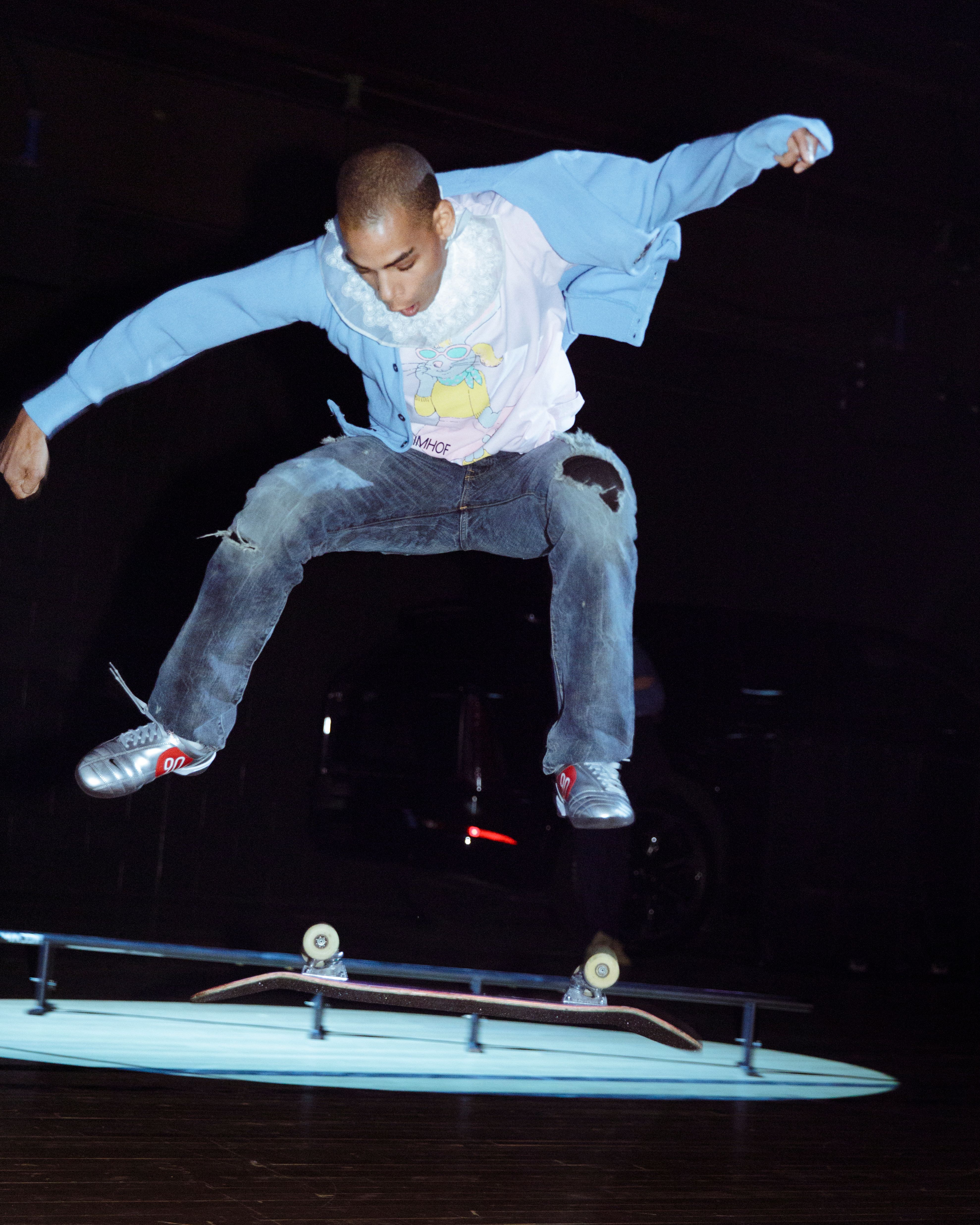
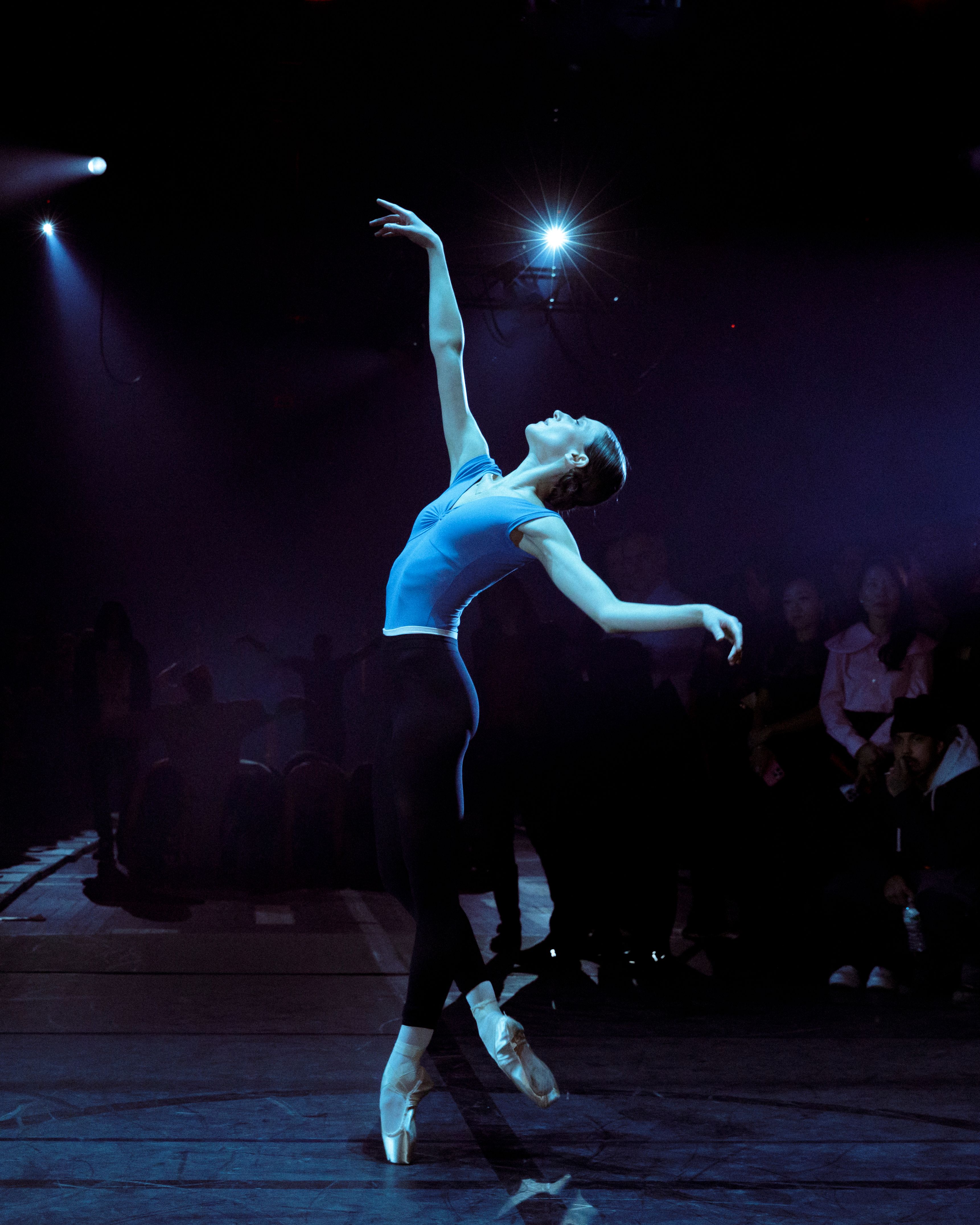
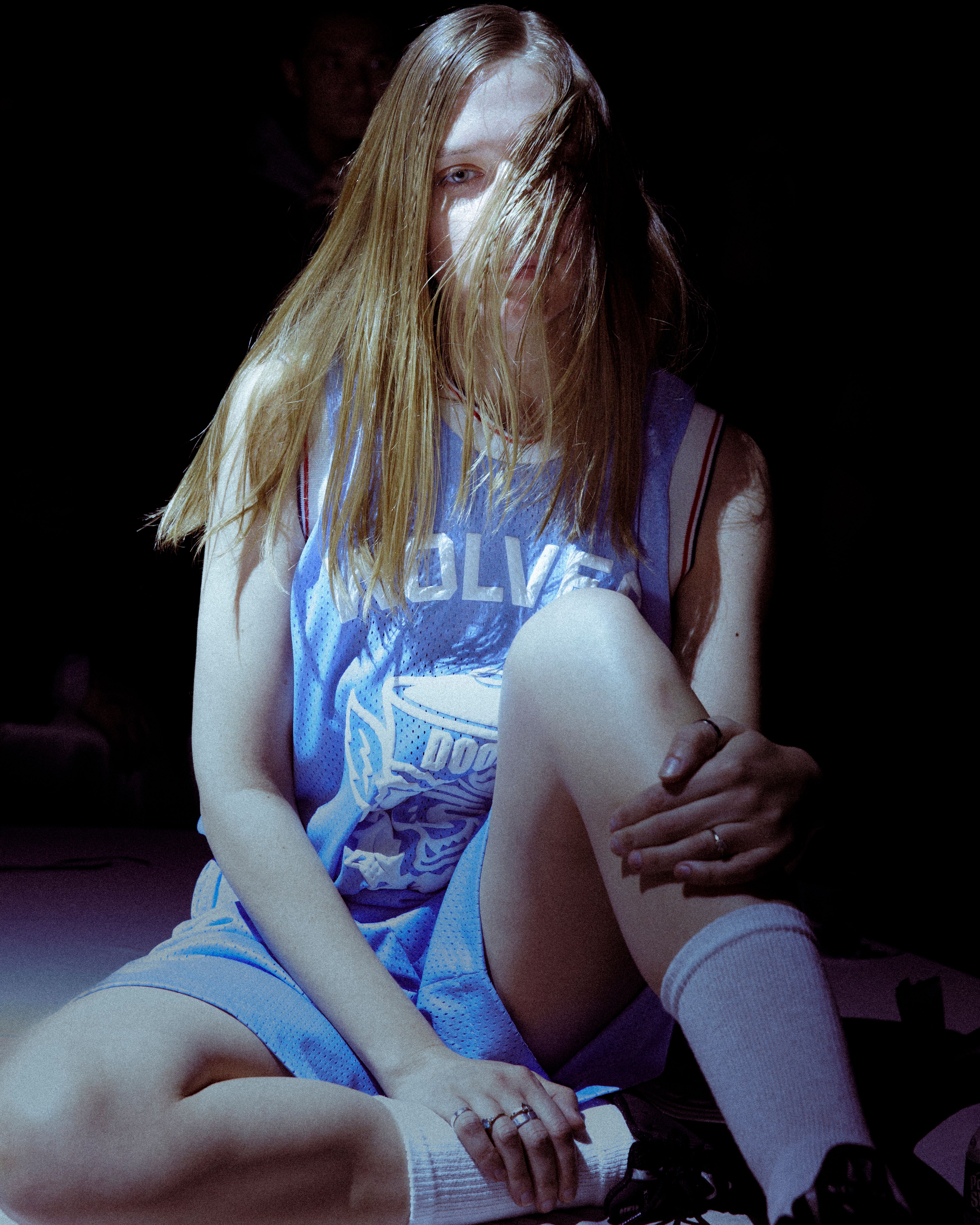
Anne Imhof turns clothing into a choreographic language that defines atmospheres and tensions between body and power. In Doom: House of Hope (Park Avenue Armory, New York), her most ambitious performance to date, she combines contemporary dance, spoken word, fragments of classical ballet, and a monumental scenography featuring Cadillac Escalades and a jumbotron projecting live images. There she stages the rite of passage of adolescence, exploring alienation, desire, and the fragile search for hope in a world in crisis. Imhof’s performers, often dressed in everyday garments that acquire symbolic weight through repetition and ritual, inhabit the space like living tableaux, moving between intimacy and aggression. In parallel, her exhibition Cold Hope at Galerie Buchholz (Berlin) extends this dramaturgy into the visual field, presenting paintings and musical scores that function as the lingering memory of her performances. Together, these works reveal how clothing can set the tone of an atmosphere, turning the museum into a charged arena where power, vulnerability, and resistance are choreographed in real time.
If these performances bring the body into the here and now, other artists project it toward what does not yet exist, imagining hybrid anatomies, survival ecosystems, and augmented biologies.
Speculative Futures and Biotechnology
Contemporary fashion does not just reflect the present, it imagines possible futures. In the museum, some creators work at the intersection of art, design, and science to explore how the body might evolve in dialogue with technology. These projects, closer to critical design than to the runway, raise questions about identity, survival, and transformation in an increasingly hybrid world.
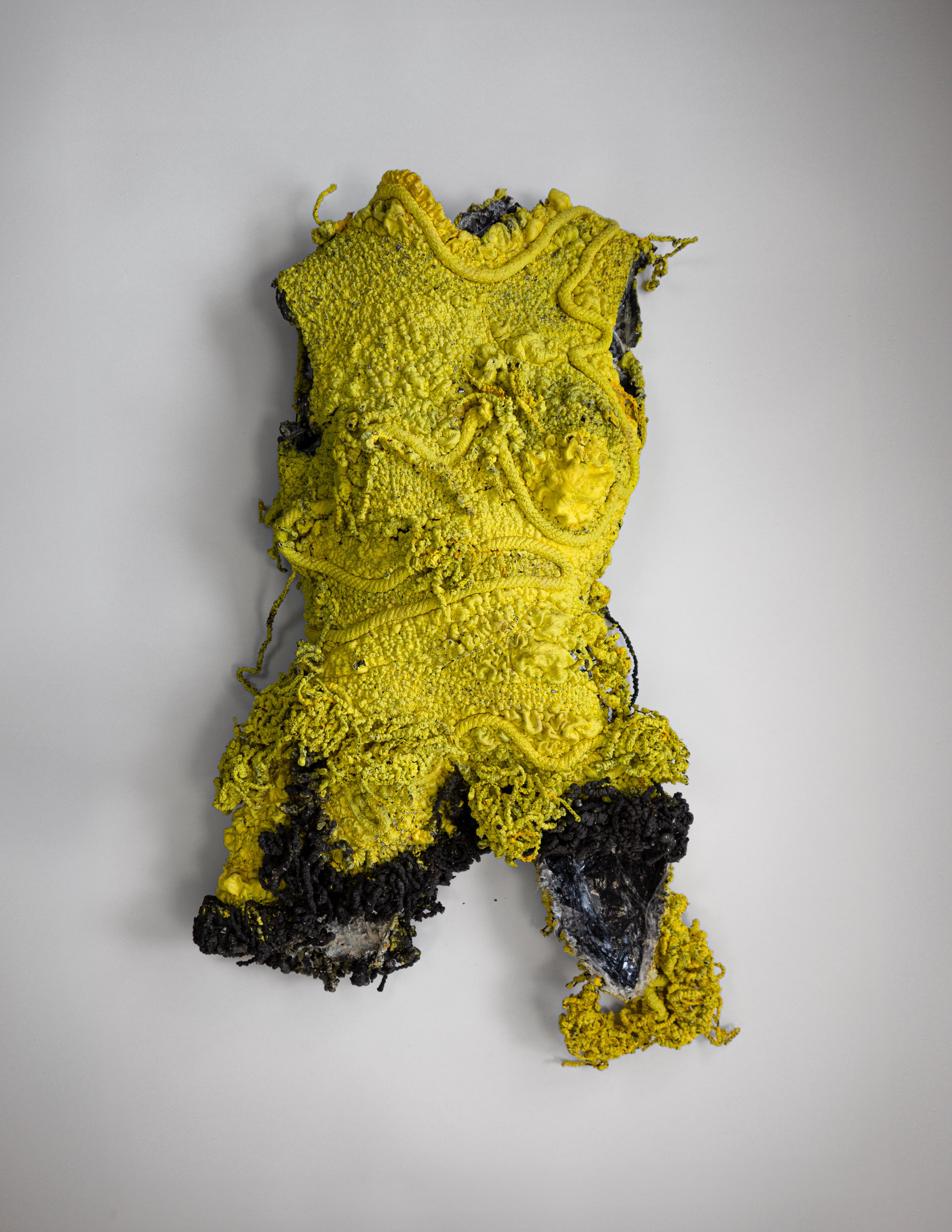
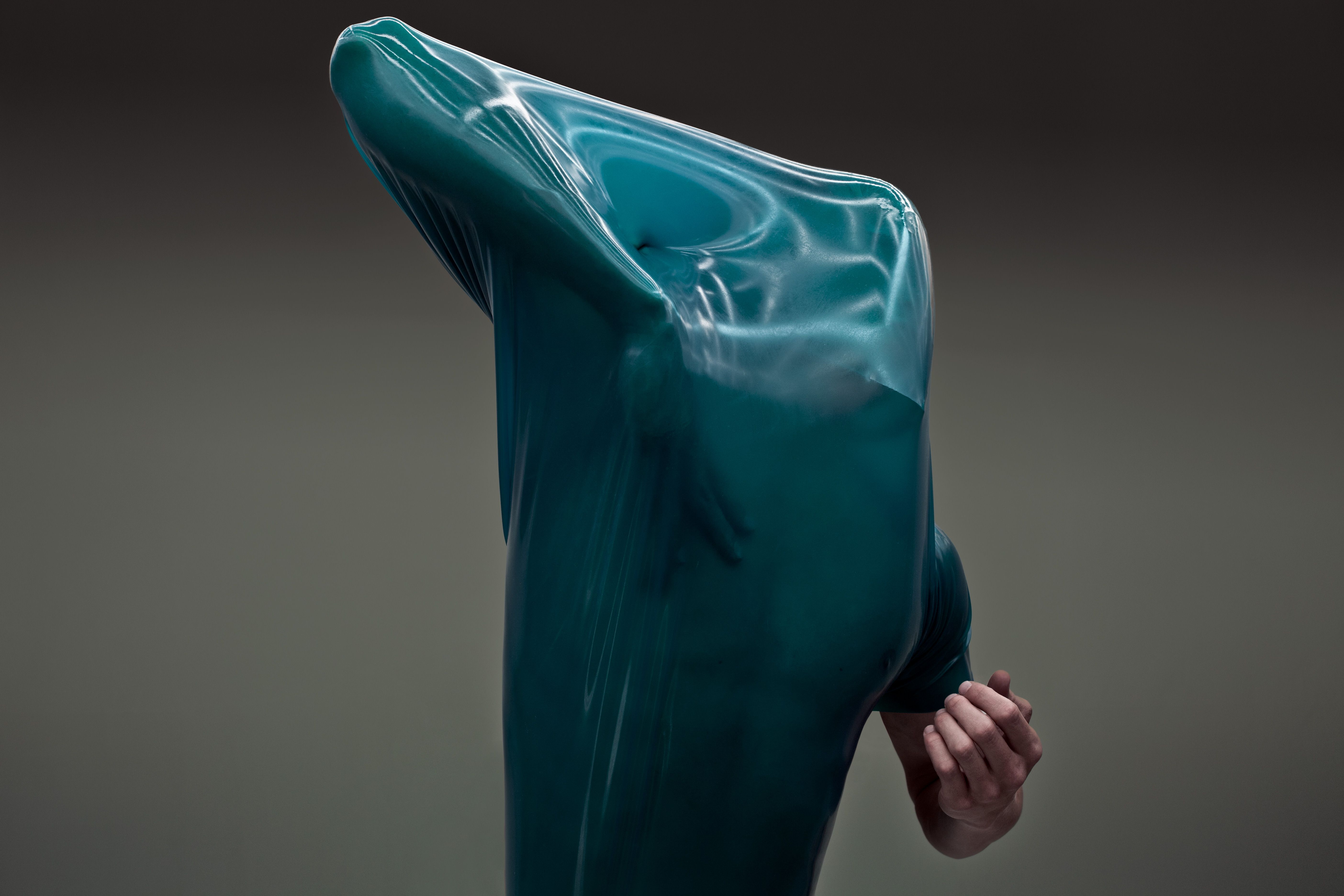
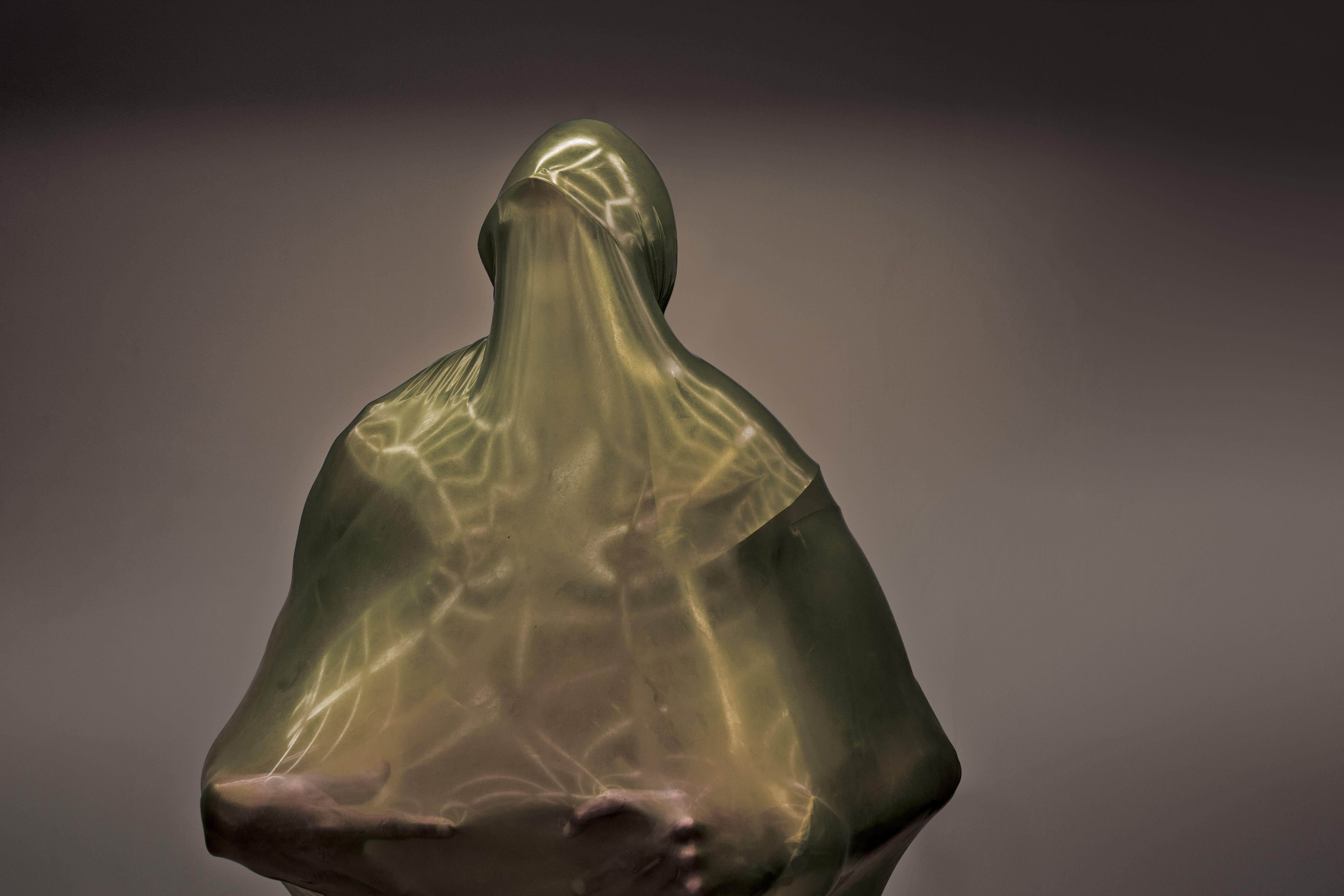
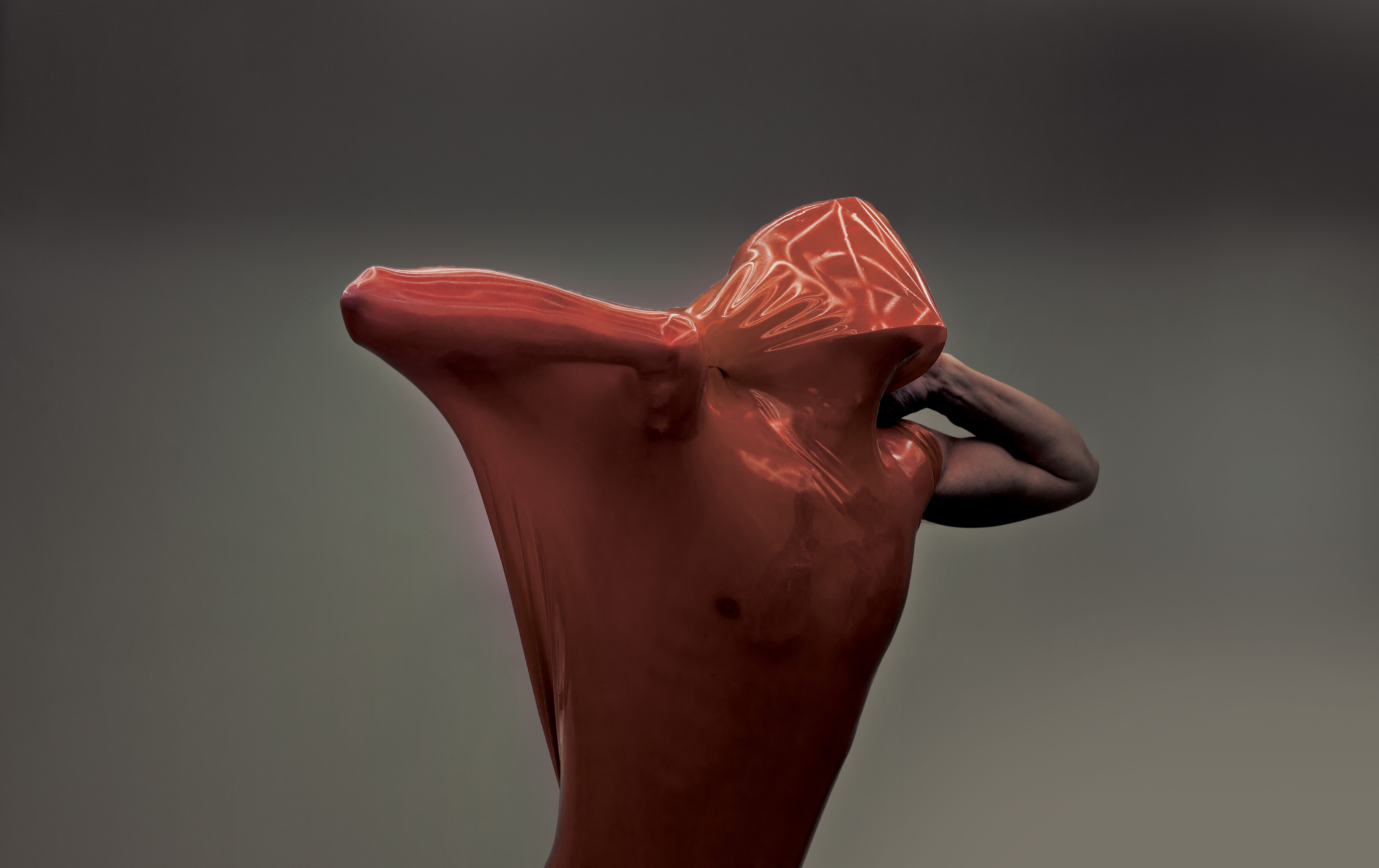
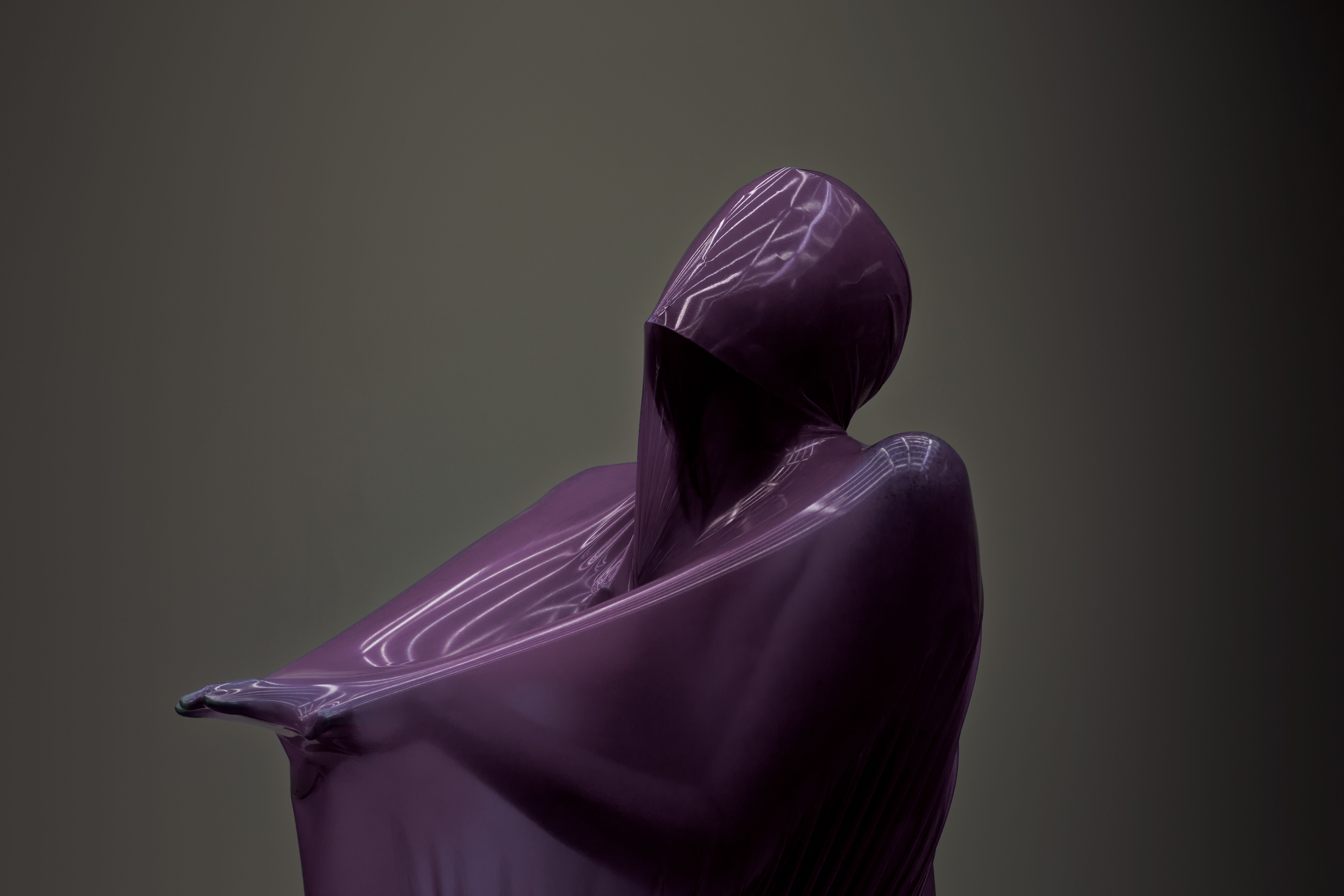
Dutch artist Bart Hess turns the skin into a sensory laboratory, covering it with viscous, foamy, or molecular materials that oscillate between the seductive and the unsettling. Through videos, installations, and performances, Hess explores how the textiles of the future might alter our perception of the body, blurring the boundaries between flesh, prosthesis, and technology. His work proposes a visceral and tactile vision of the future, where the body becomes an experimental support and a testing ground for imagining new ways of existence.
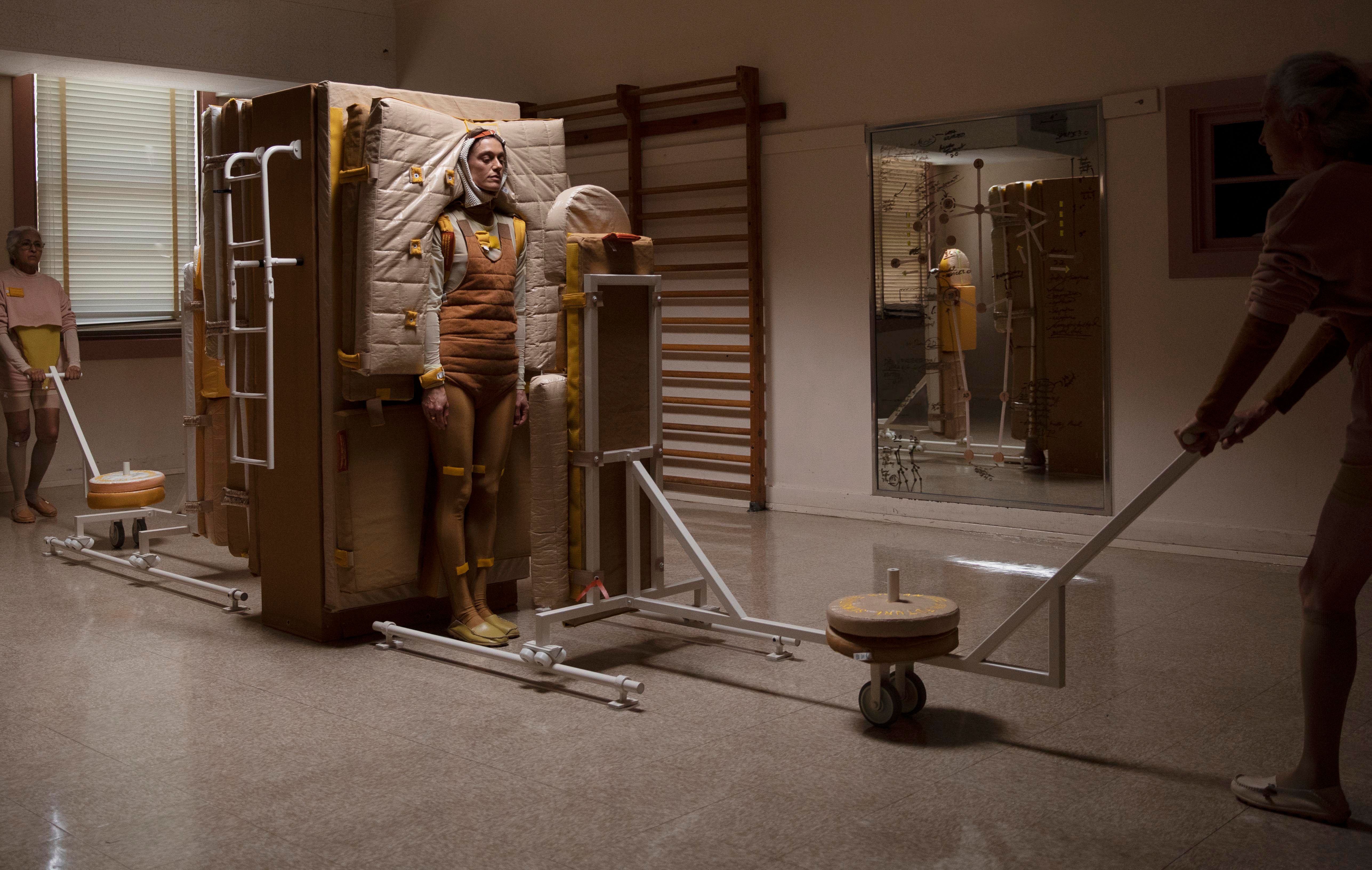
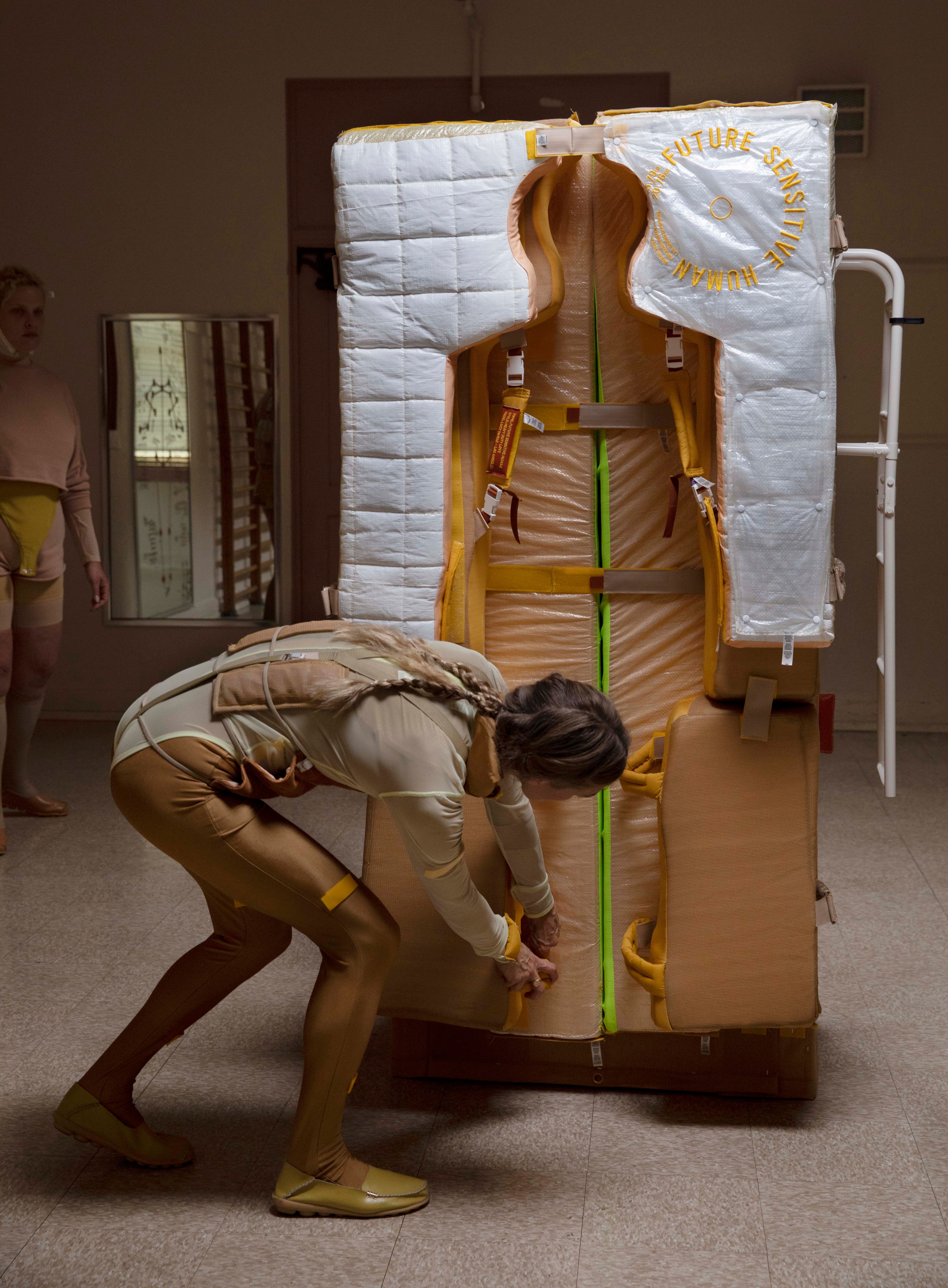
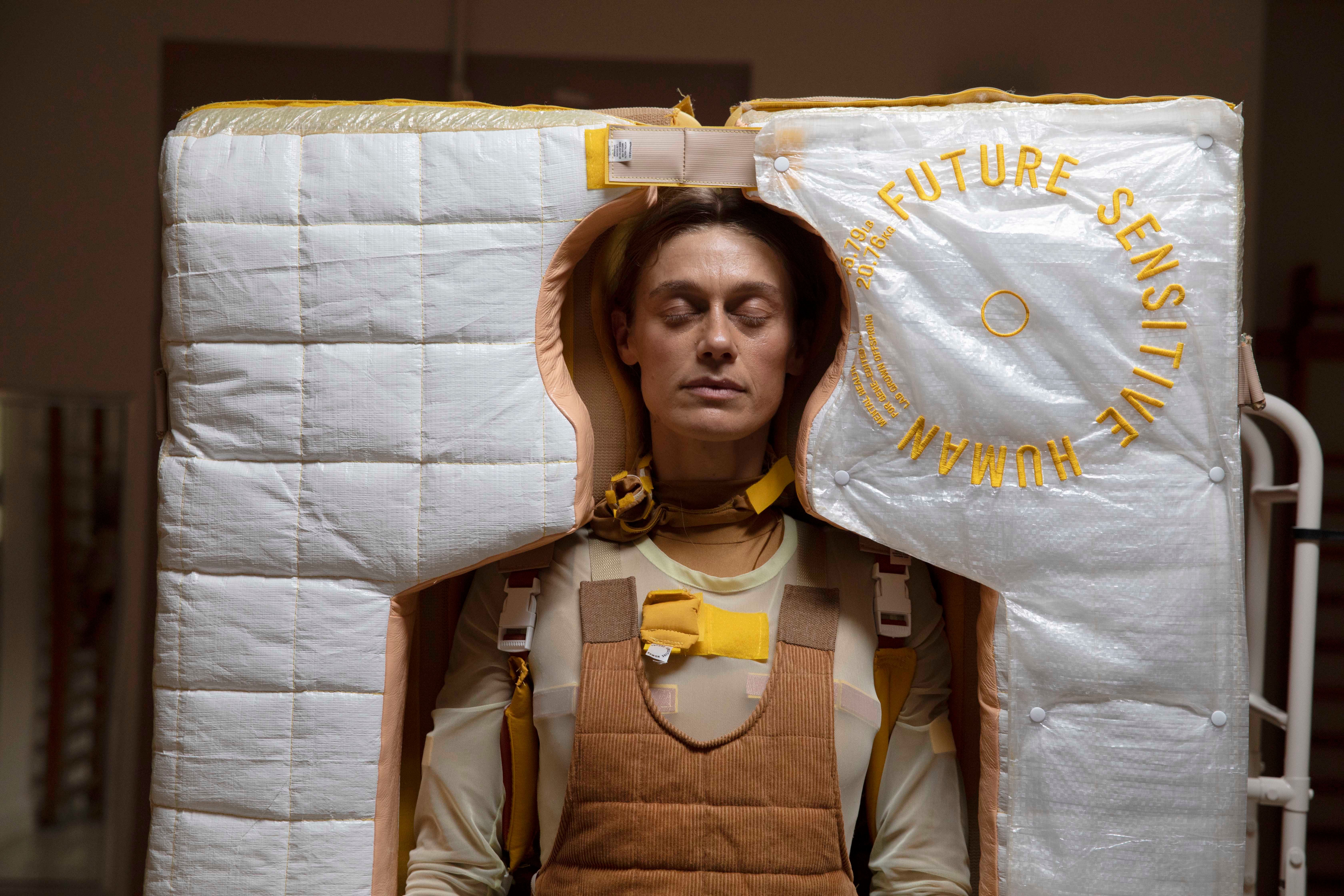
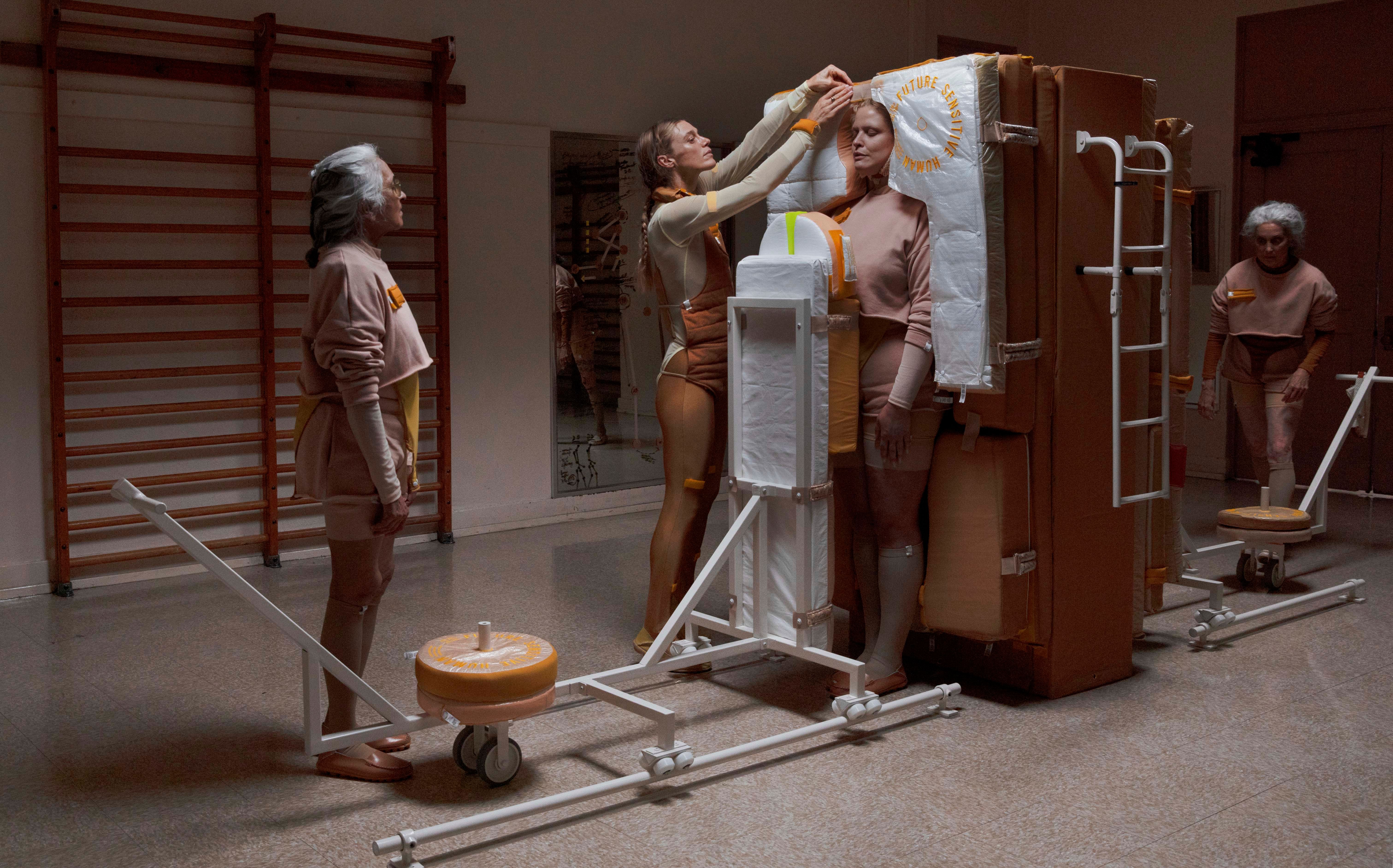
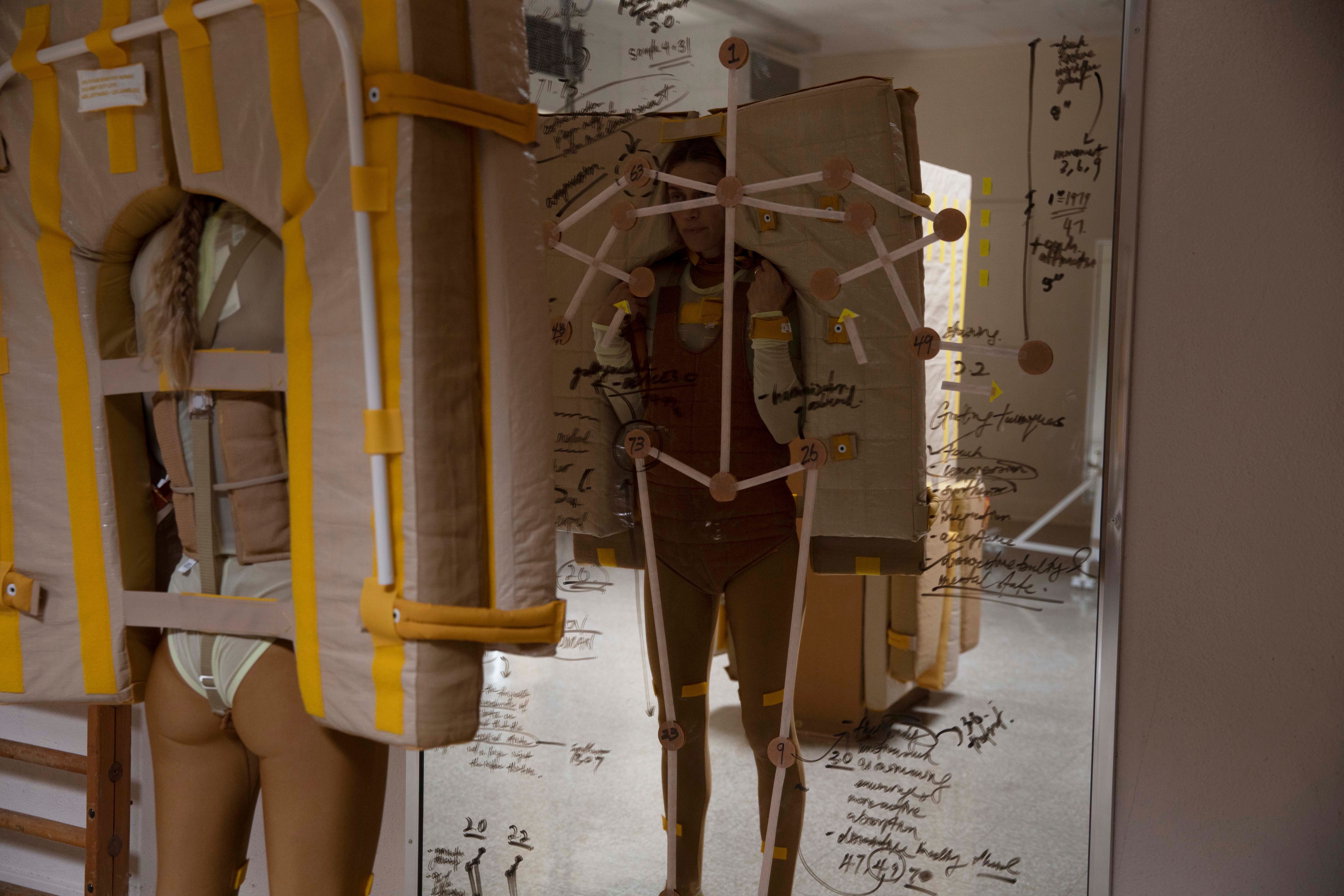
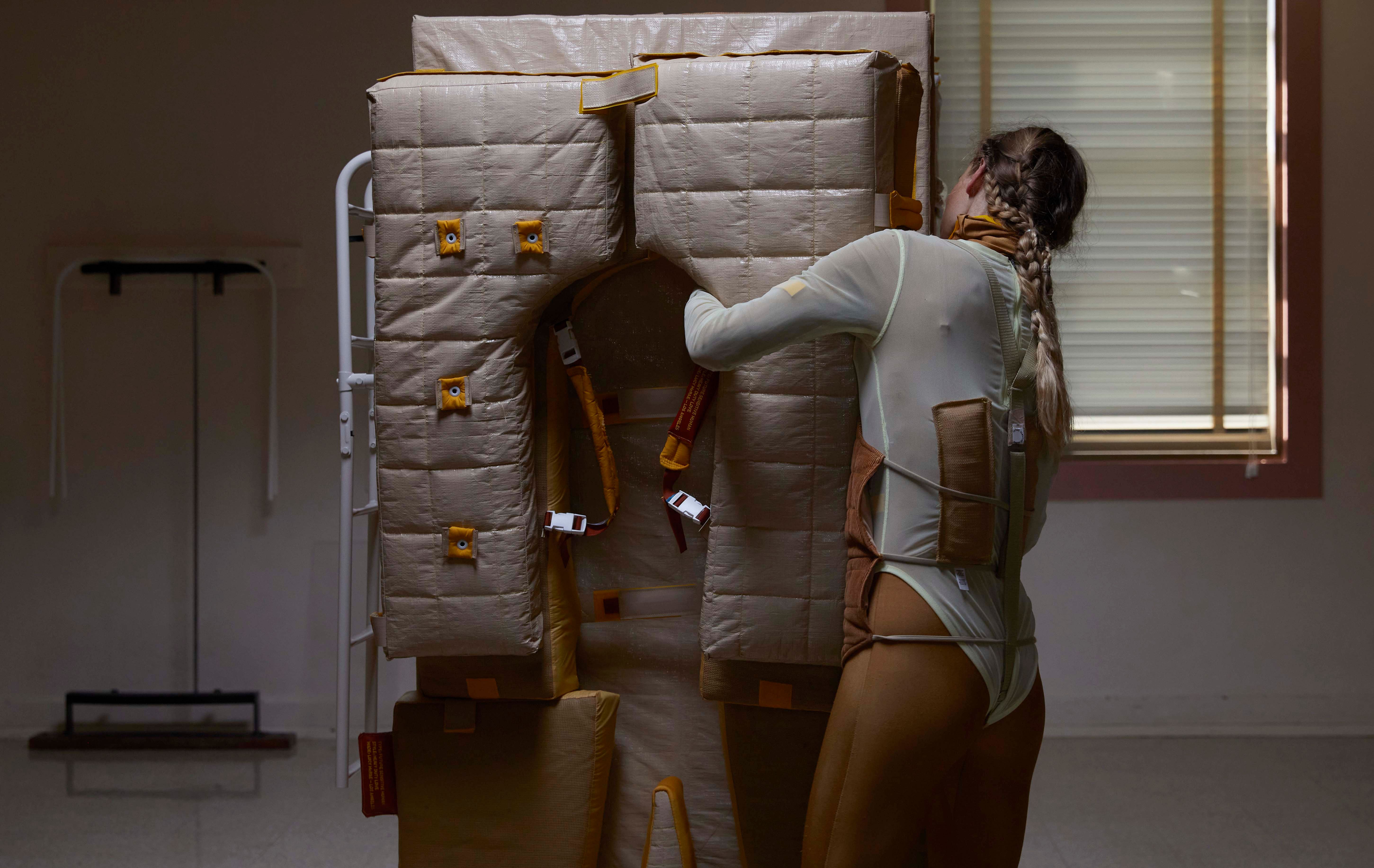
Australian artist Lucy McRae takes this reflection a step further, blurring the boundaries between art, architecture, technology, design, and fashion to speculate on the evolution of human biology. Self-defined as a “science-fiction artist,” McRae uses art as a mechanism to question the ethical and ideological frameworks that shape our identity and our relationship with technological progress. In collaboration with institutions such as Philips, MIT, Ars Electronica, and NASA, she has speculated on scenarios in which human biology could be augmented through physical design, genetic modification, or even emotional engineering.
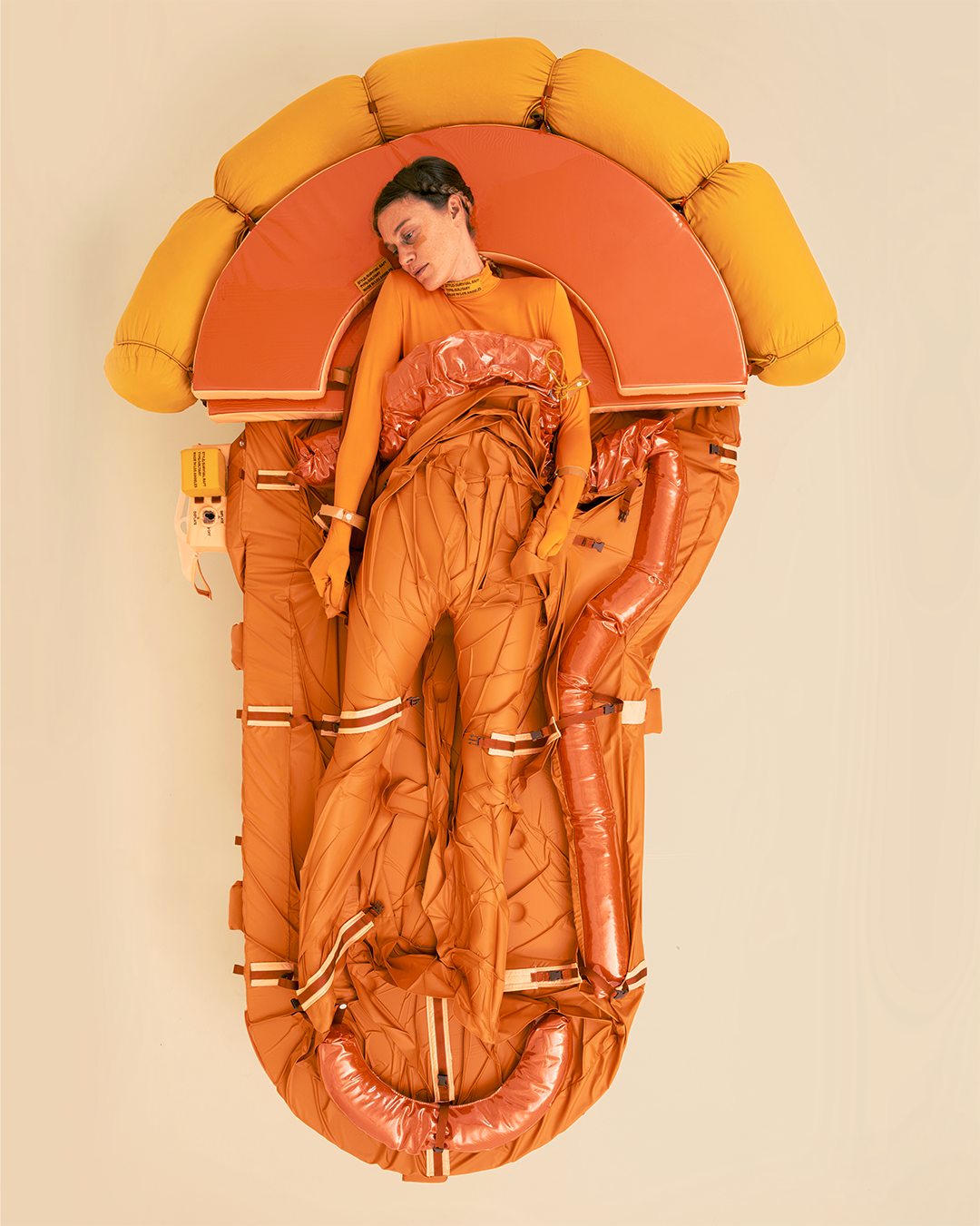
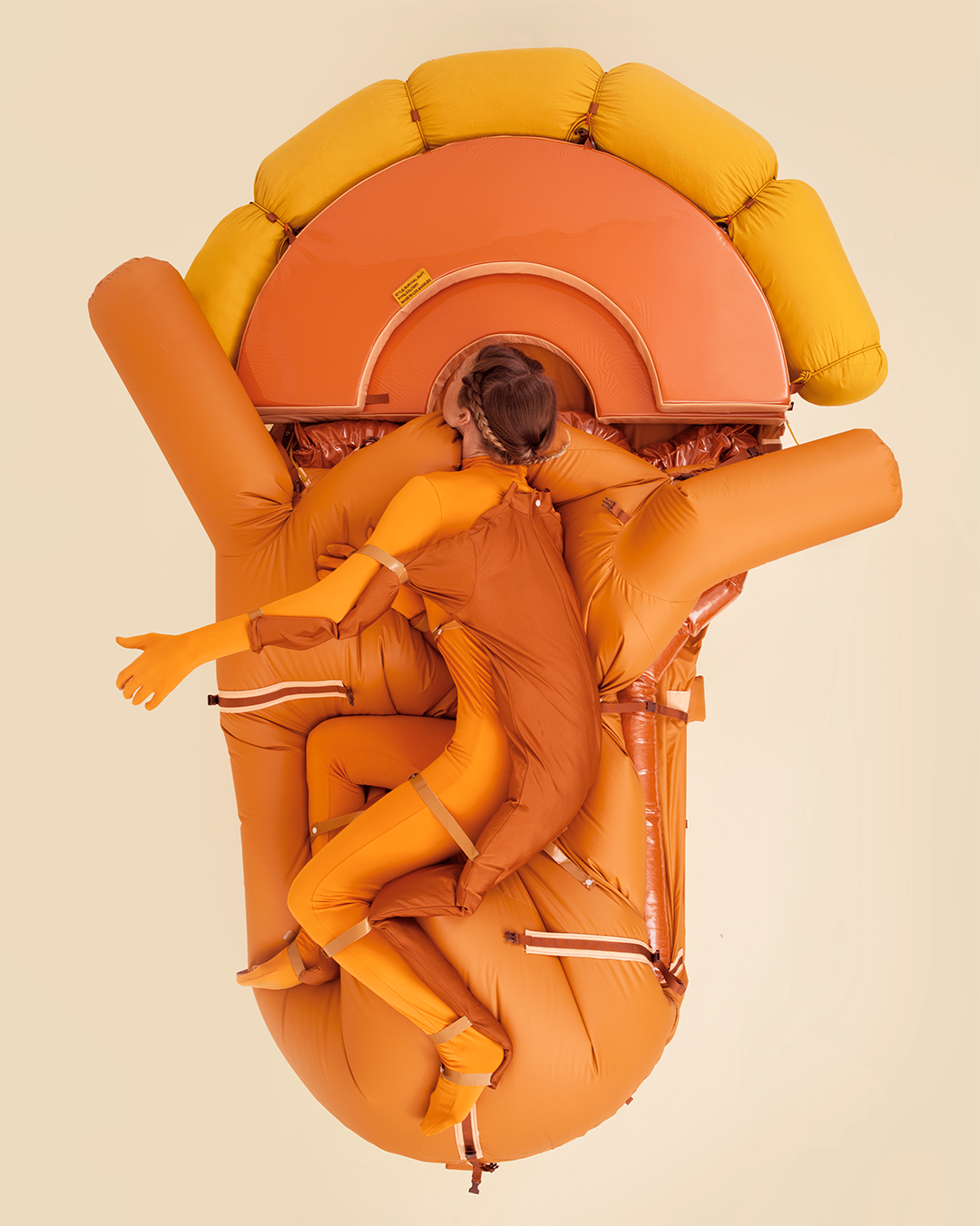
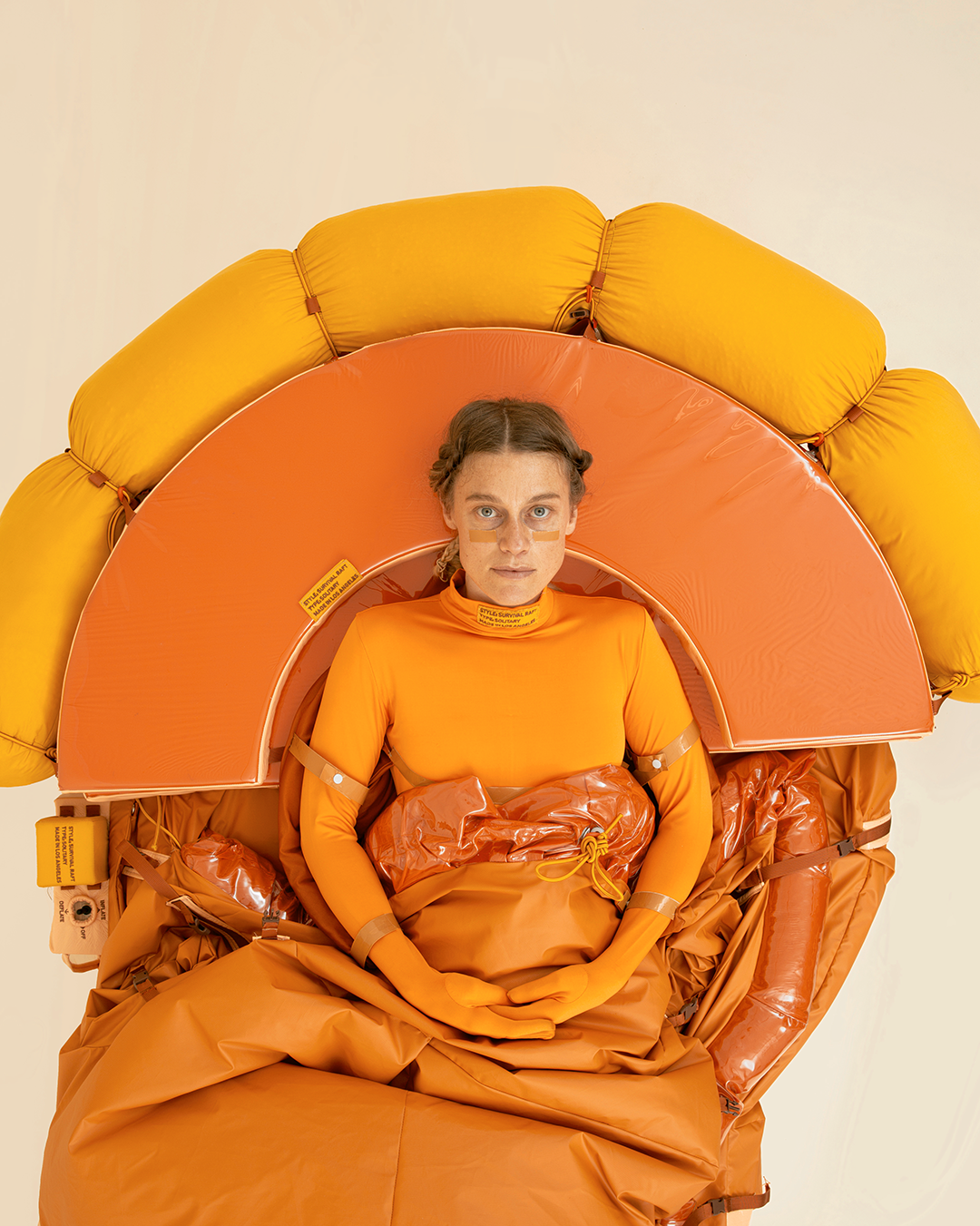
In a similar speculative line, but with a more social and collective approach, the work of Lucy + Jorge Orta explores how fashion can become a device for survival, community, and resilience. Their practice, which they define as “Body Architecture”, addresses the boundaries between body and space, developing portable habitats and ways of inhabiting in times of crisis. Series such as Refuge Wear and Body Architecture propose garments that transform into shelters, jackets that become tents, and survival kits for the contemporary nomad, turning clothing into an extension of architecture and a tool of protection.
In Nexus Architecture, clothing connects several people through a shared system of fastenings, forming collective bodies that function as visual metaphors for interdependence and solidarity. These works question notions of mobility, citizenship, and care, and are often deployed in public space to amplify their political dimension. Projects such as Antarctica or Amazonia transform squares and natural environments into stages for action, where art and activism intertwine to raise ecological awareness.
Unlike Lucy McRae’s more intimate, speculative vision or Bart Hess’s material and sensory approach, Lucy + Jorge Orta’s work emphasises the community dimension of the body and its capacity to generate networks of resistance. Their installations, somewhere between performance, ephemeral architecture, and social sculpture, expand fashion beyond the object, turning it into a space for encounter, protest, and future possibility.
Expanded Fashion: From Body to Rite
In 2025, two major European exhibitions reaffirm that fashion in the museum is no longer just an object but an experience, a form of thought, and a site of speculation. Both propose an expanded language that connects disciplines, times, and worlds, inviting us to reconsider the role of the body, material, and decay in contemporary culture.
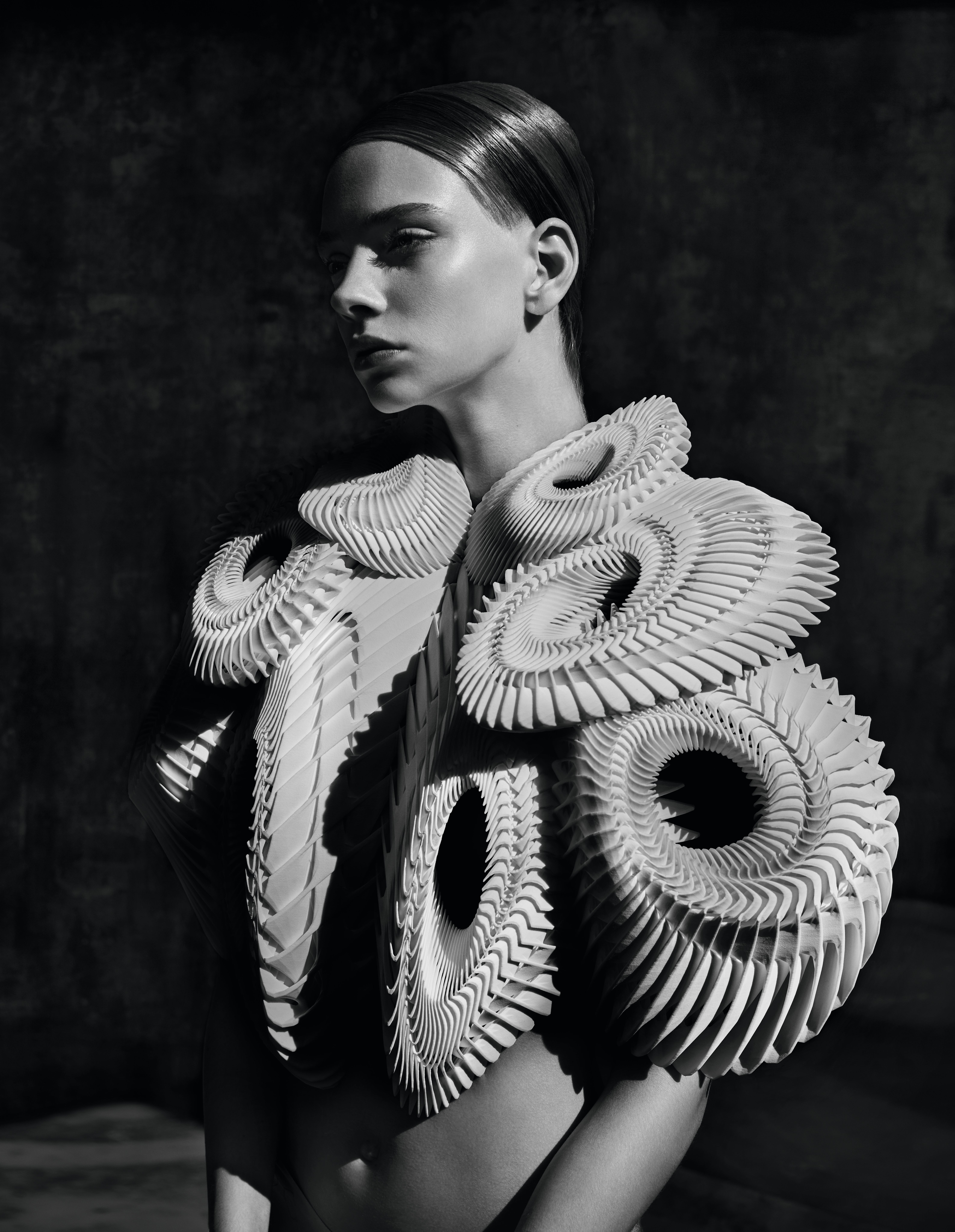
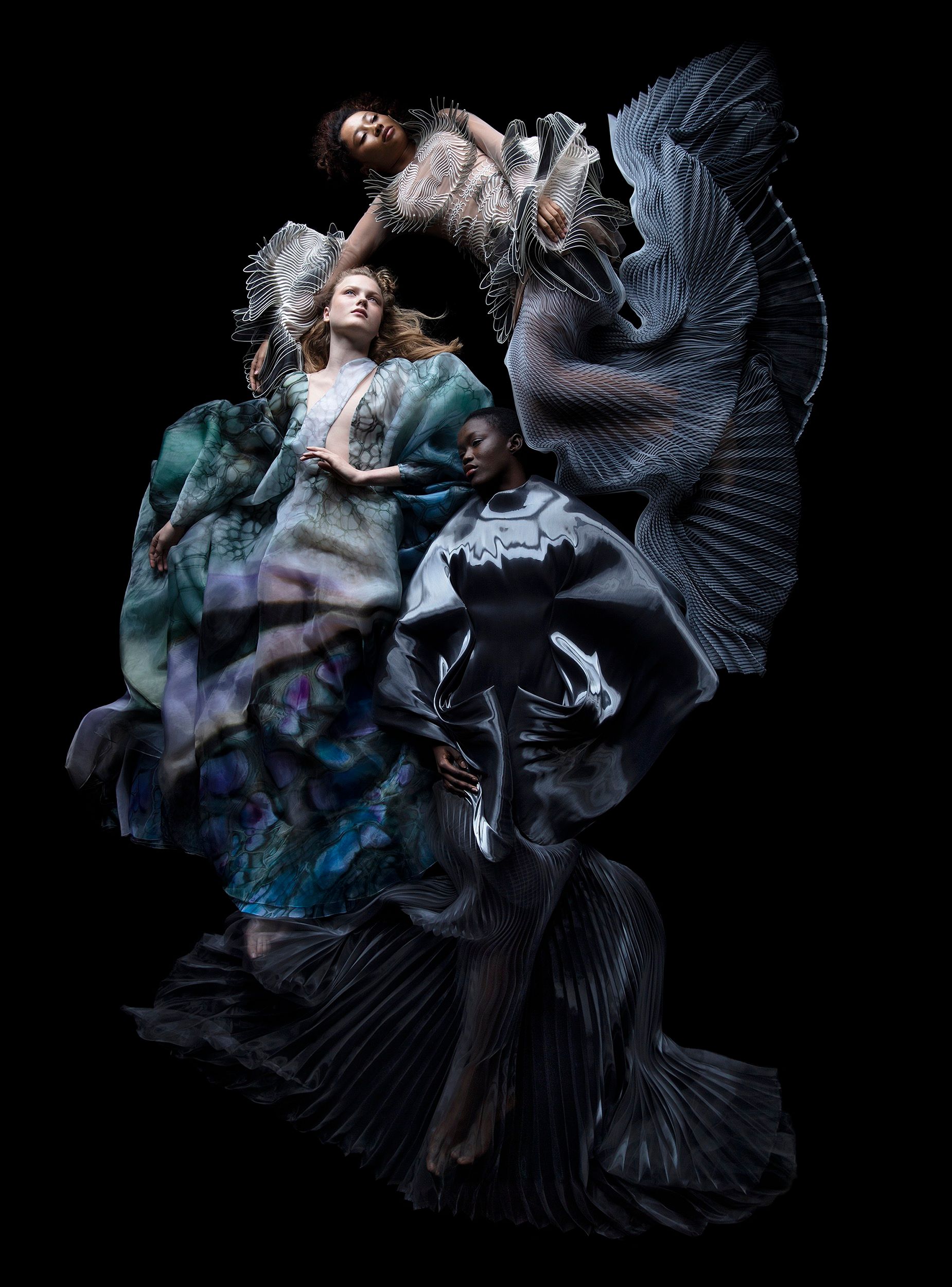
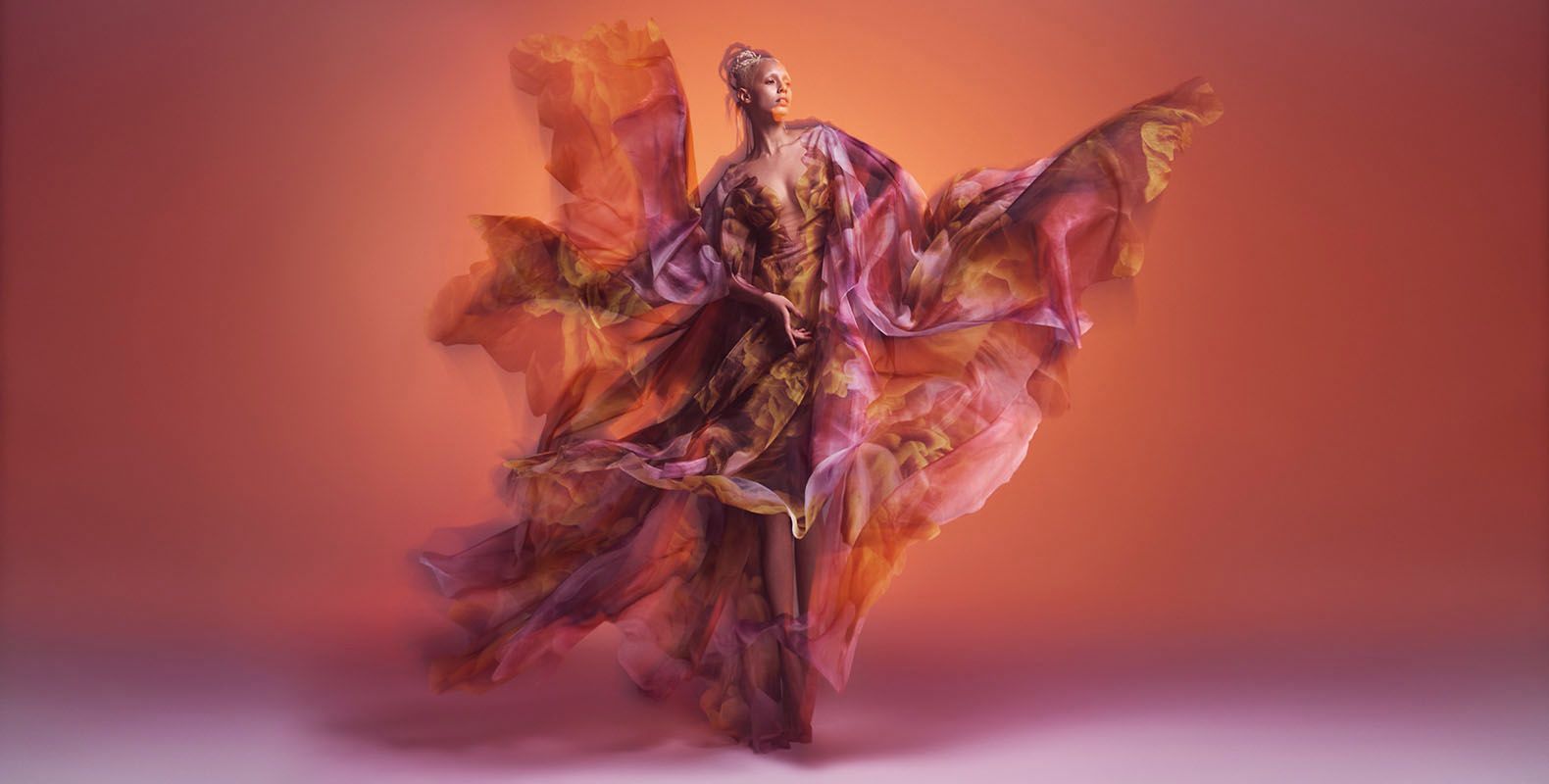
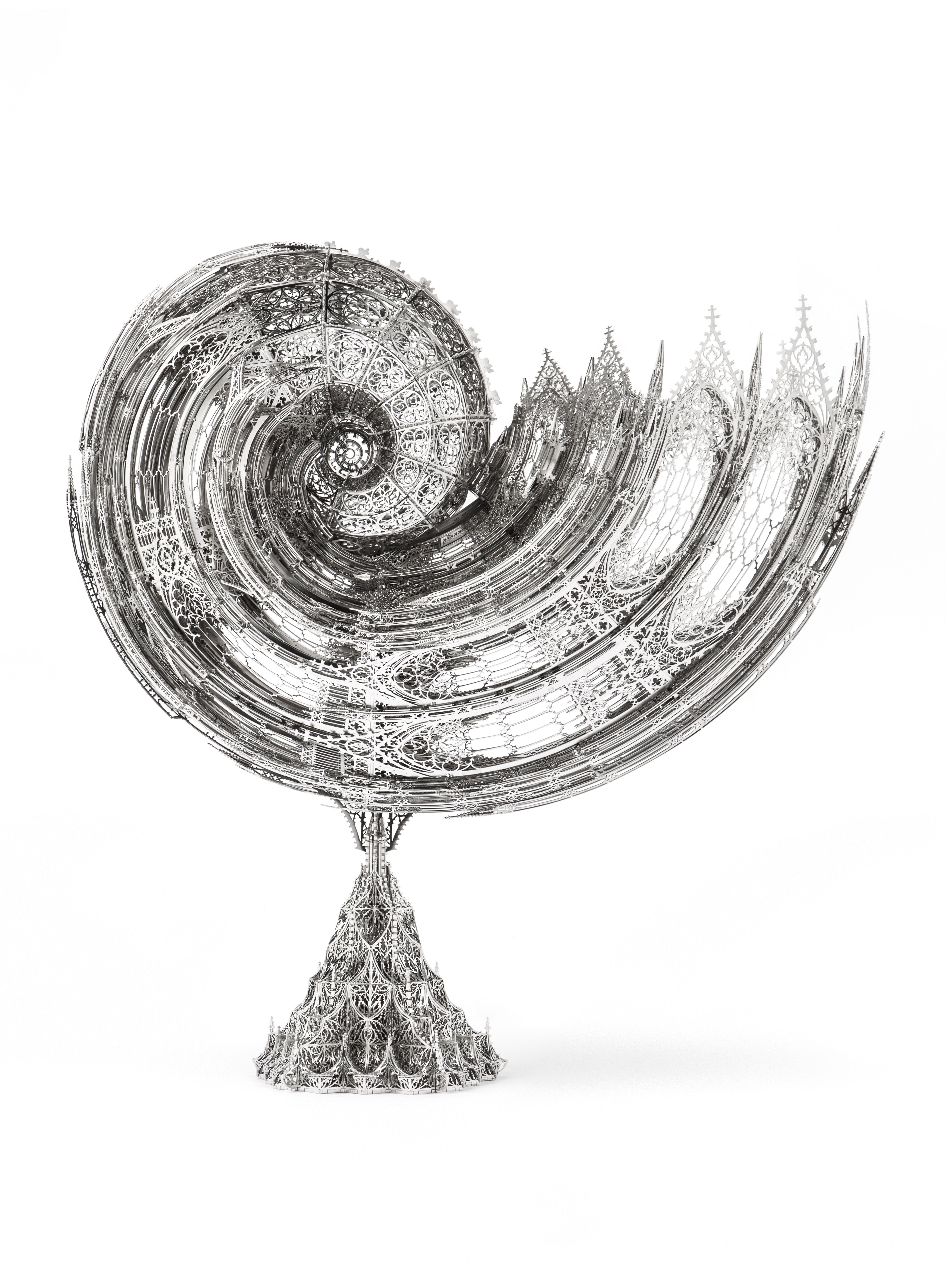
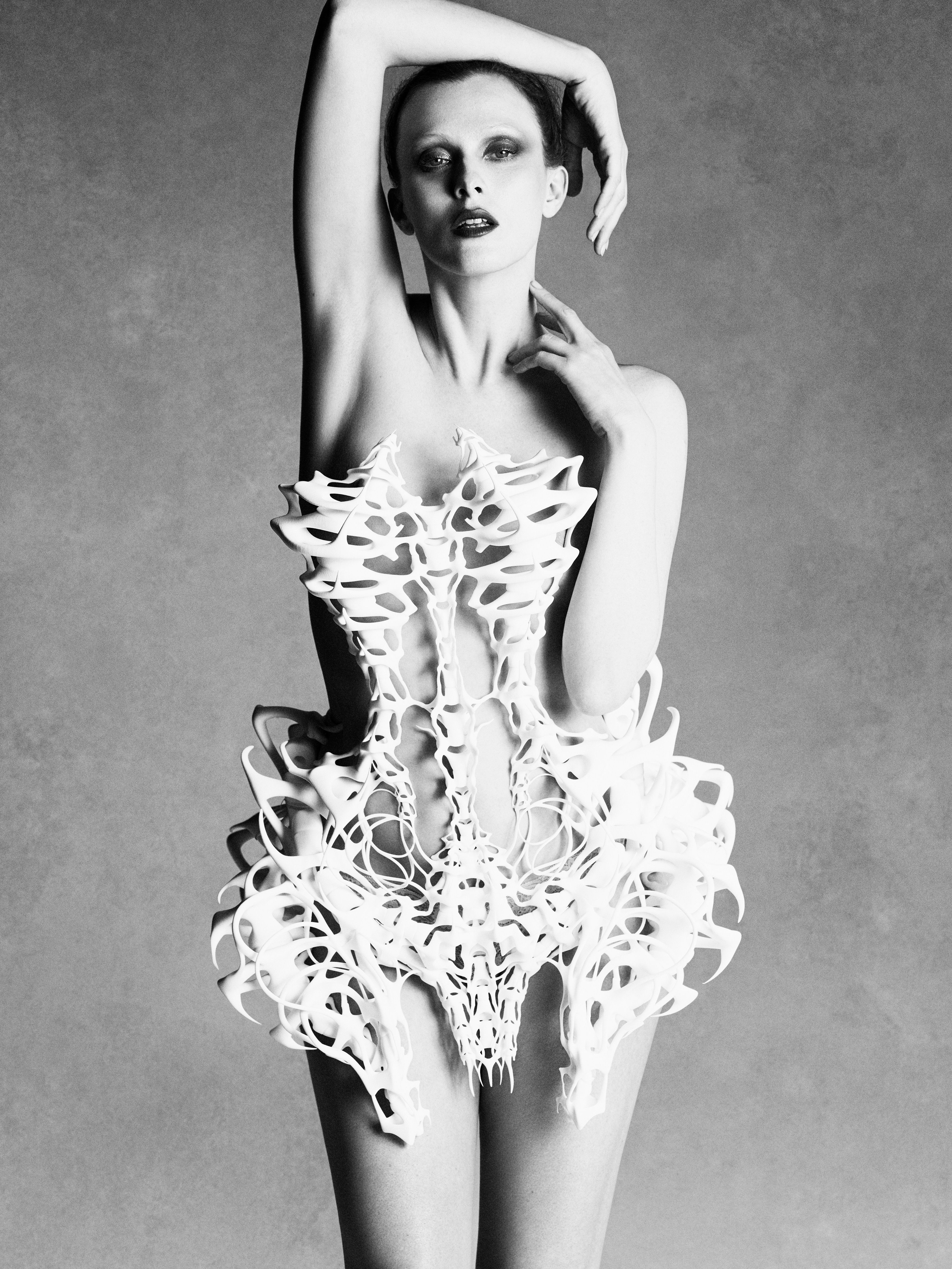
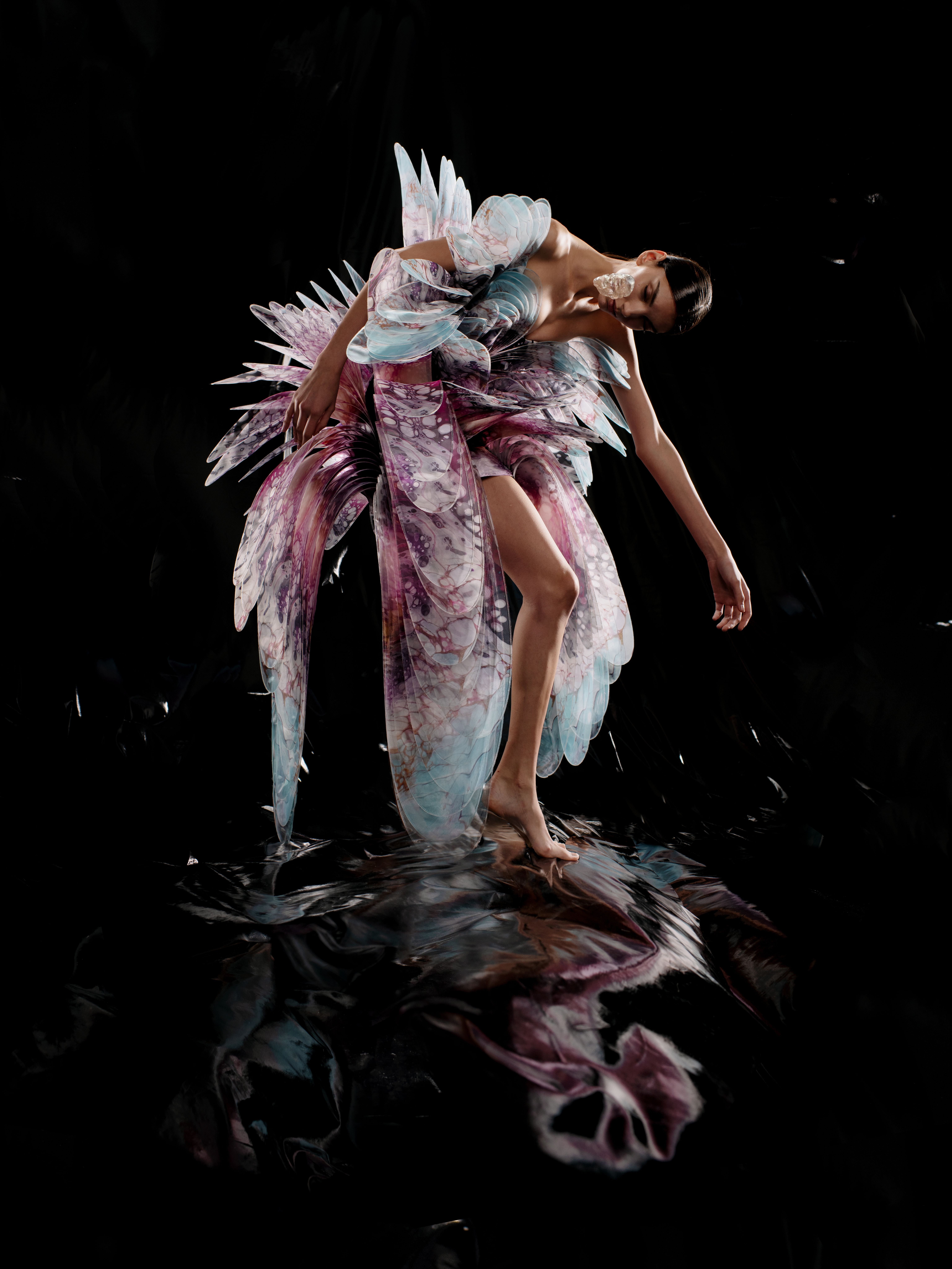
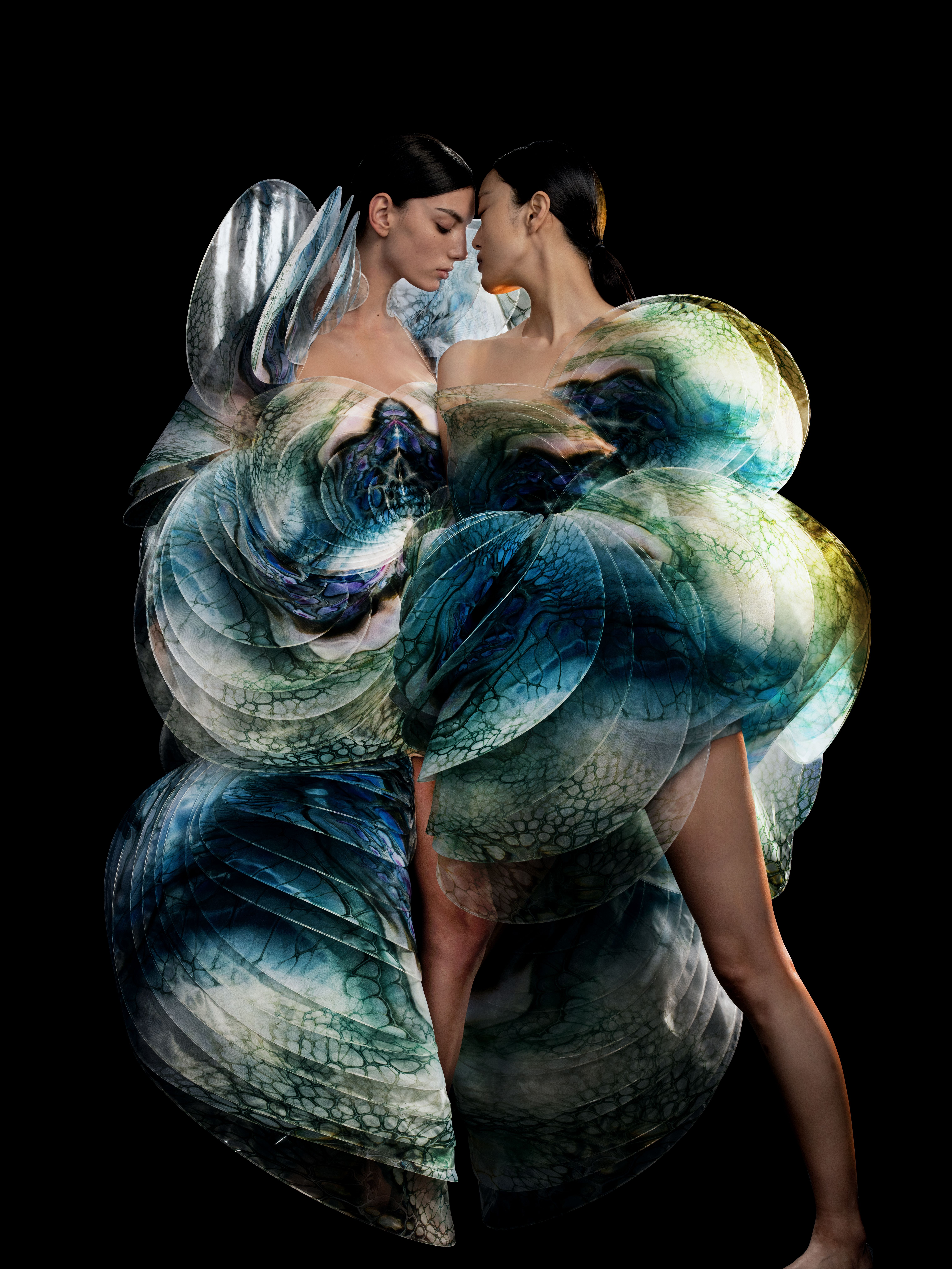
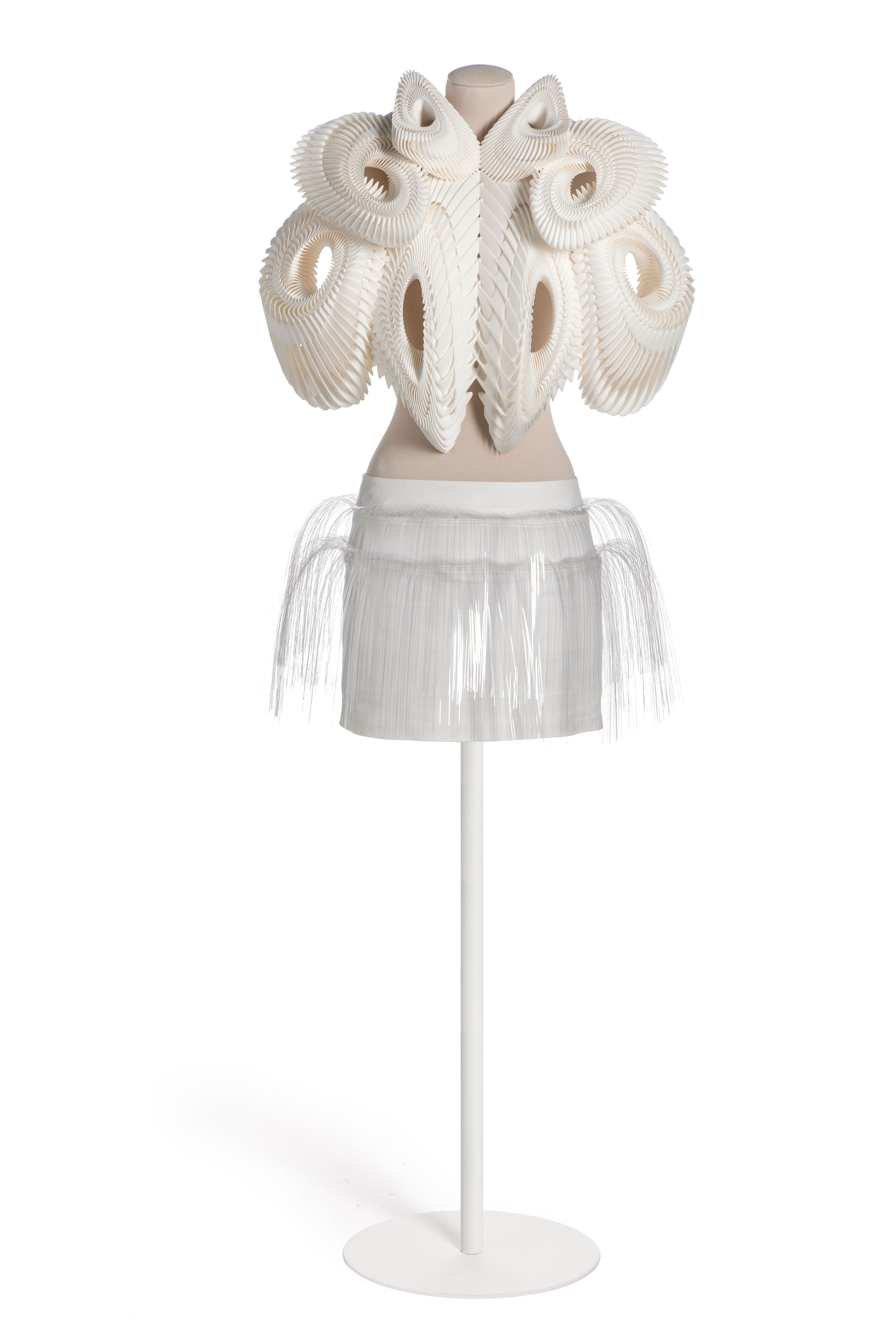
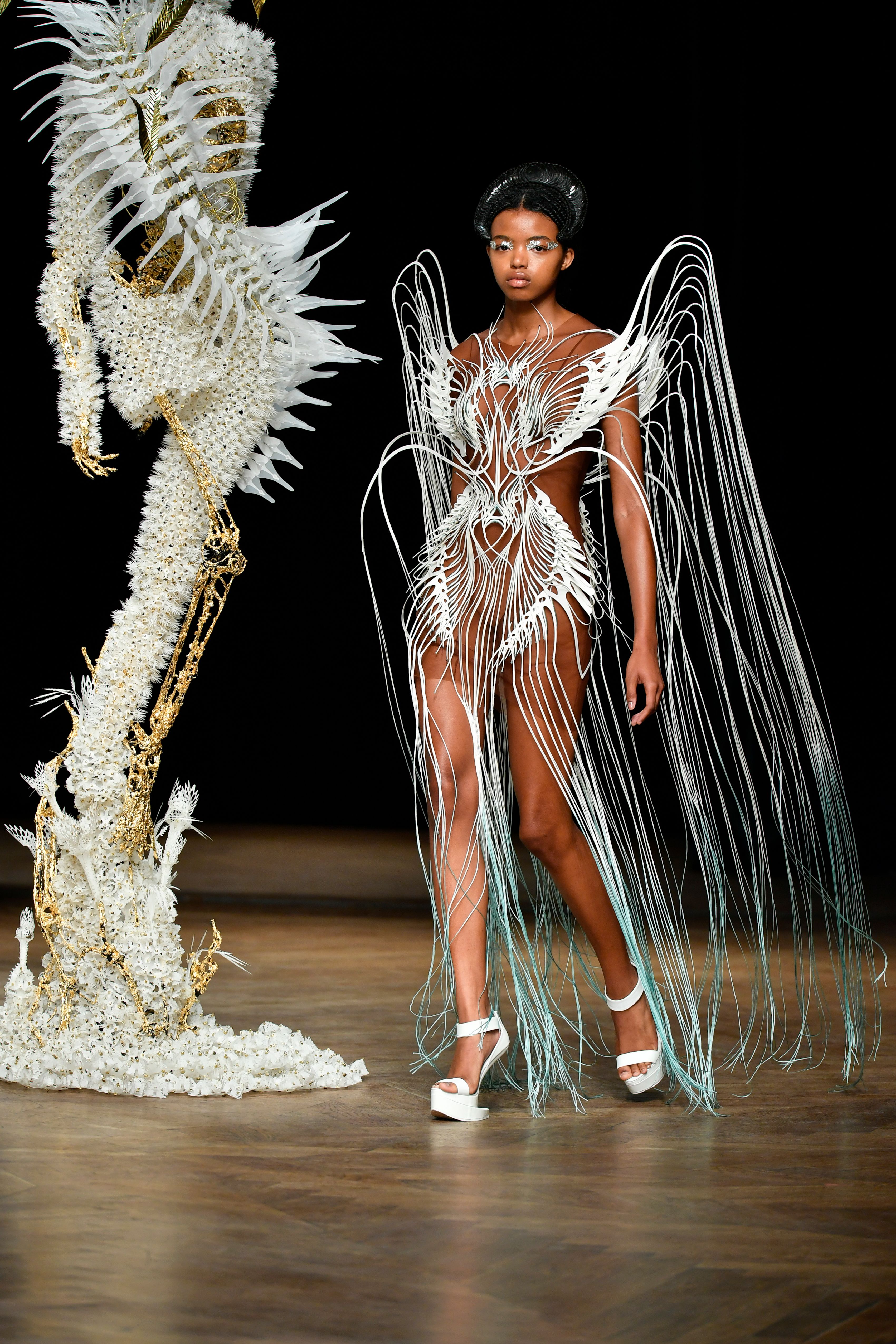
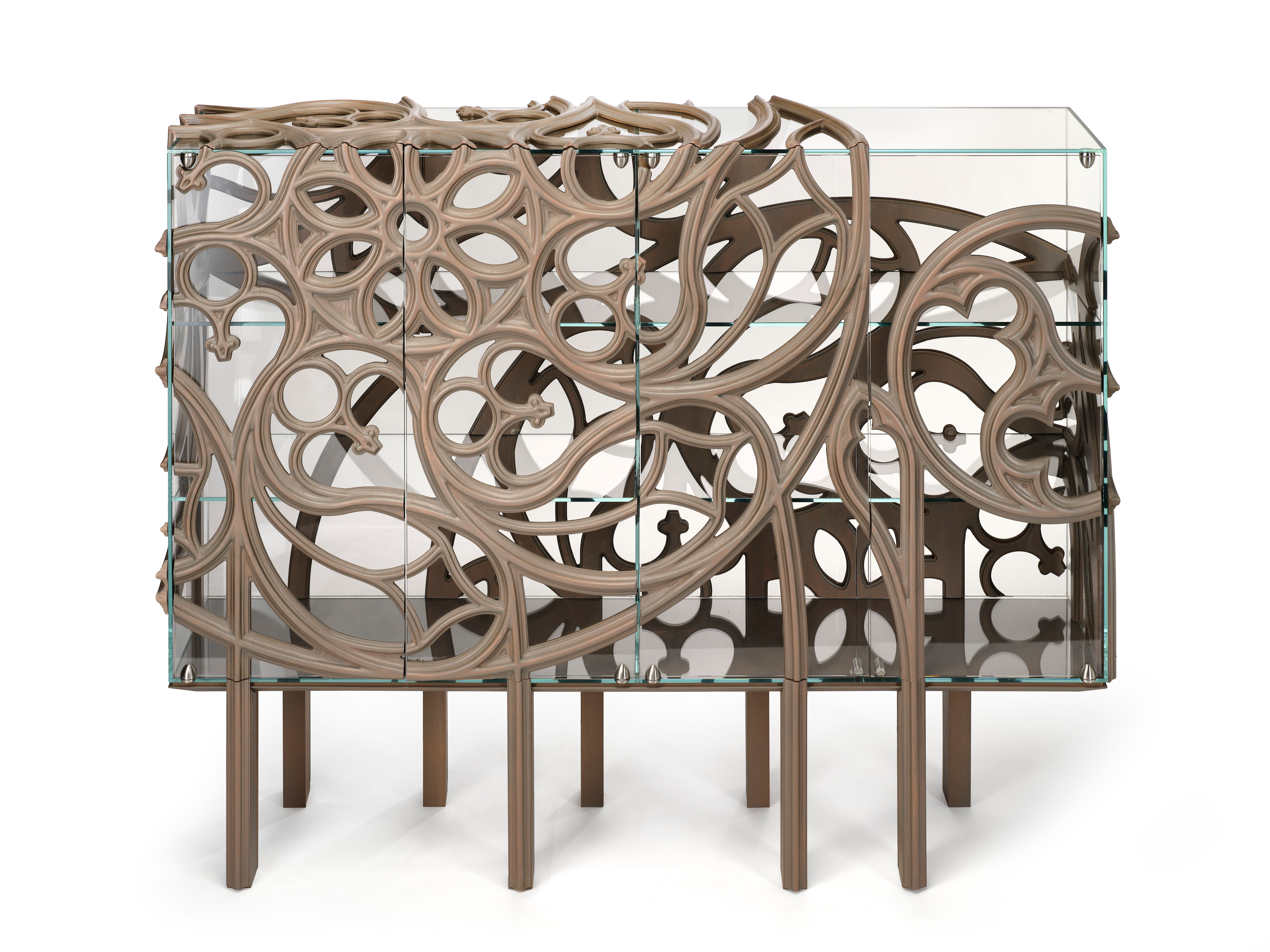
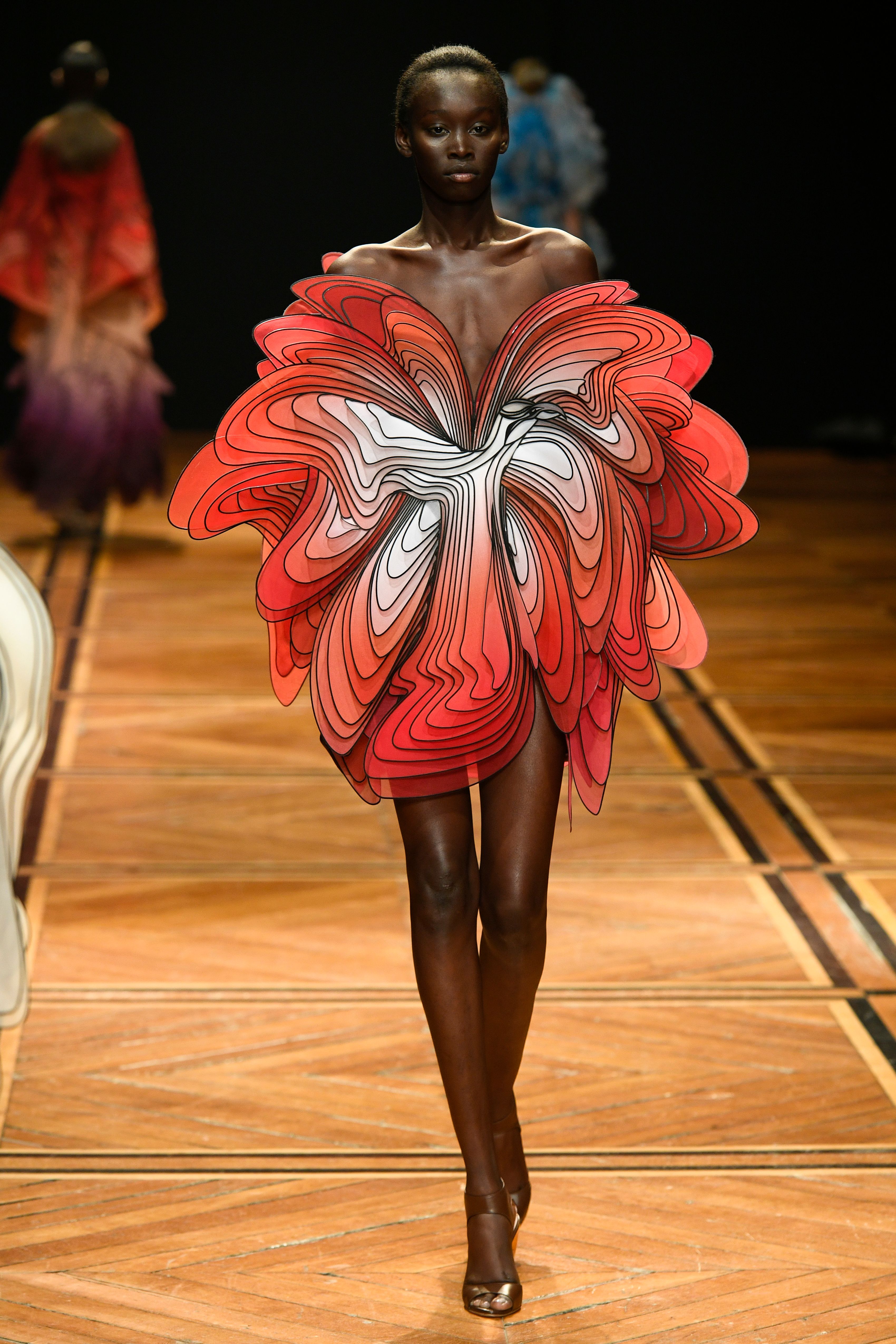
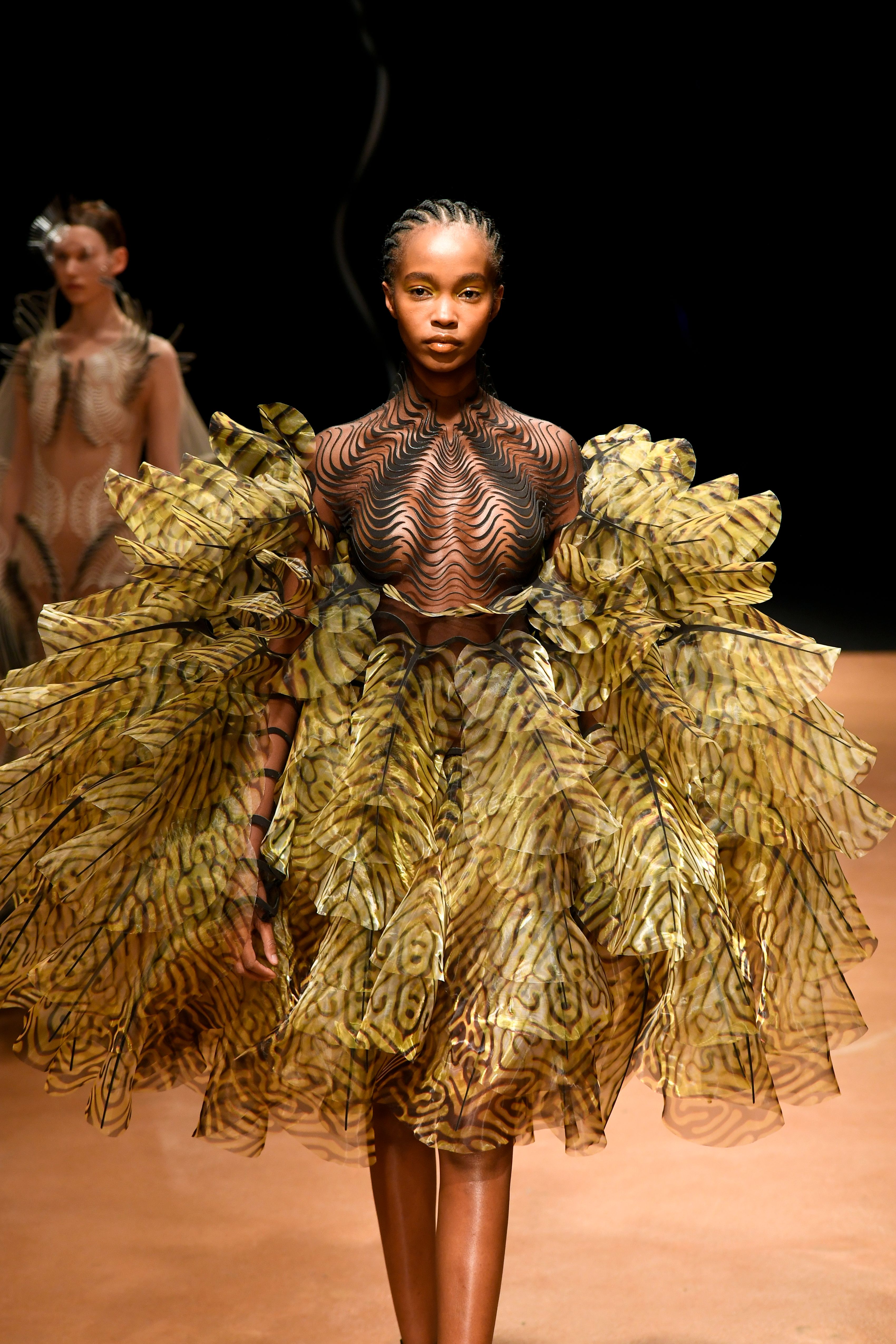
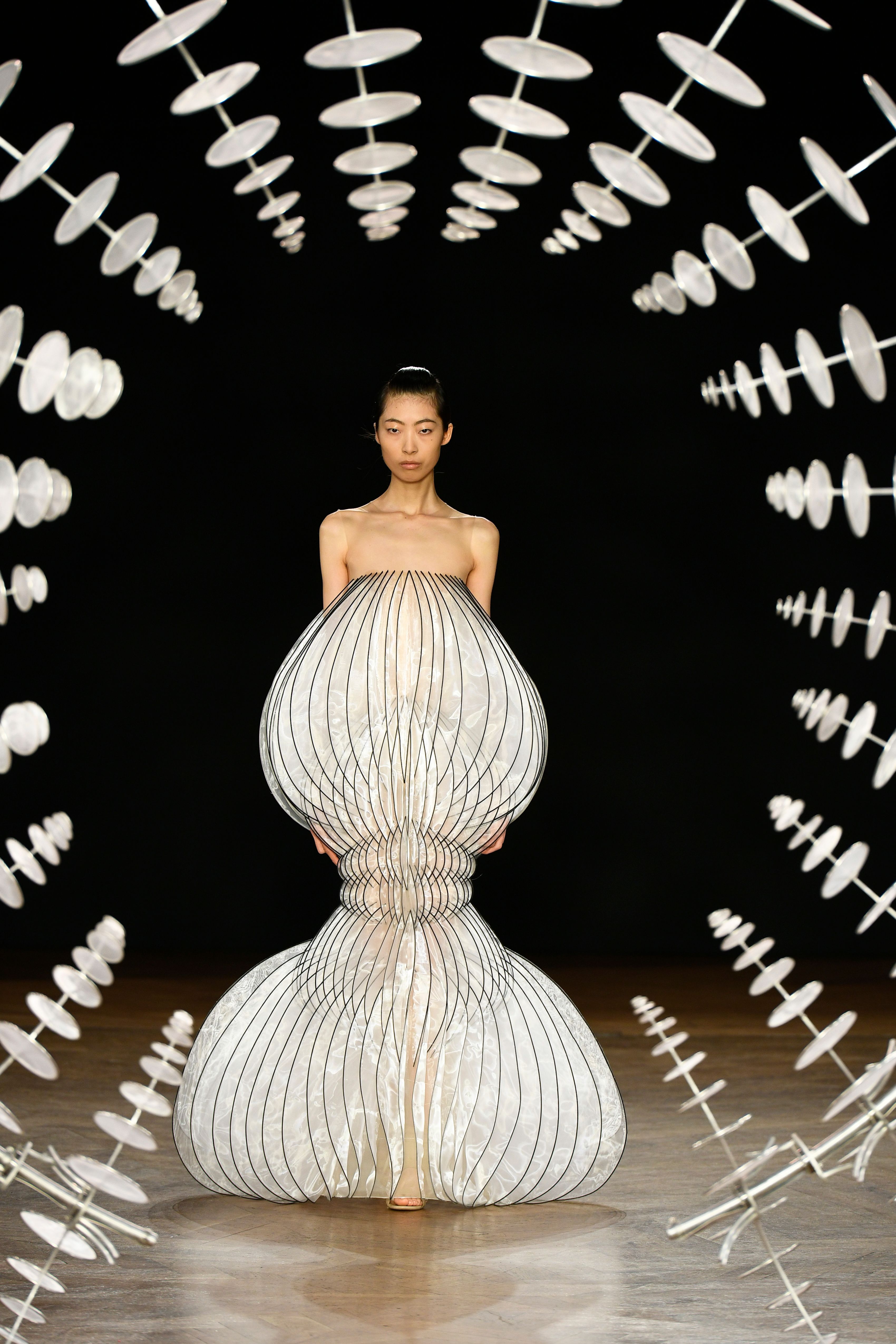
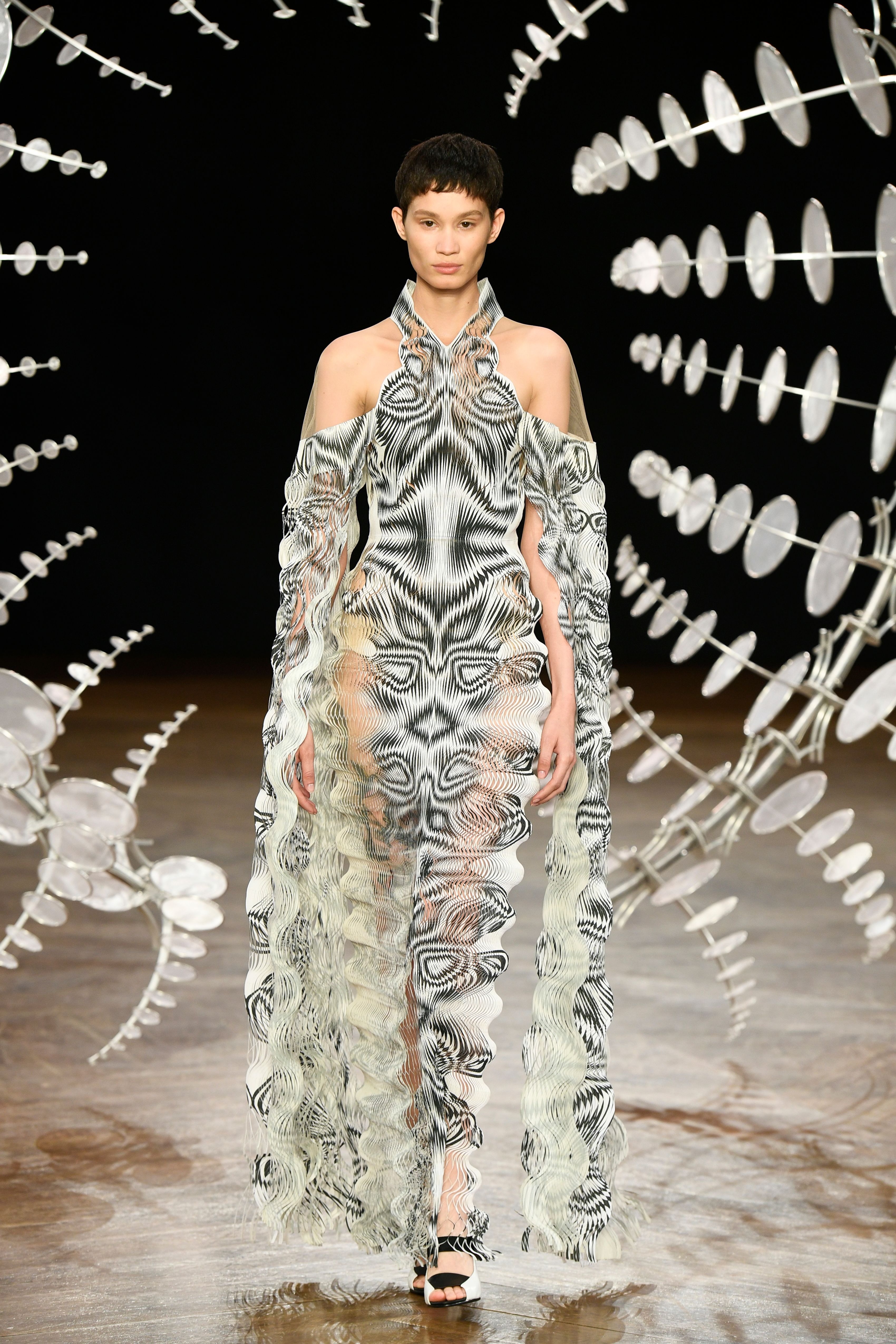
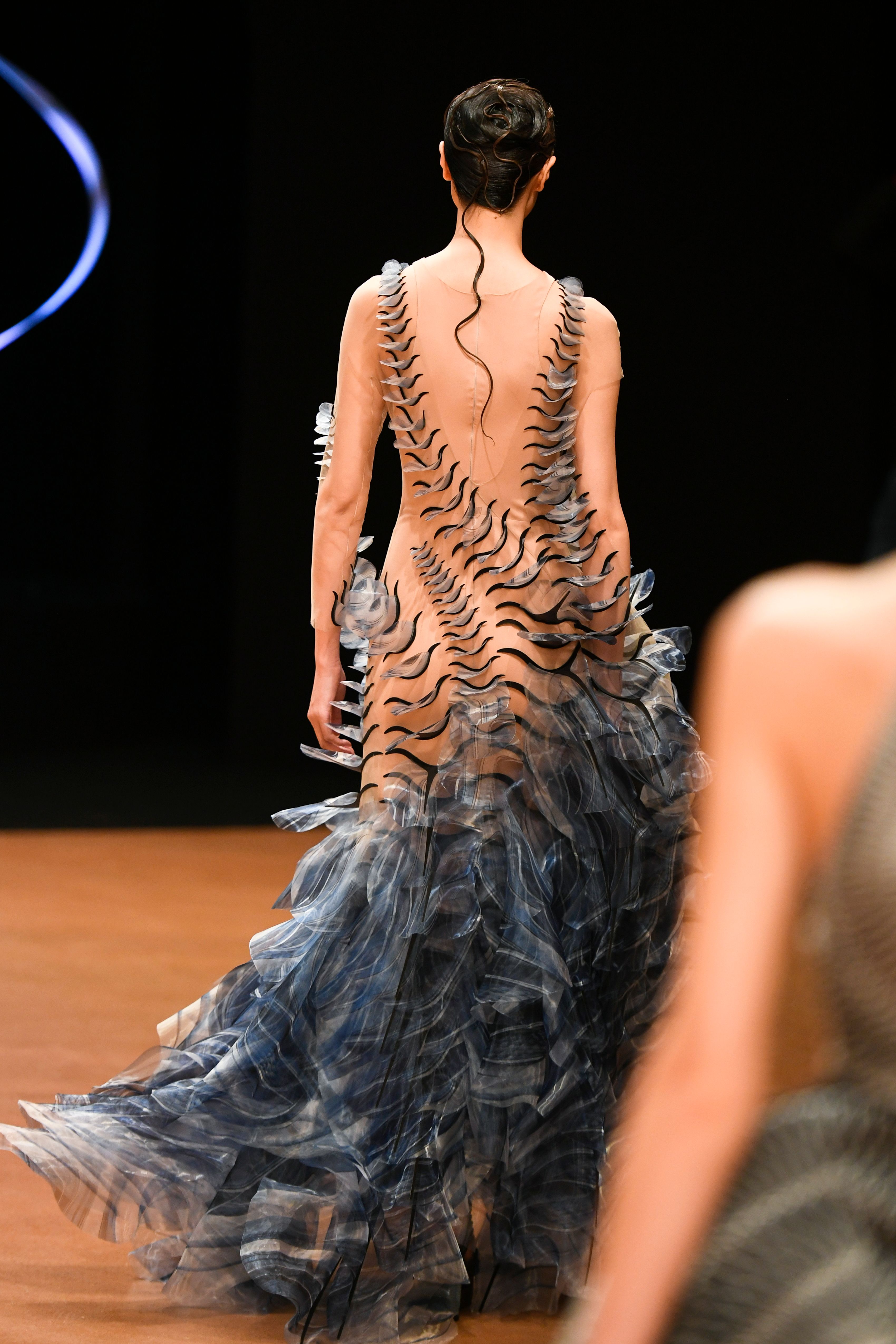
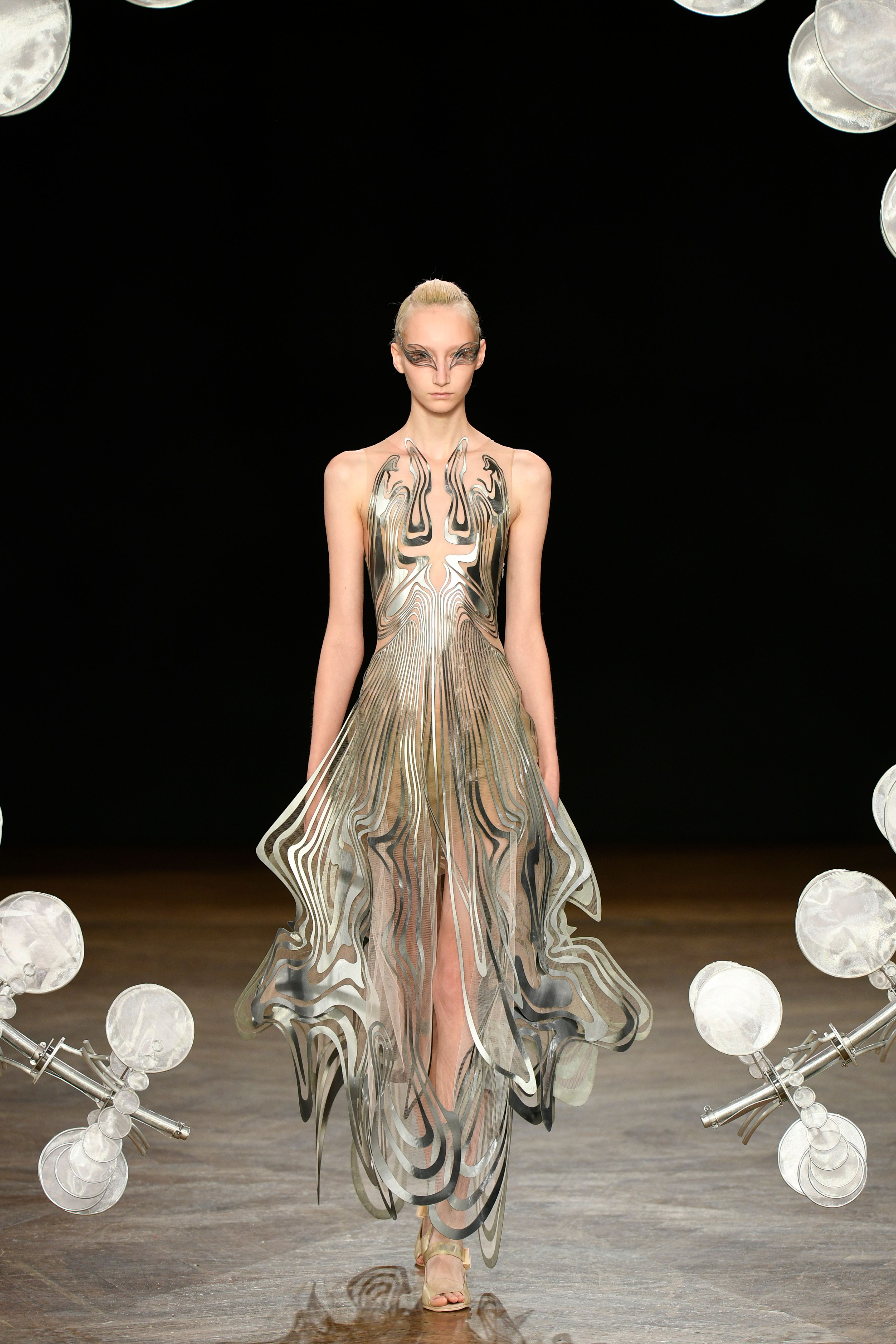
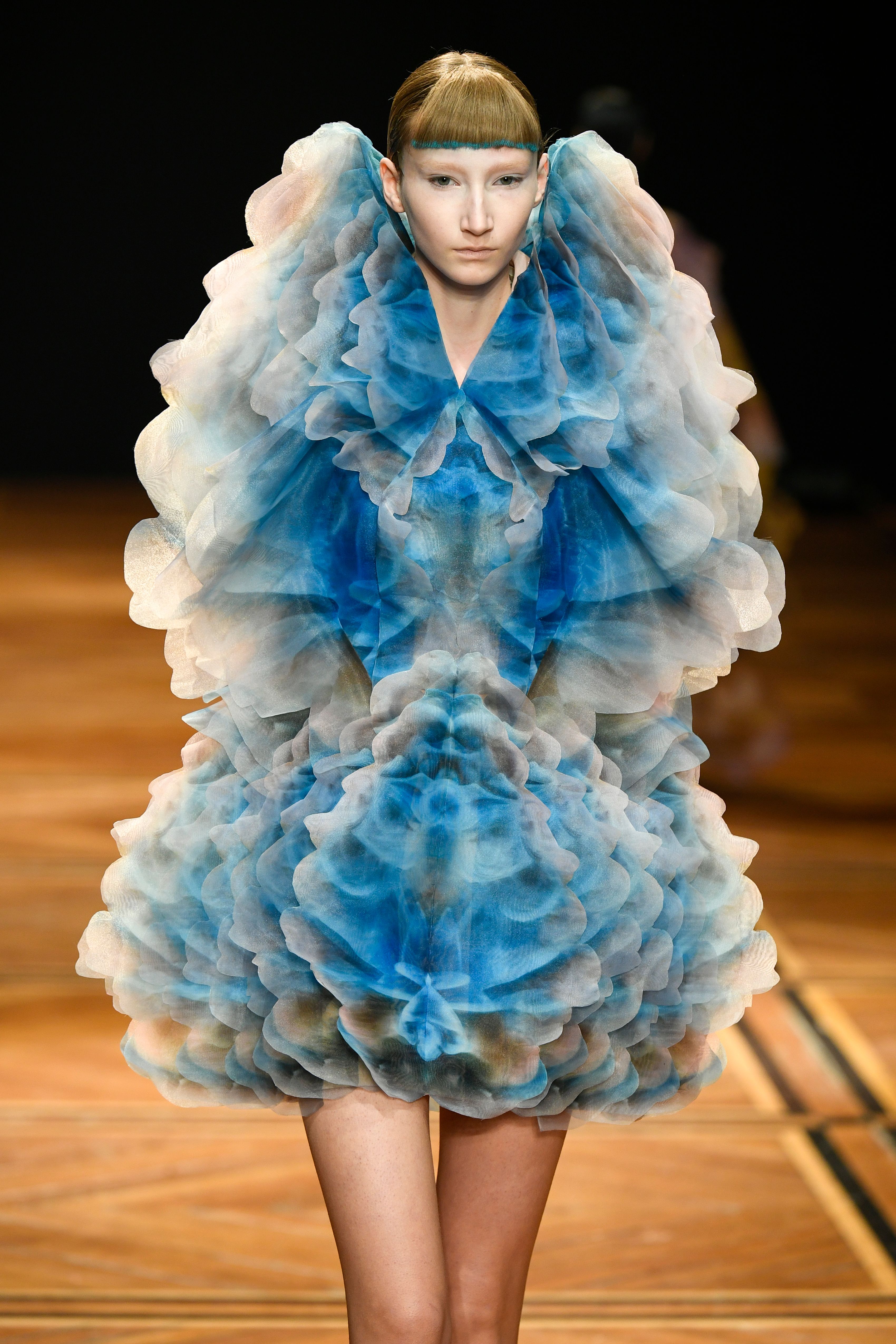
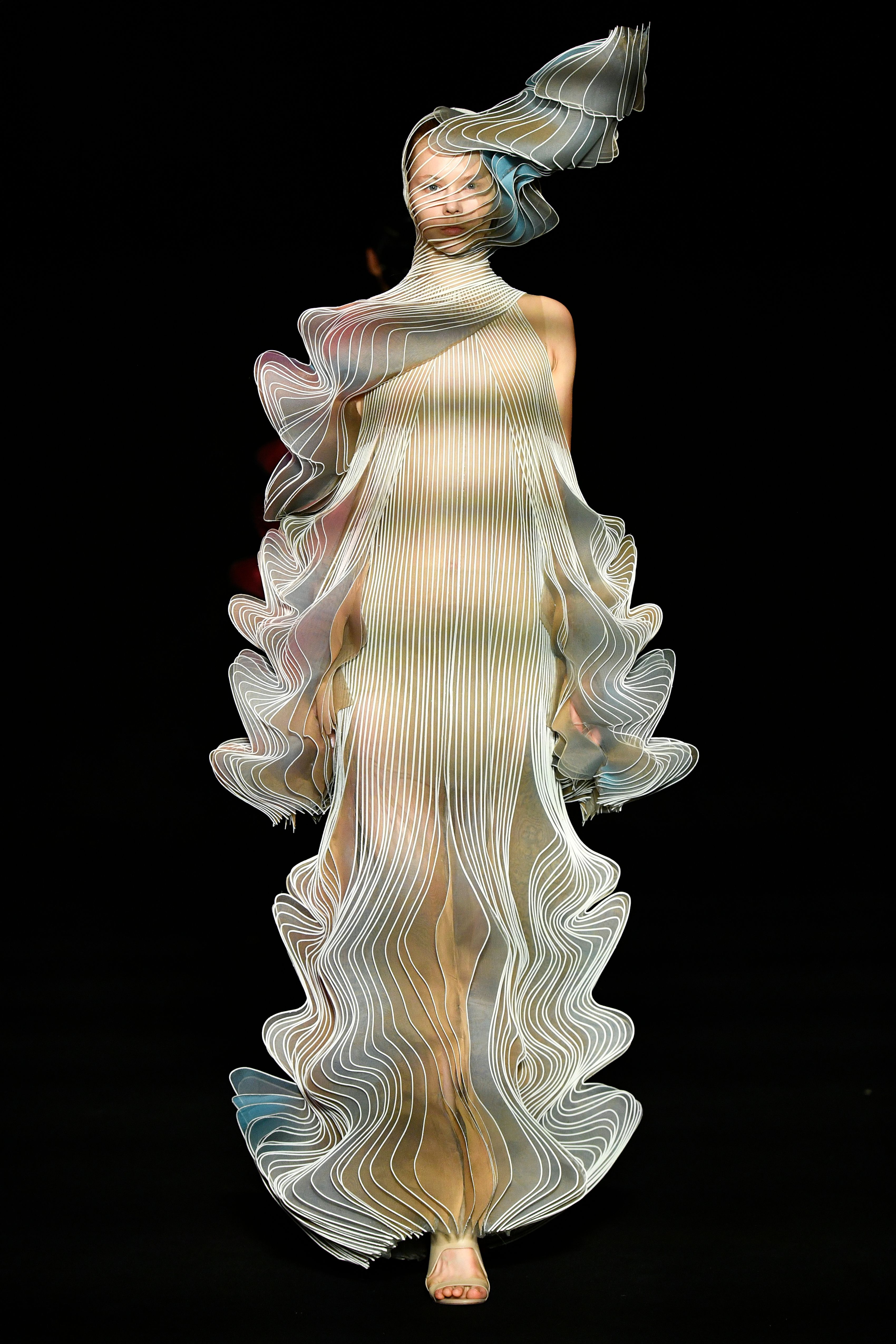
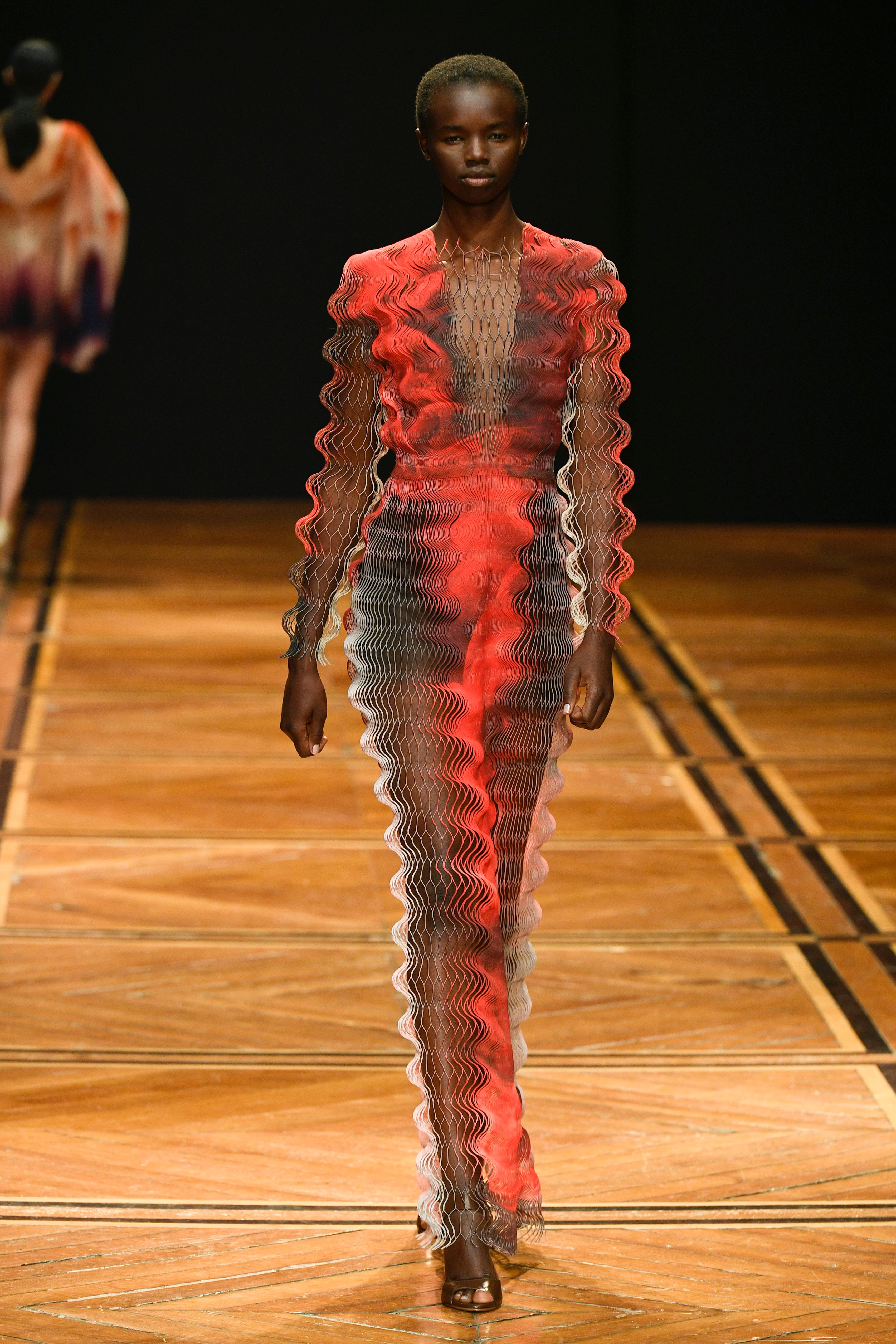
On one hand, Sculpting the Senses, the large retrospective of Iris van Herpen that opened on September 27 at the Kunsthal Rotterdam, confirms the Dutch designer as one of the creators who have brought haute couture into the realm of artistic research. The exhibition gathers more than one hundred pieces in dialogue with works by artists and designers such as Philip Beesley, Kohei Nawa, Collectif Mé, Neri Oxman, and Casey Curran, in a route organised around nine themes exploring the relationship between body, nature, and future. From her first 3D-printed dress from the Crystallization collection to her latest Carte Blanche series, Van Herpen combines haute couture craftsmanship with pioneering digital fabrication processes, generating pieces that seem like living sculptures. The exhibition addresses topics such as water and the origins of life, invisible ecosystems, anatomy, mythology, and the cosmos, inviting visitors into an immersive journey that transcends fashion and becomes a sensory experience. All of this is enhanced by Salvador Breed’s sound composition, which envelops the journey and highlights the almost performative dimension of the dresses.
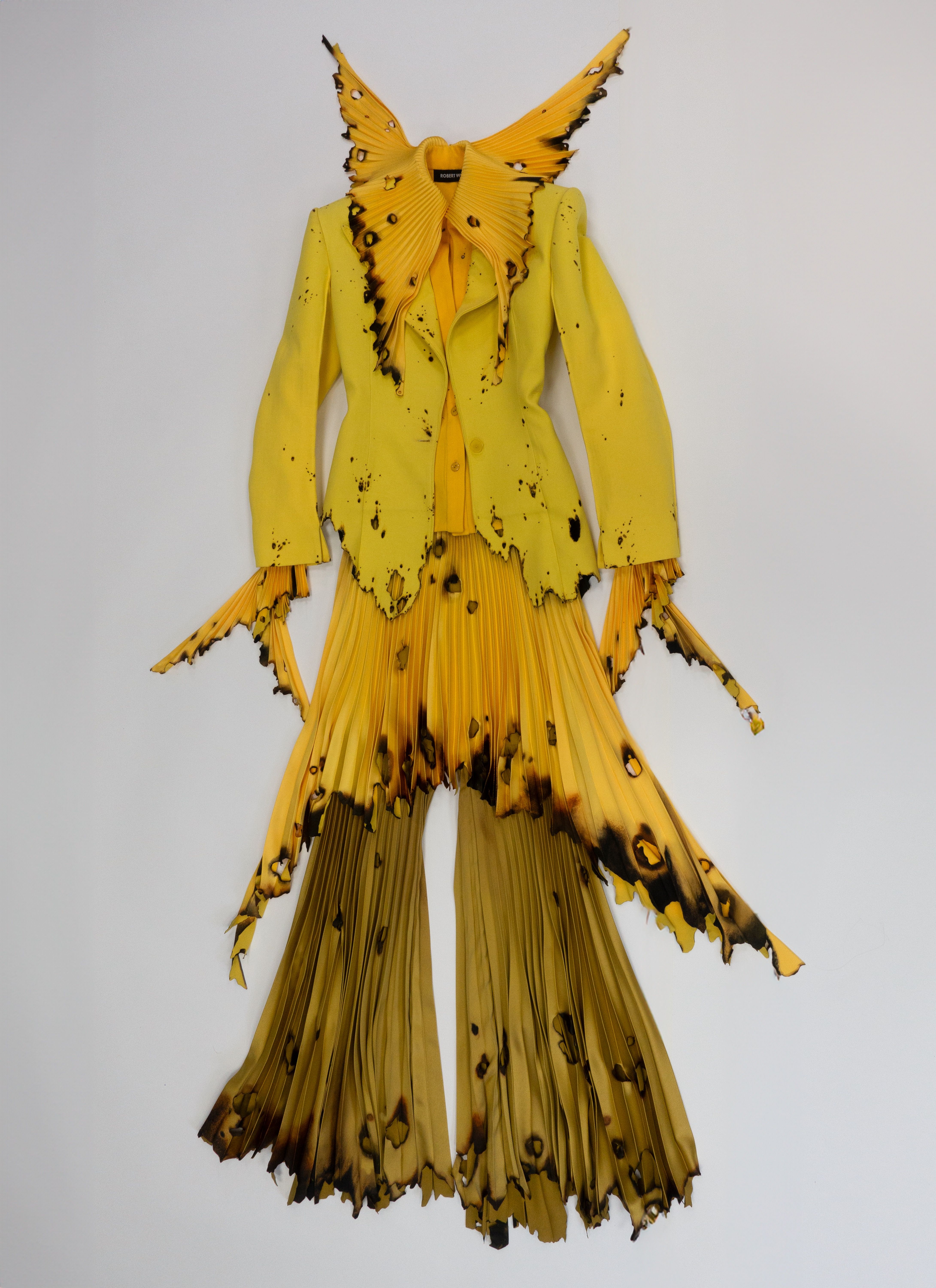
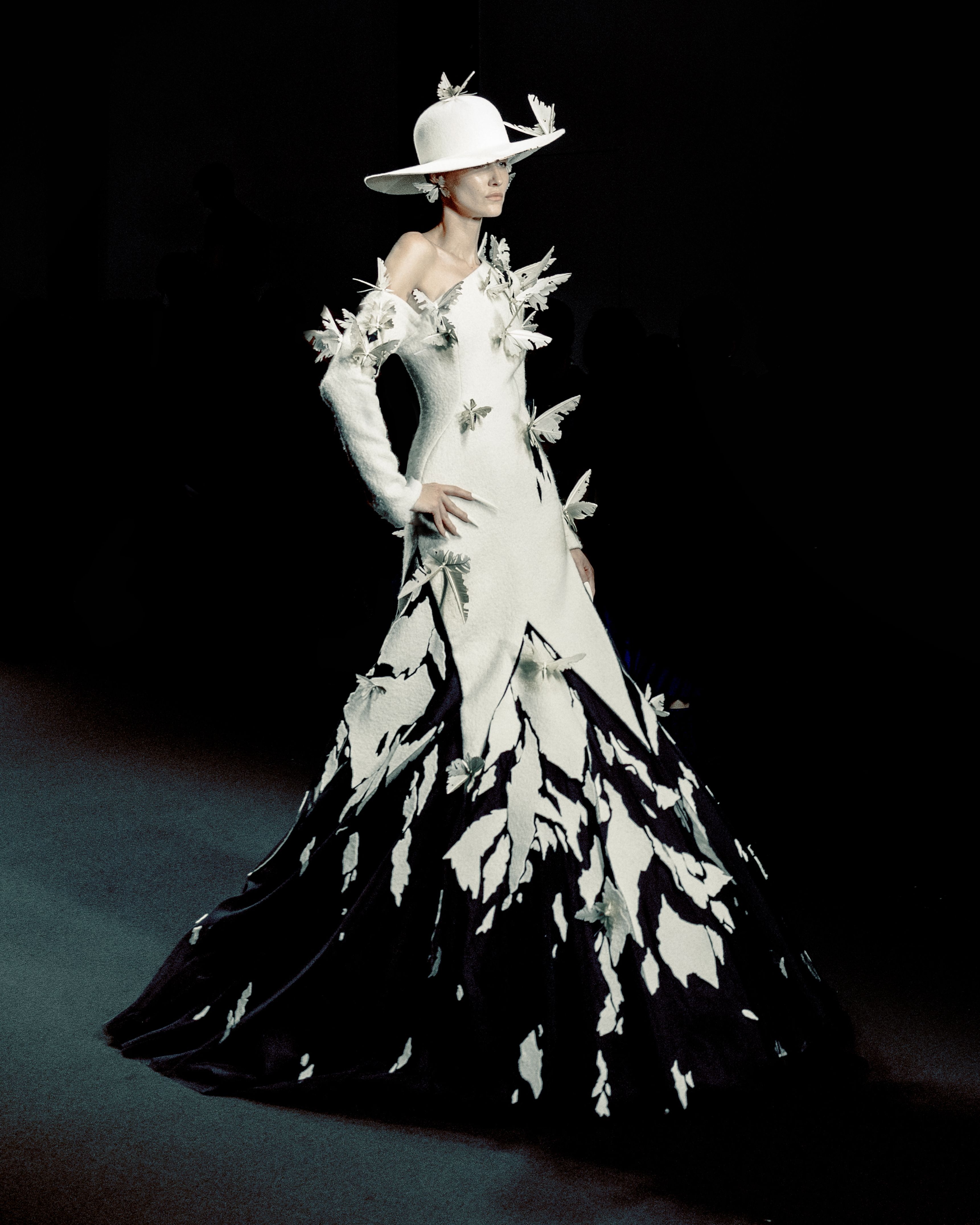
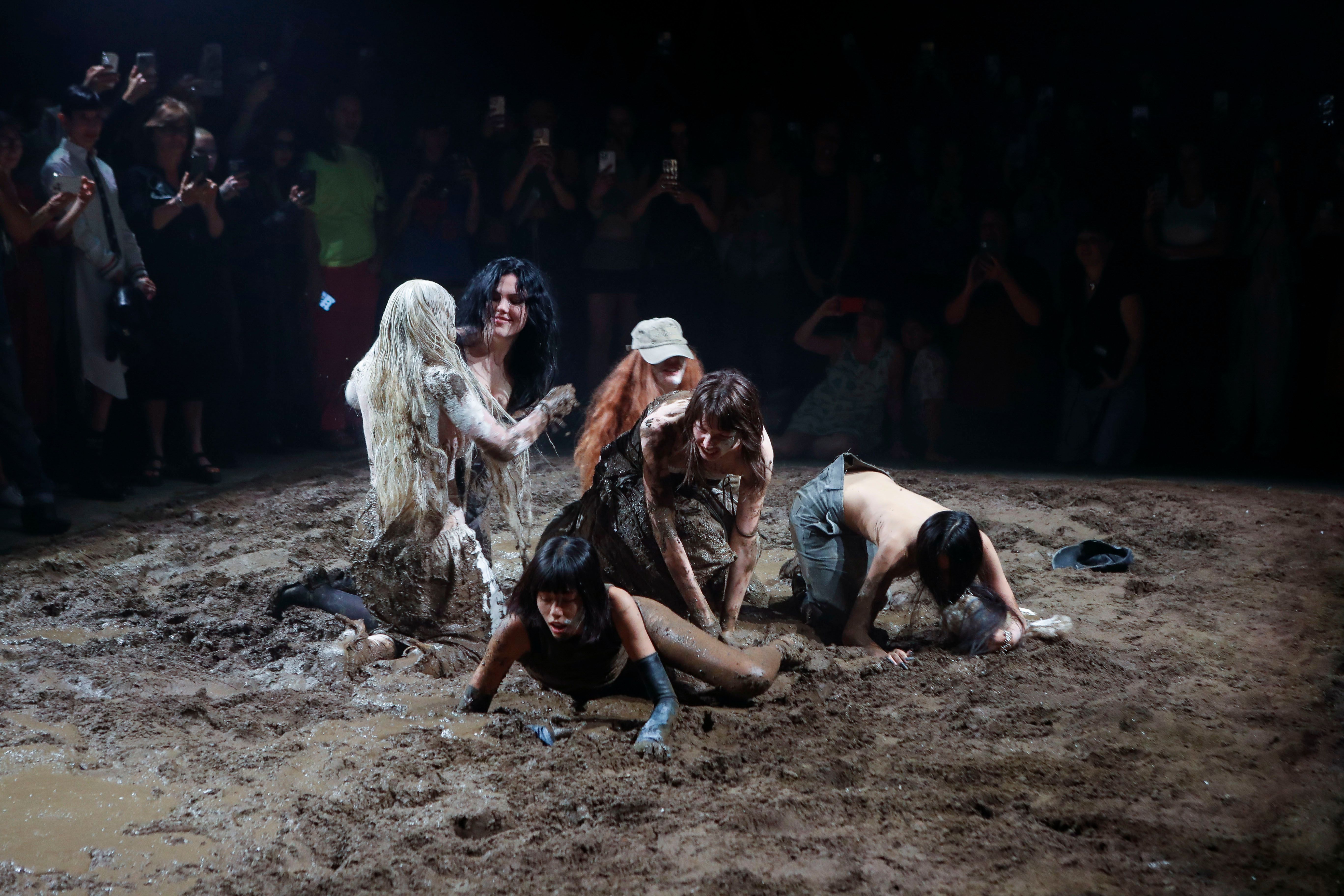
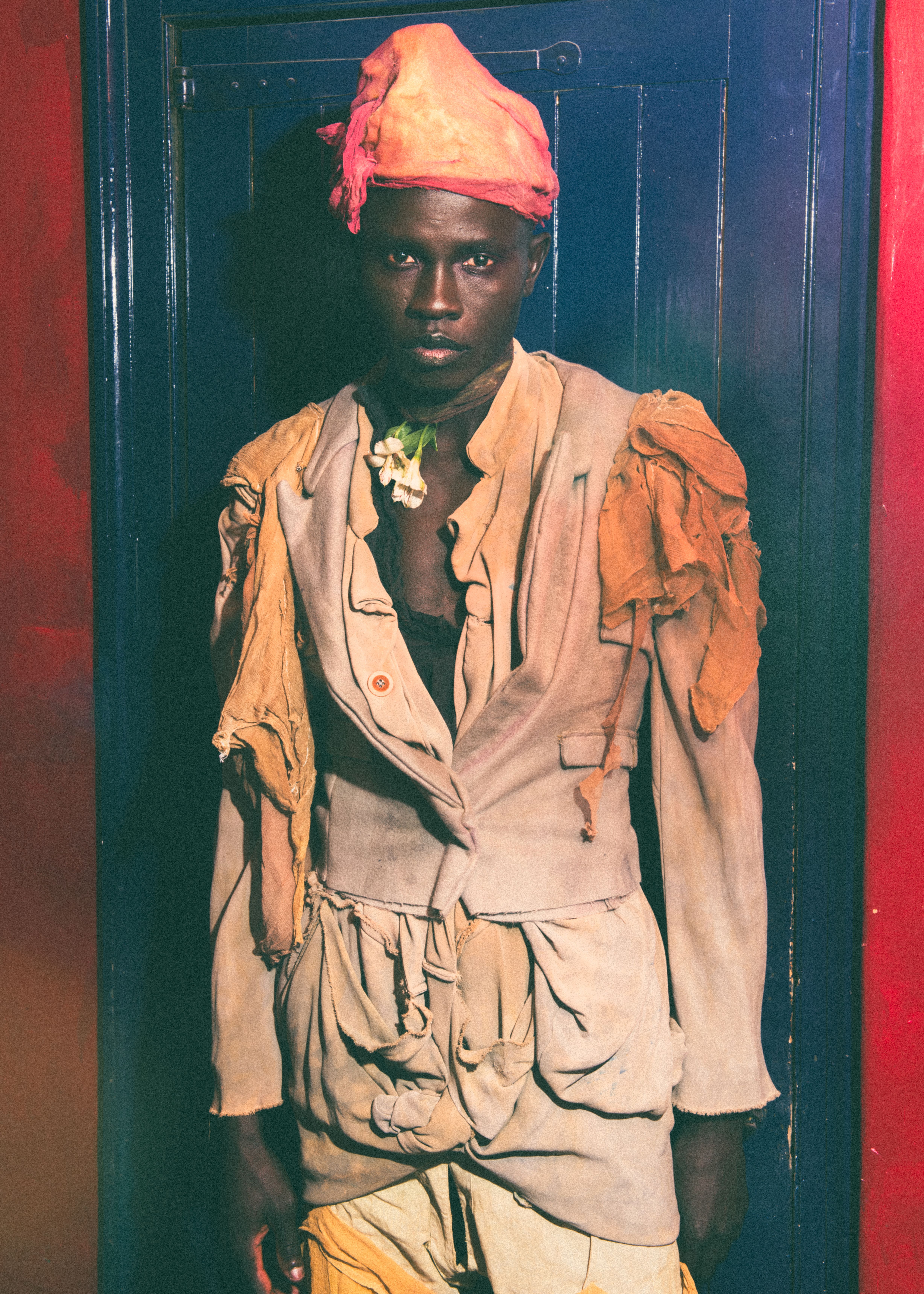
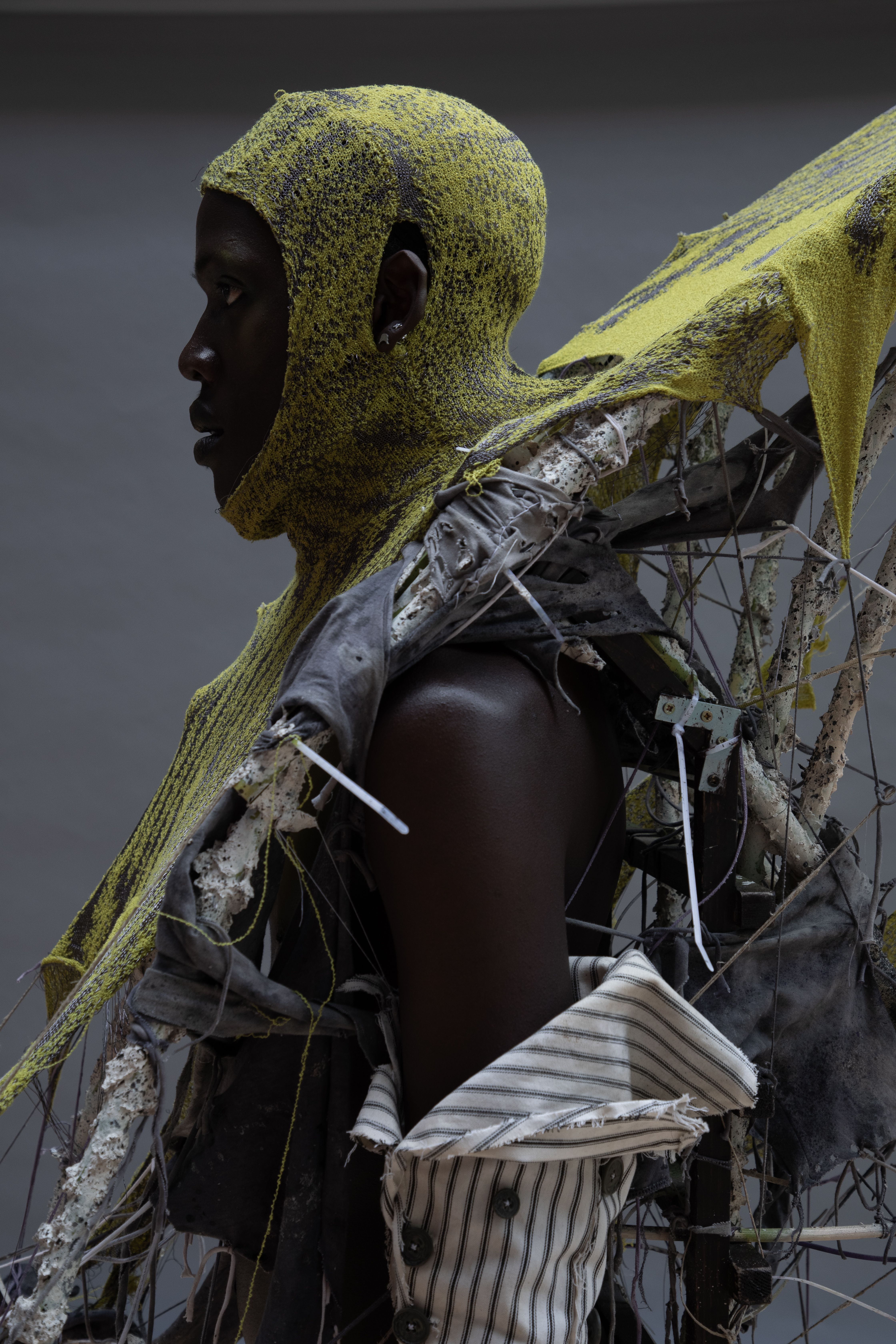
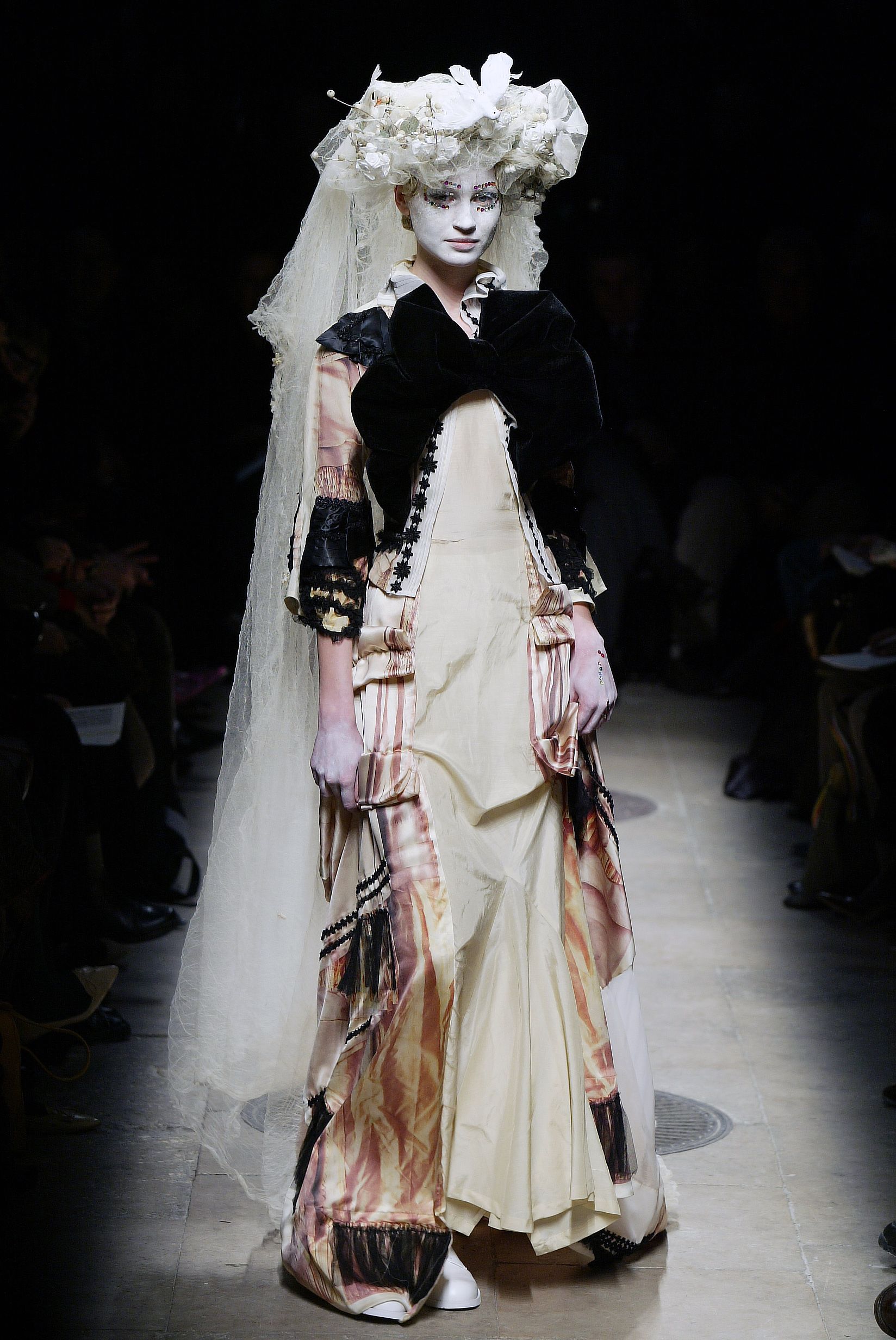
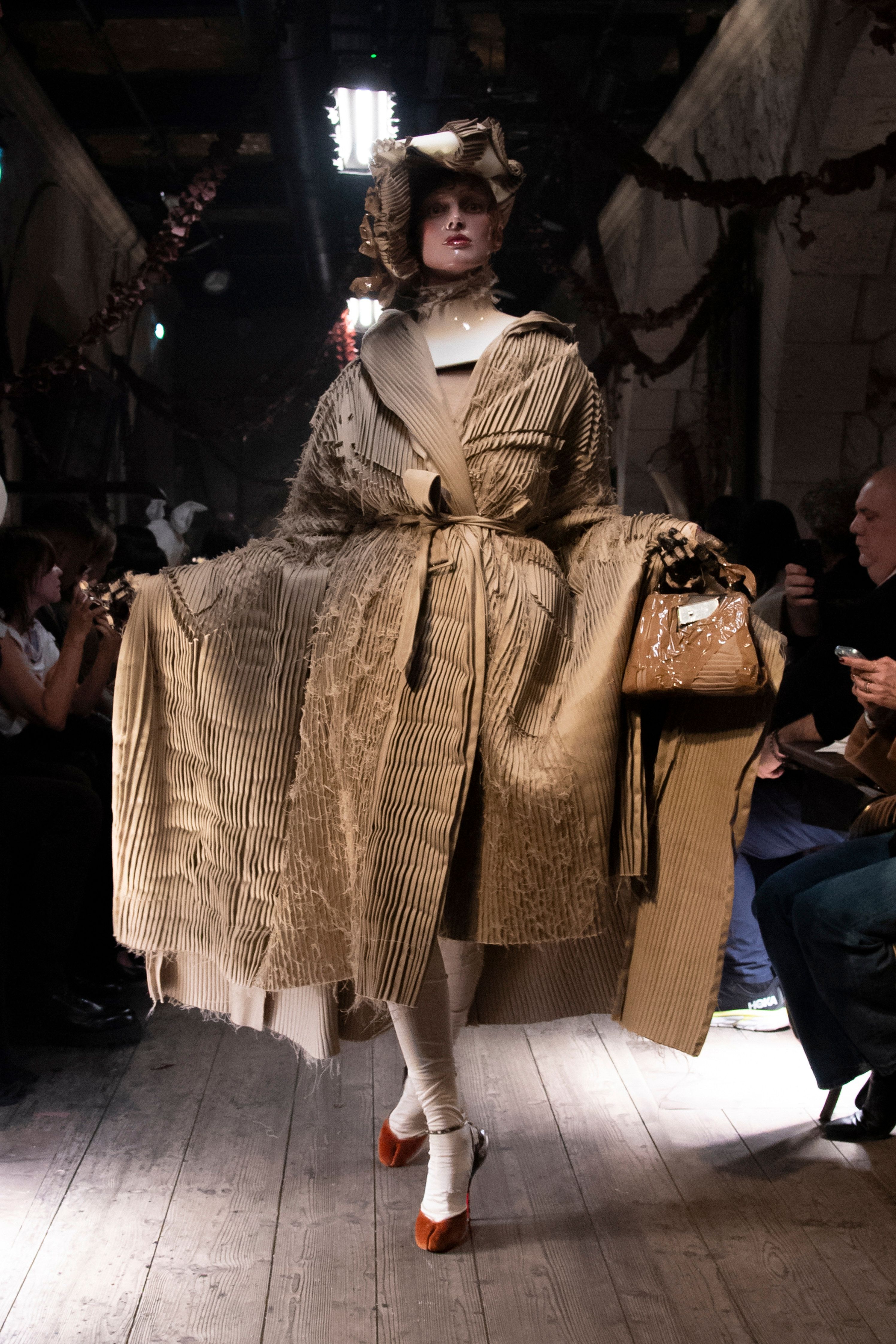
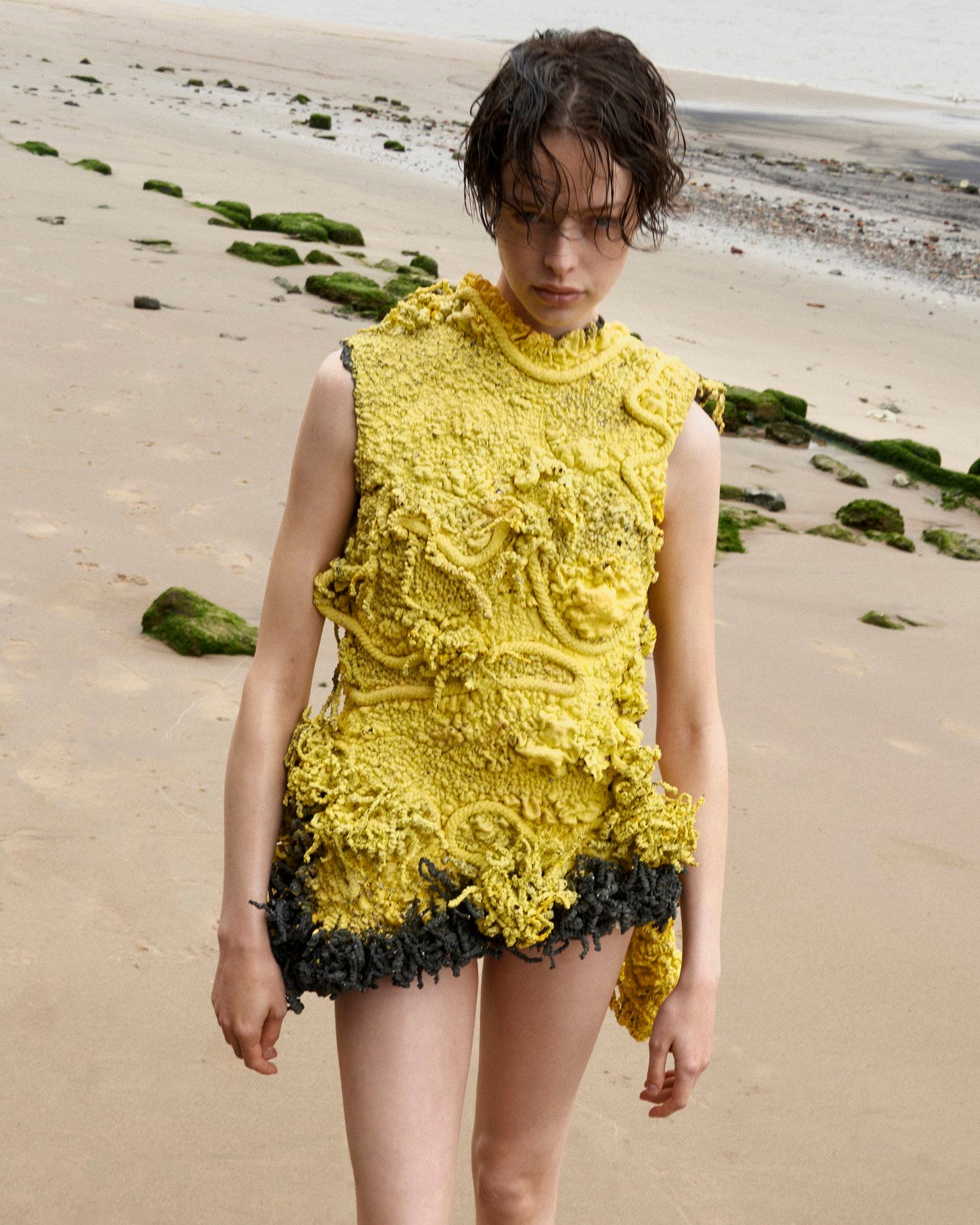
This drive to transform fashion into a space of friction and critical thought finds a complementary echo in Dirty Looks: Desire and Decay in Fashion, which opened on September 25 at London’s Barbican. The exhibition celebrates the beauty of the imperfect and explores how wear, dirt, and decay have become languages of resistance in contemporary fashion. Through more than one hundred looks by iconic and emerging designers, the exhibition traces a genealogy that spans from the punk aesthetics of Vivienne Westwood and Malcolm McLaren, who turned ripped clothing into political declaration, to the radical visions of Paolo Carzana, Solitude Studios, and Elena Velez, who conceive of fashion as a living organism in constant transformation.
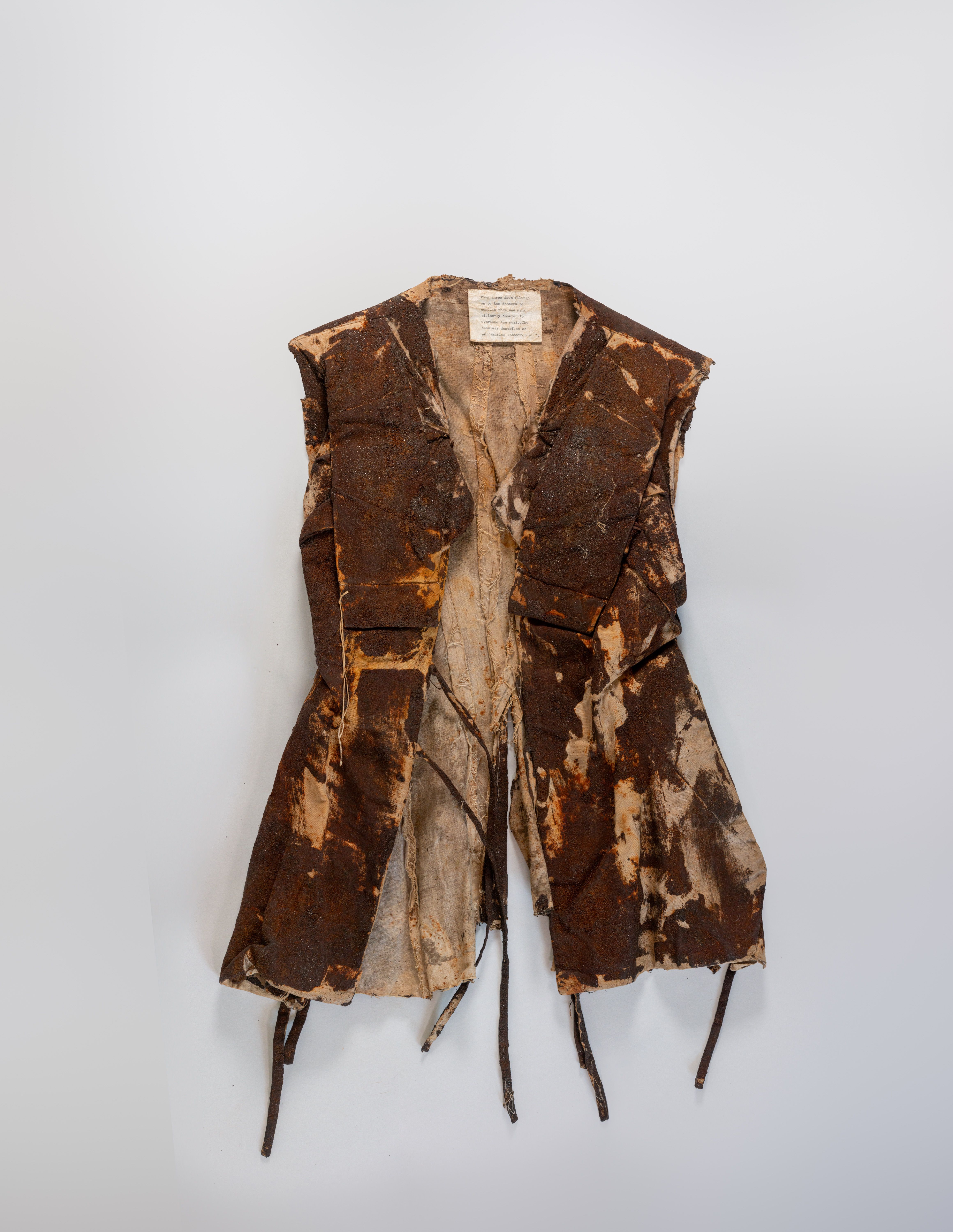
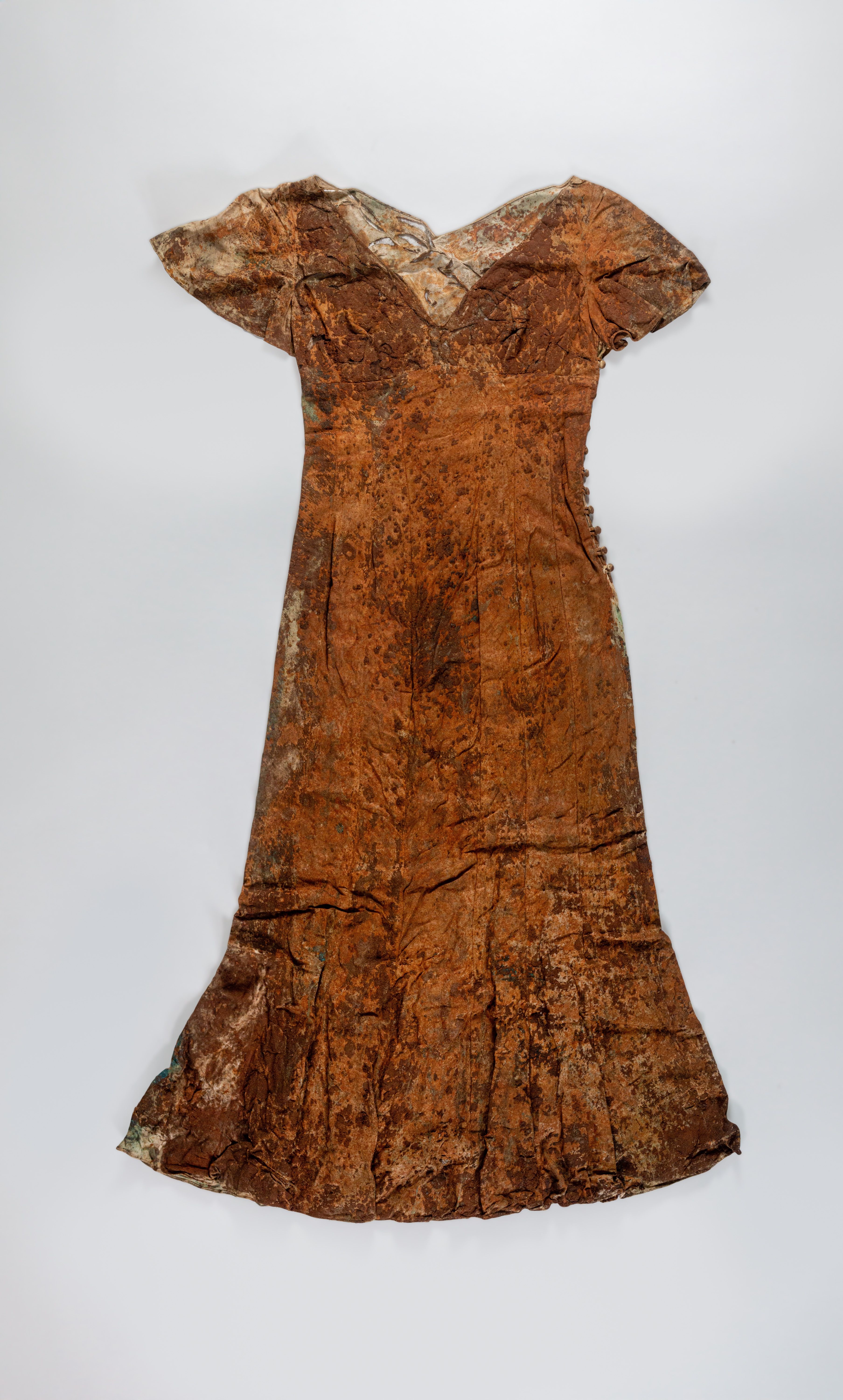
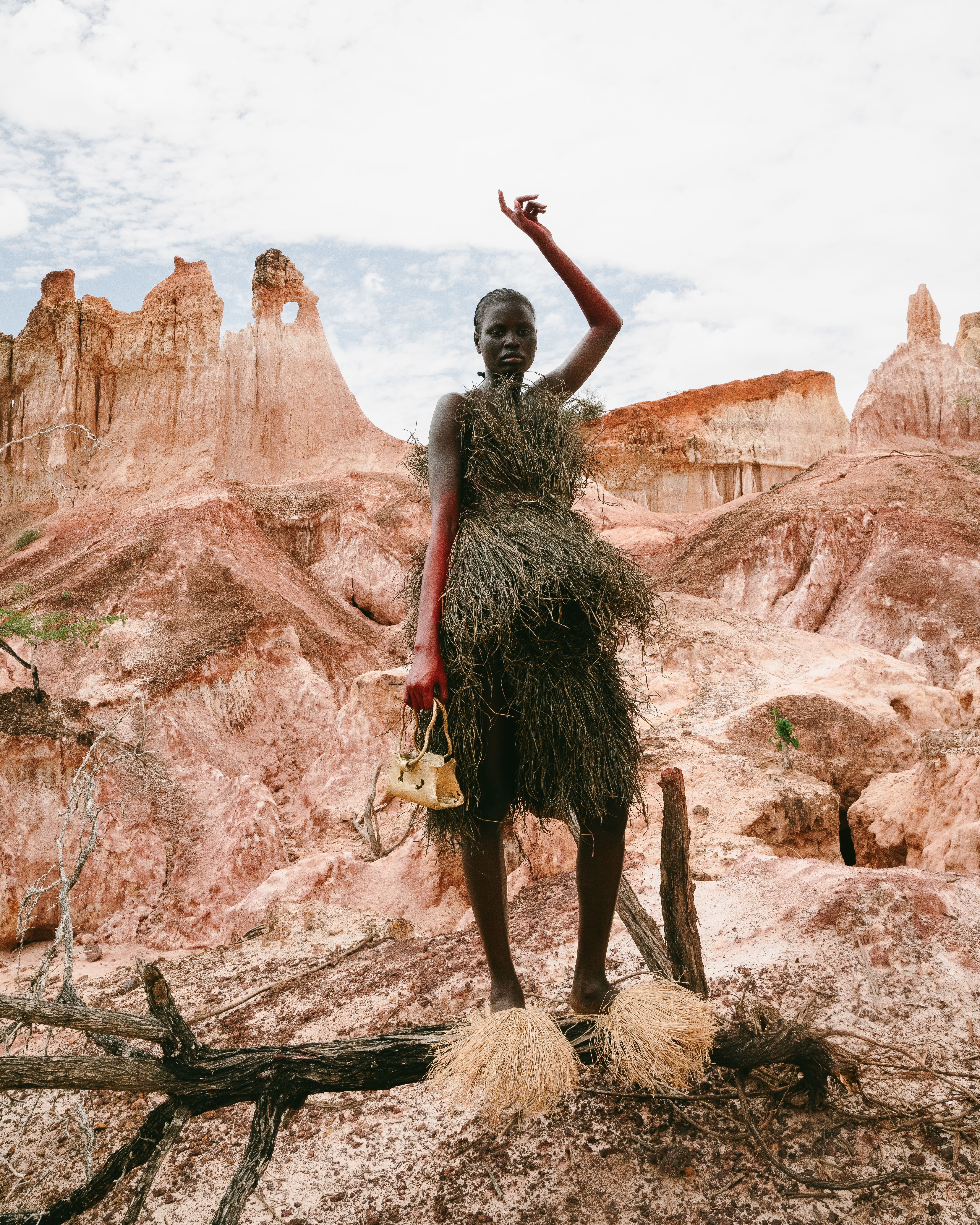
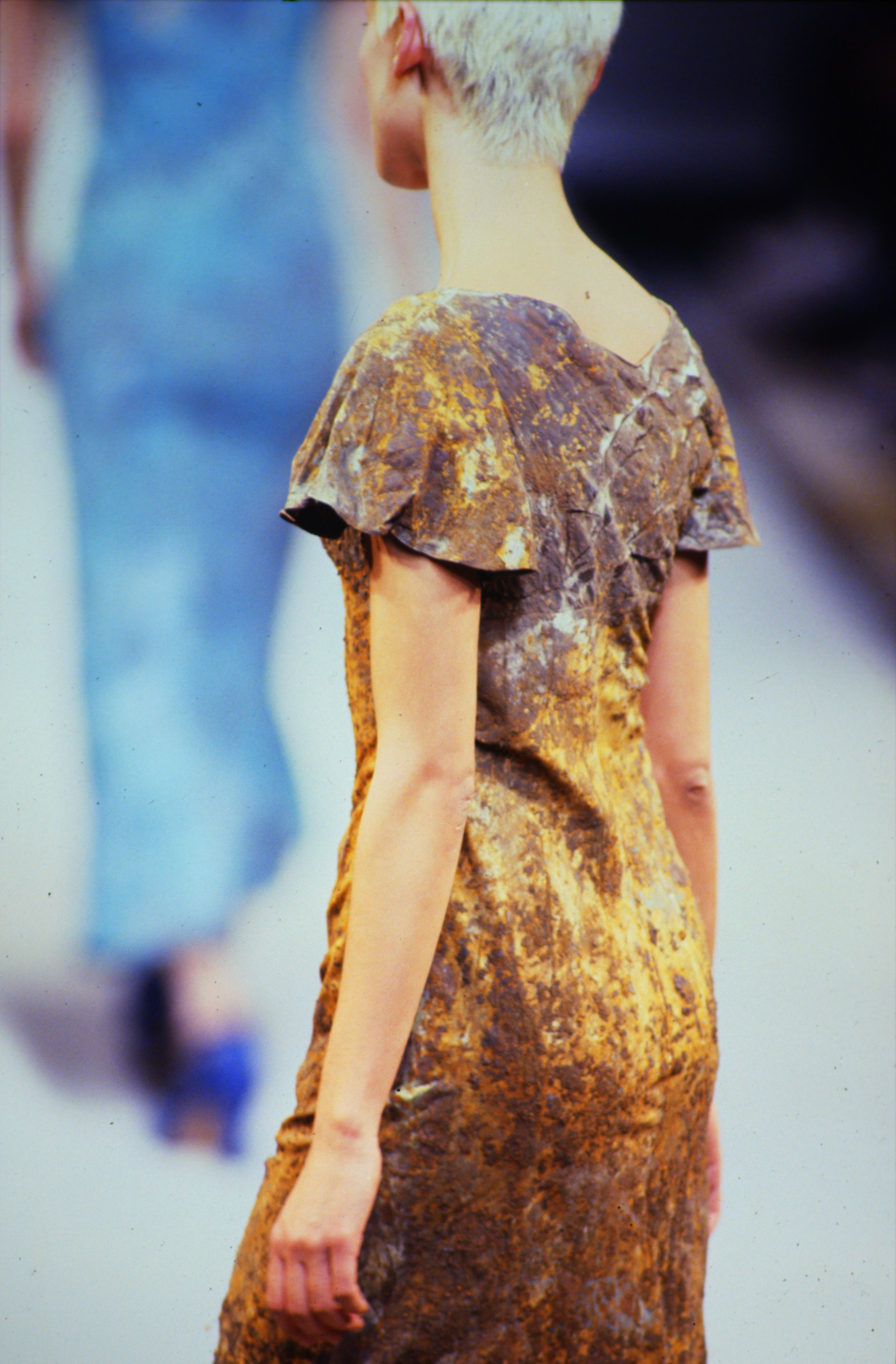
The proposal is enriched by historical milestones such as Hussein Chalayan’s The Tangent Flows (1993), in which dresses were buried alongside iron filings to oxidize, and opens to spiritual and ecological narratives: Michaela Stark works with the tension of the skin in sculptural corsetry; Bubu Ogisi repairs the link to the earth through plant fibers and traditional knowledge; and Robert Wun turns stains and fire into metaphors of purification. Studio Dennis Vanderbroeck’s exhibition design transforms the galleries into swamp-like landscapes and altars, where fashion becomes ritual and visitors are invited to experience decay as a possibility for regeneration.
Together, these two exhibitions map a contemporary fashion landscape that no longer limits itself to displaying garments but positions the museum as a laboratory of futures. If Sculpting the Senses speaks to us of bodies that mutate and expand into new anatomies, Dirty Looks reminds us that every metamorphosis passes through erosion, collapse, and recomposition. Both turn the act of looking into an embodied experience, where the visitor traverses materials, sounds, and emotions to imagine new ways of inhabiting the present and the future.
The Museum as a Space of Friction
Fashion’s presence in the museum is not just about legitimising its cultural value; rather, it seeks to turn fashion into a space of friction, questions and possibilities. Exhibitions such as Sculpting the Senses or Dirty Looks demonstrate that the museum can be a place to think about the body, time, and production systems from new perspectives. By bringing together artists and designers, the museum helps us understand fashion as an ecosystem where industry, desire, craft, identity, and the environment converge.
Against the immediacy of the runway or social media, the museum offers time to contemplate, debate, and imagine possible futures. At this intersection of art, fashion, and thought, the museum becomes a place where we not only look at clothing but imagine new ways of living, dressing, and inhabiting time.
It also becomes a space where fashion’s environmental issues, from overproduction to textile waste, can be made visible and critically addressed. This critical framework opens up conversations about consumption, sustainability, and social justice, inviting us to imagine more conscious futures where fashion ceases to be just an object of desire and becomes an agent of transformation. In this way, the museum becomes not just a stage for fashion, but a laboratory where bodies, materials, and futures are imagined and contested.